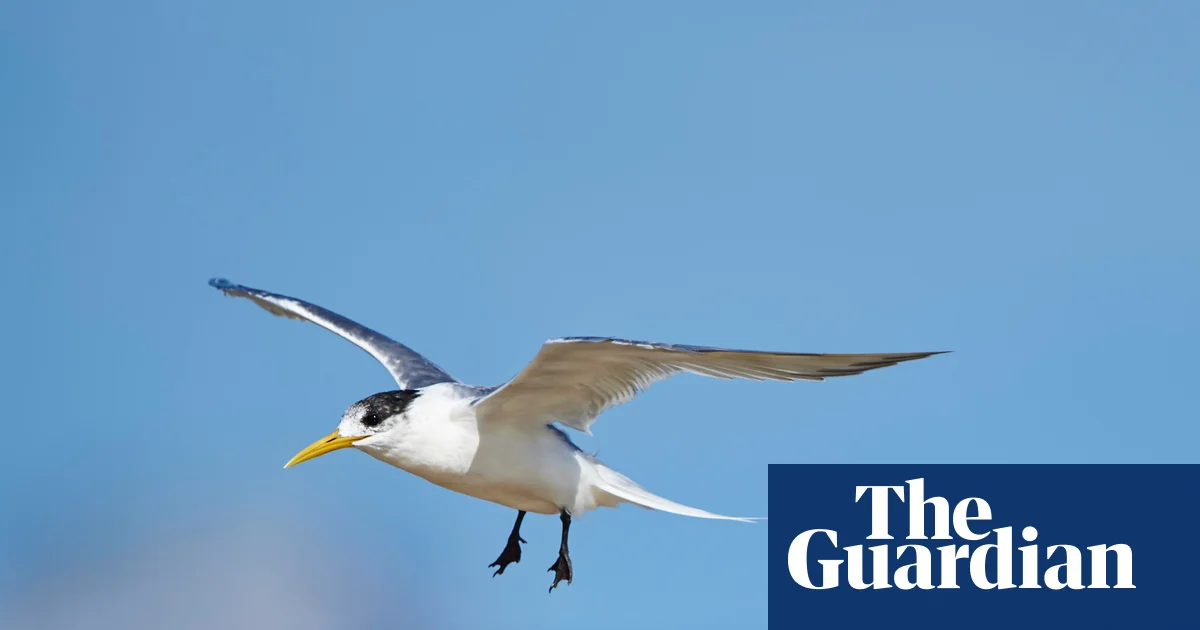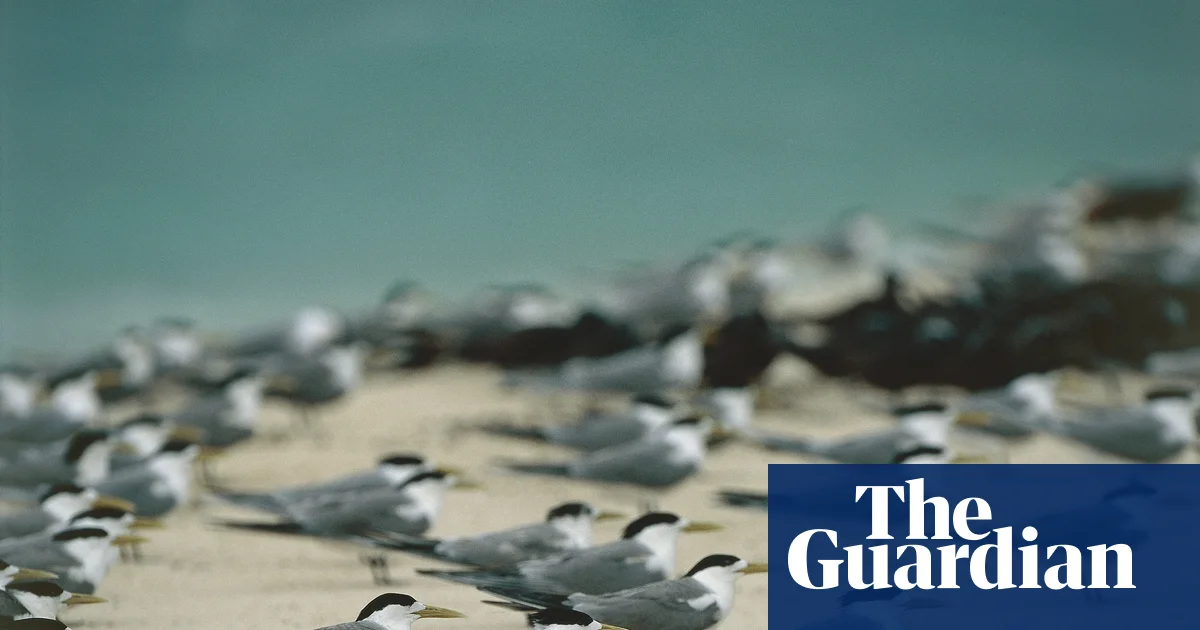
Sandwich terns are a graceful seabird known for their committed, forceful and spectacular plunging dives into the ocean to catch fish.Thousands of the species started to fall sick across Europe in 2022 with tens of thousands dying as a lineage of the H5N1 bird flu – 2.3.4.4b – spread through the continent’s wild flocks.The effects of the virus on the brain cause the terns to flounder on the ground, craning and straining their necks in a suffering behaviour known as star-gazing. It is difficult to watch.“I remember a colony at Scolt Head Island in Norfolk,” says Prof James Pearce-Higgins, the director of science at the British Trust for Ornithology.“You had adult terns trying to mate with dead terns and chicks begging for food from their dying parents.The sandwich tern (pictured) is a close relative of the greater crested tern, which is common in Australia. Photograph: Natural England/Allan Drewitt/PA“It was a real sense of a colony collapse as you watched this transfer of the virus between birds.”Sandwich terns are close relatives of greater crested terns, which are seen all around Australia and were the first native bird to suffer a mass mortality event from the disease in Australia on South Australia’s Limestone Coast.Since the virus re-emerged in Europe in 2021 it has swept over every other continent, killing millions of birds and mammals, and infecting more than 400 bird species as well as mammals – in particular, seals and sea lions.The virus was finally detected in Australia two months ago in migratory seabirds that likely brought the disease from breeding grounds in the subantarctic.
When bird flu hit the UK, suffering seabirds died in their thousands. Australia’s wild flocks will soon do the same
Australia’s bird population will experience ‘large mortalities’ and risk species loss, modelling based on global outbreaks shows
1,077 words~5 min read