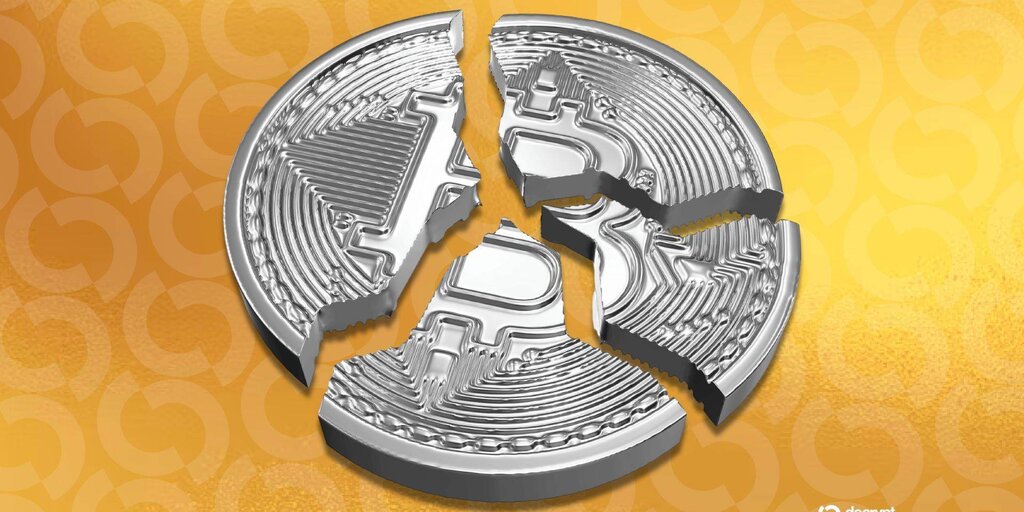
Bitcoin's (BTC) blockchain split into two branches Saturday when nodes running BIP-110 began rejecting blocks that did not signal support for the controversial "anti-spam" proposal. However, only a small minority of miners supports the forked chain.
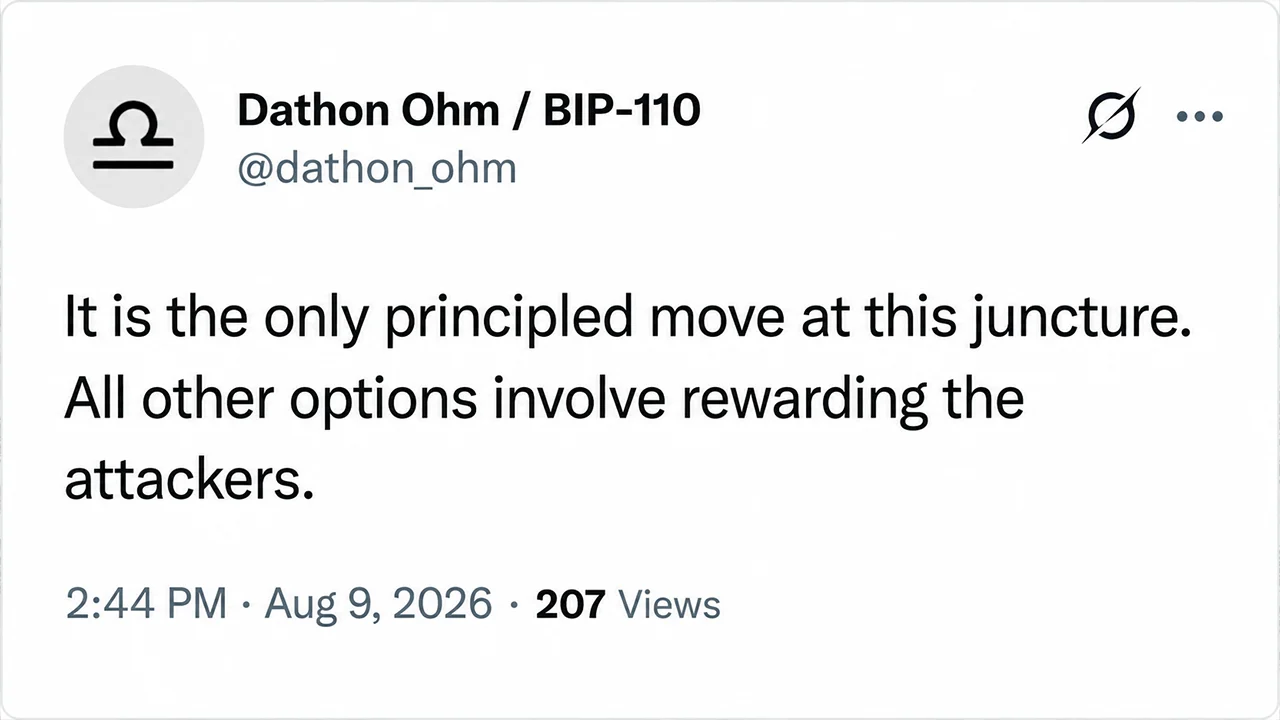
BIP-110 is a proposed one-year rule that would restrict non-financial data on the Bitcoin blockchain, such as Ordinals inscriptions. The proposal has transformed a technical dispute into a broader fight over who gets to decide how Bitcoin’s limited block space can be used.
The split began at block 961,632, opening a two-week period during which BIP-110 nodes will require every new block on the forked chain to signal support. Leading BTC pool AntPool mined the first block without that signal. Though most of the Bitcoin network accepted the block, BIP-110 nodes rejected it, later following an alternative block produced through Ocean by Roughnecks.
As of 6:00 p.m. ET, Bitcoin’s main chain had reached block 961,640. The BIP-110 chain stood at block 961,633 after producing its second block, leaving it seven blocks behind.
The competing blocks at height 961,632 both build on block 961,631 but contain different sets of transactions. AntPool mined the block followed by the main network. The fork-tracking Mempool Guide attributes the alternative block to Roughnecks, a miner using Ocean.