1 hour(s) ago
Jagaran Chakma
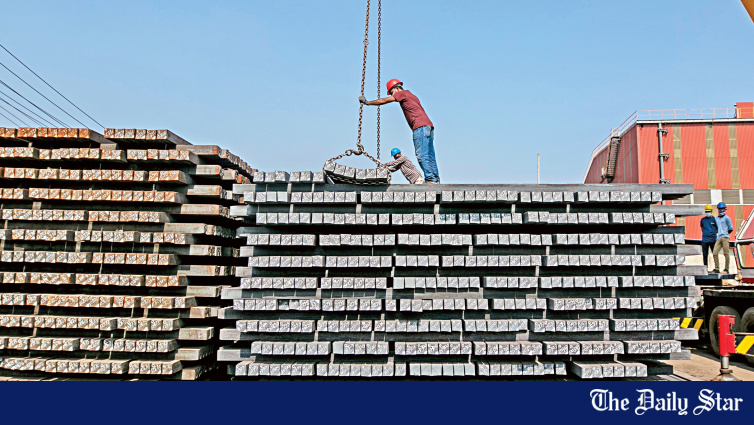
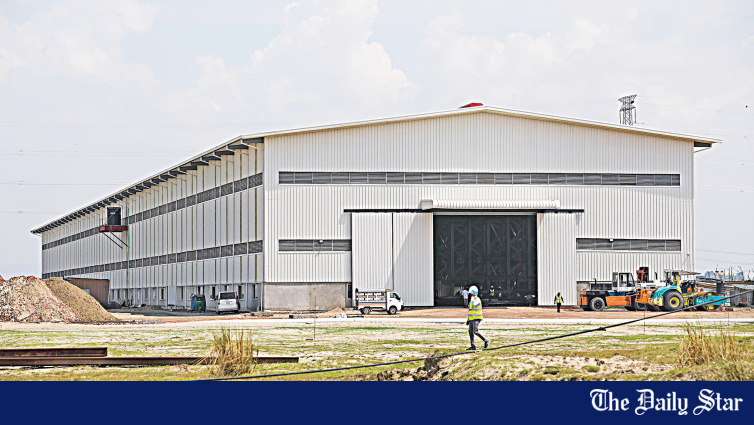
Public sector demand for locally manufactured prefabricated steel, like the one seen in this photo, has dropped by nearly 90 percent, according to industry insiders. PHOTO: Star/file
Bangladesh’s prefabricated steel industry faces a severe downturn driven by a sharp contraction in public infrastructure spending, sluggish private investment, and rising competition from duty-free imports, executives said.Prefabricated steel structures -- pre-engineered components assembled on-site -- are heavily used across commercial and industrial projects. However, demand has collapsed alongside a broader national development slowdown.Implementation of Bangladesh’s Annual Development Programme fell to a 53-year low in fiscal year 2025-26, with authorities executing just 67.52 percent of the revised budget.Public sector demand for locally manufactured prefabricated steel has dropped by nearly 90 percent, according to Md Sarwar Kamal, managing director of McDonald Steel Building Products Ltd.Industry insiders estimate the domestic market at Tk 4,000 crore, with industrial projects accounting for 80 percent of demand, followed by commercial (15 percent) and residential (5 percent) construction.Despite a government directive mandating local construction materials in public projects, industry officials allege foreign-funded developments continue to import finished steel duty-free.“This creates a serious disadvantage for local investors,” Sarwar said.Foreign suppliers are often able to bring finished structures into the country under duty-exempt arrangements, undermining local producers, he added.In response to the market imbalance, McDonald Steel has urged the National Board of Revenue (NBR) to either offer concessional customs duties on imported raw materials used in structural steel production or levy equivalent duties on imported finished components.“This policy does not support the growth of the local prefabricated steel structure industry,” Sarwar stressed.He emphasised that the duty disparity is especially damaging given the substantial capital domestic firms have already invested in modern manufacturing plants, machinery, advanced technology, and workforce training.