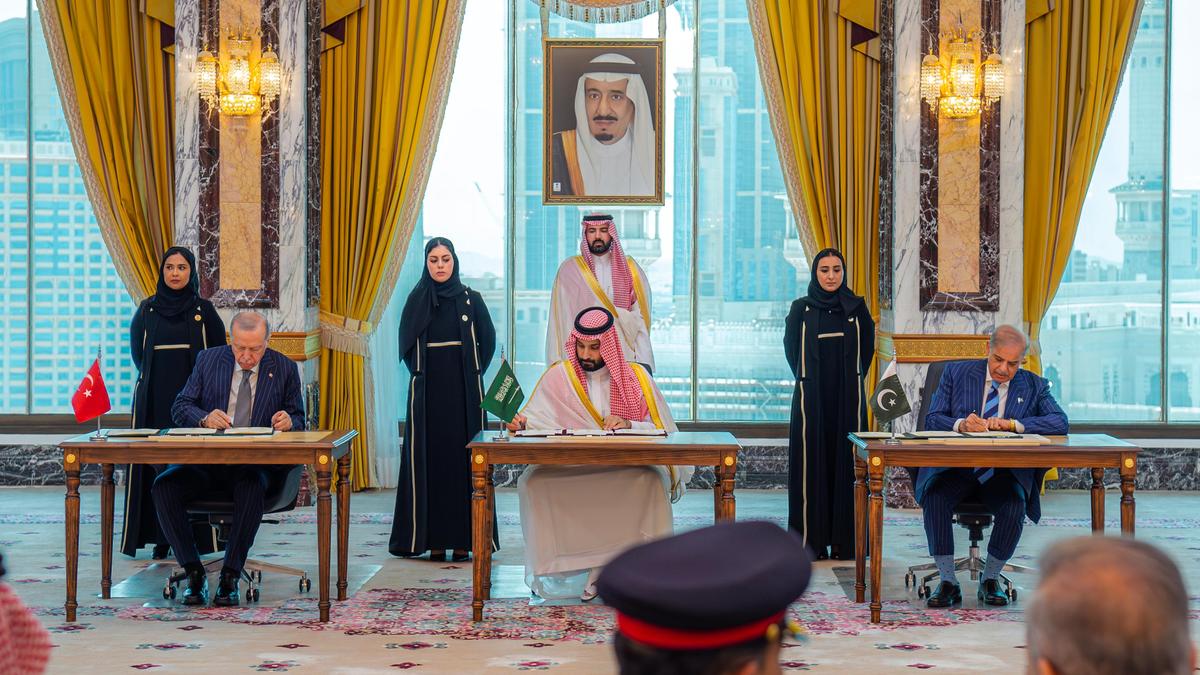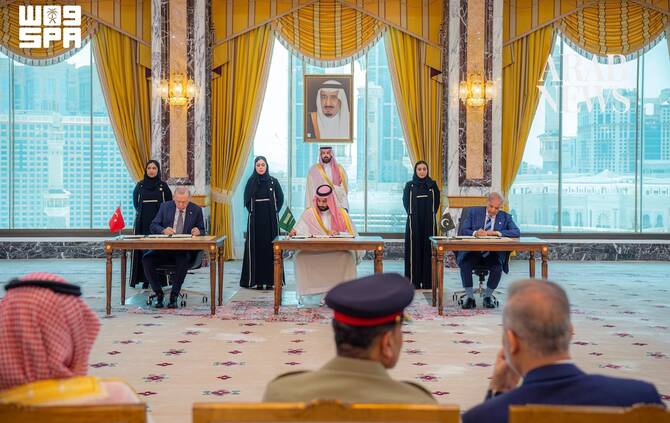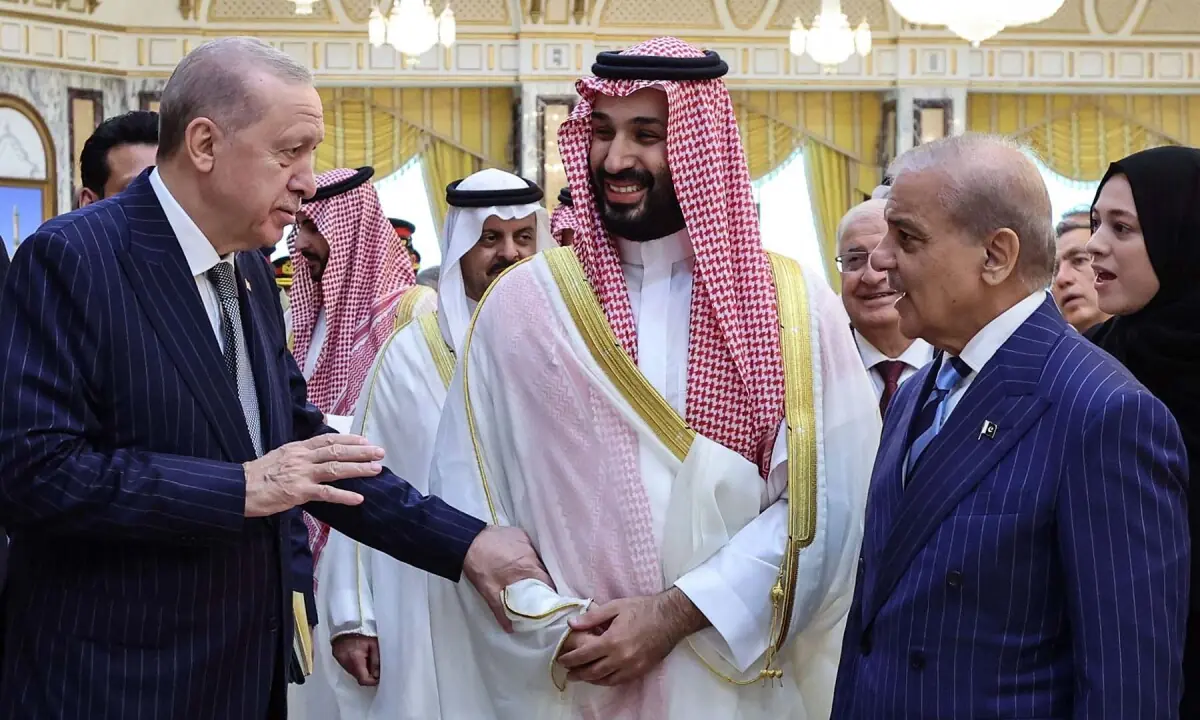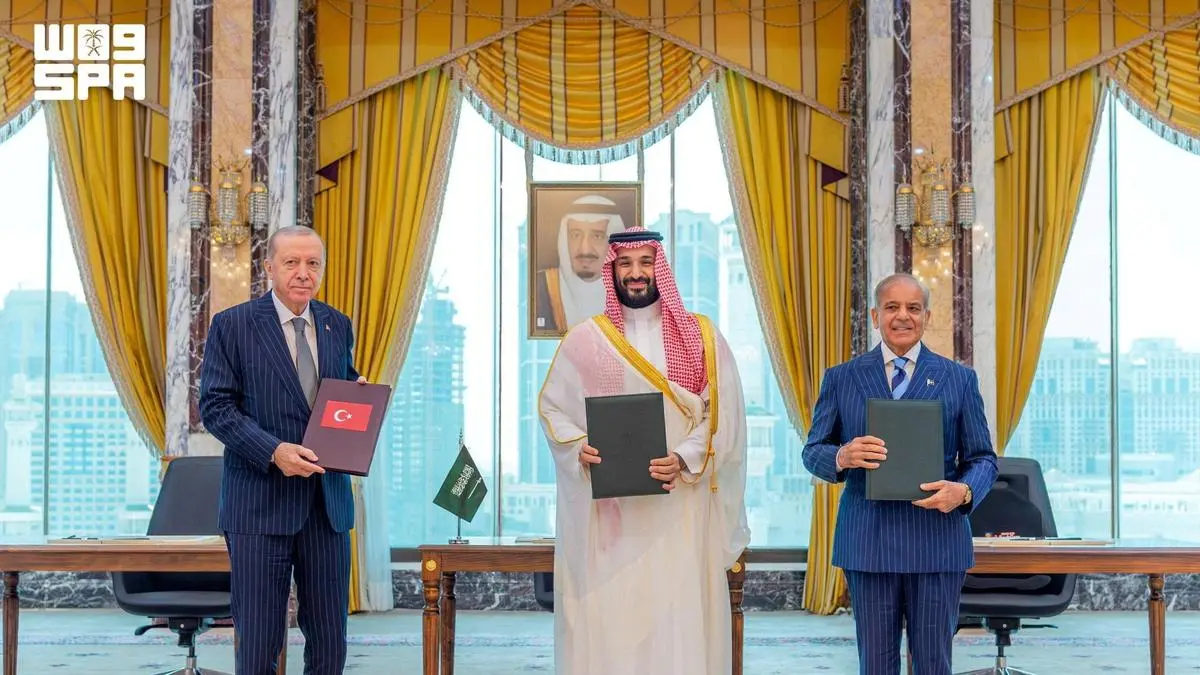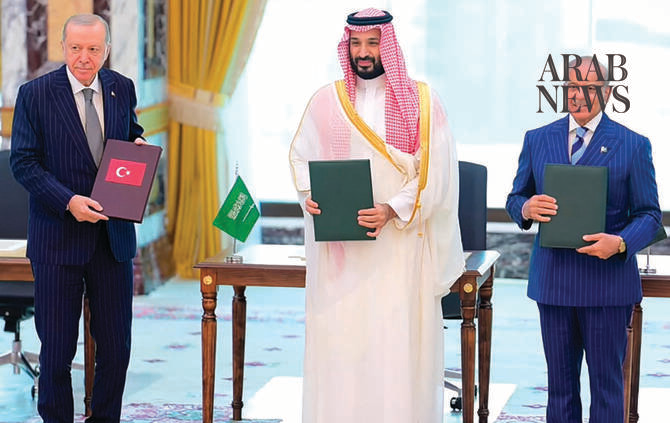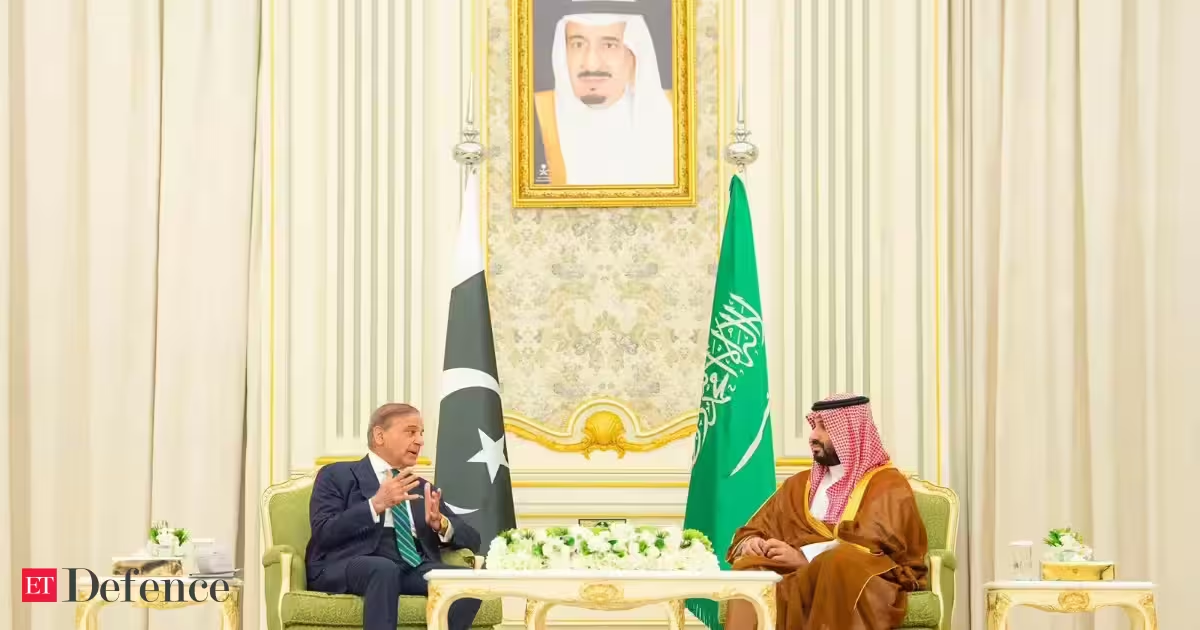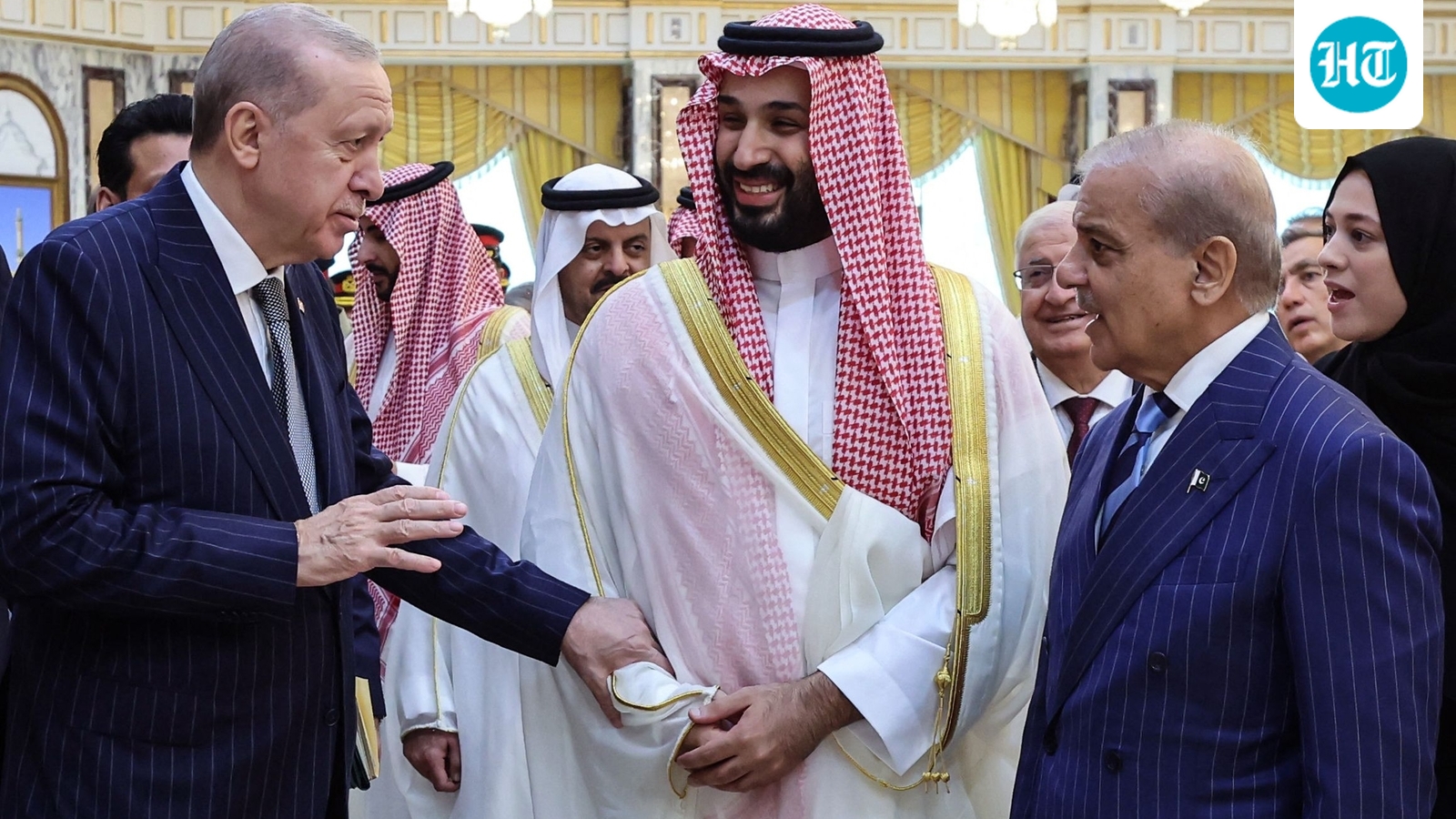
The joint defense agreement signed at Al-Safa Palace in Makkah on Friday between Saudi Arabia, Turkey, and Pakistan was by no means a spur-of-the-moment decision. It was preceded by months of consultations and discussions, undertaken well before the deterioration of the Middle East’s security landscape, which has become increasingly fraught with threats and dangers.Yet, its emergence at this particular juncture can be regarded as a masterstroke by seasoned regional and international political players whose expertise in navigating complex geopolitical realities and perilous pitfalls is extensive. It undoubtedly represents a significant diplomatic success for Saudi Crown Prince and Prime Minister Mohammed bin Salman, who has consistently sought to mitigate security risks and address sources of instability through strategic alliances of this nature.It is no coincidence that the Makkah Coalition came just days after the international maritime coalition formed by Riyadh with dozens of countries committed to the just cause of regional security and stability—a cause that has a direct bearing on international peace—at a time when risks have escalated sharply as a result of the US-Israeli-Iranian conflict.It is particularly noteworthy that this tripartite joint defense agreement derives additional significance from having been signed in the holiest and most sacred place for the signatories and for Muslims worldwide, especially given that the three countries collectively comprise at least 380 million people. One of the parties—Turkey—is a member of NATO; the second—Pakistan—is the only Islamic country possessing nuclear weapons; and the third—Saudi Arabia—is among the world’s most influential countries economically, politically, and militarily.The agreement expressly stipulates that it is defensive, not offensive, and is not directed against any specific country. Perhaps its most pivotal provision is that any attack against one of its signatories is considered an attack against all three. This has led some commentators to liken it to an “Islamic NATO.”The provision reflects the strategic wisdom of Saudi Crown Prince Mohammed bin Salman, Turkish President Recep Tayyip Erdoğan, and Pakistani Prime Minister Shahbaz Sharif. Through this agreement, they have sent a candid message to all countries as well as to militias threatening Saudi sovereignty and its vital oil infrastructure, which is indispensable to the entire world: Saudi Arabia is not alone. With its own armed forces, reinforced by the armies of its two allied nations, Saudi Arabia will not stand idly by while Iran and its proxies hold the Red Sea, Bab el-Mandeb, and the Strait of Hormuz hostage, in defiance of the will of the international community.It is worth emphasizing that the Makkah Pact is reshaping the geopolitics of the region—a geopolitics that has, in one way or another, become inseparable from the geopolitics of the entire world. Since the fall of the Shah’s regime in 1979, Iran has harassed countries across the region through its policy of “exporting the revolution” and by creating proxy militias that seek to undermine the independence and sovereignty of the countries in which they operate, including Yemen, Lebanon, and Iraq.It has embraced the most reprehensible logic and thinking: that if it is attacked by Israel and the United States, it will retaliate against the Gulf states, particularly Saudi Arabia, by closing the Strait of Hormuz and directing its proxies in Yemen to close the Bab el-Mandeb Strait.Such thinking and such actions cannot be tolerated. Not because Saudi Arabia and its Gulf neighbors lack the capacity to respond militarily, but because Iranian actions now threaten the interests and livelihoods of citizens in every country around the world, potentially causing shortages of fuel, food, agricultural fertilizers, and medicine. Iran would therefore find itself confronting the entire world, rather than merely the regional countries it targets because of their alliance with the United States—an alliance that has endured for nearly a century and has never been directed against any other nation.It should also be stressed that this agreement is not exclusively military in nature. Its three signatories stand to reap substantial economic benefits, including increased investment and the further development of their military manufacturing infrastructure. Such infrastructure is already well advanced in Riyadh, Ankara, and Islamabad.Certainly, the Makkah Coalition could expand to include other countries, further completing the restructuring of the region’s geopolitics and strengthening its capacity to confront threats, challenges, and dangers from whatever quarter they may arise. No country can be expected to stand idly by while being subjected indefinitely to attacks, conspiracies, and incitement. Therefore, this joint defense agreement, inked byinfluential nations and key capitals, represents both a powerful deterrent and an effective instrument for countering aggression.
Makkah Coalition: Riyadh, Ankara, and Islamabad engineer a geopolitical map
The joint defense agreement signed at Al-Safa Palace in Makkah on Friday between Saudi Arabia, Turkey, and Pakistan was by no means a spur-of-the-moment...
743 words~3 min read