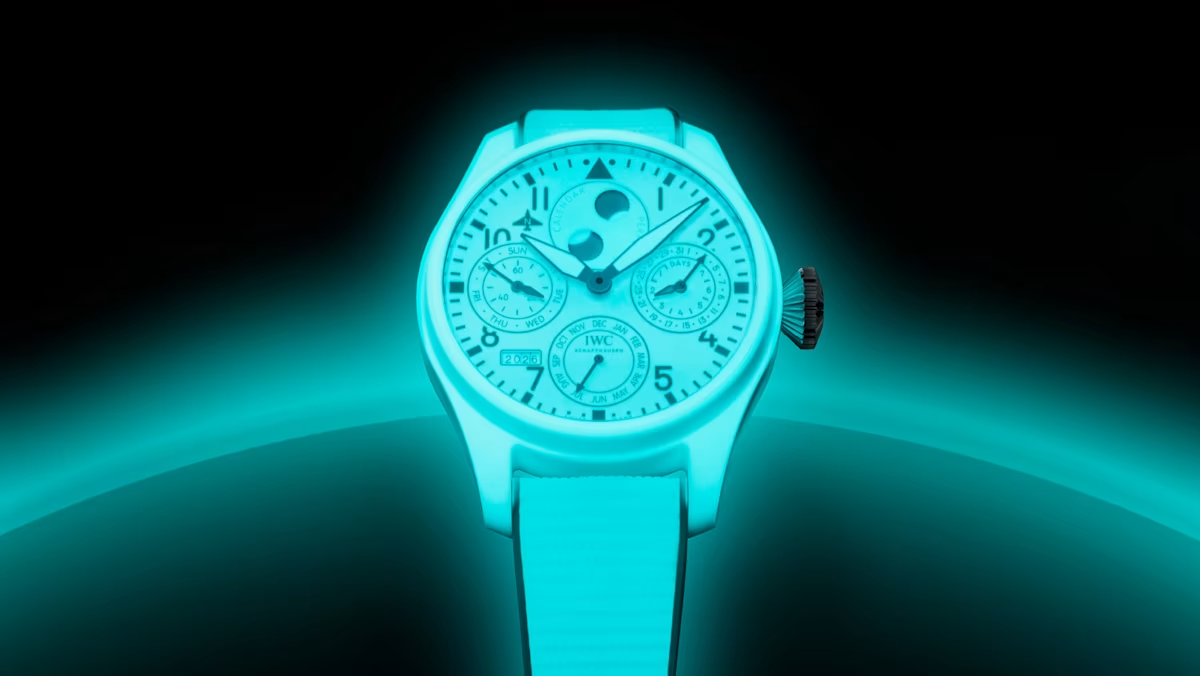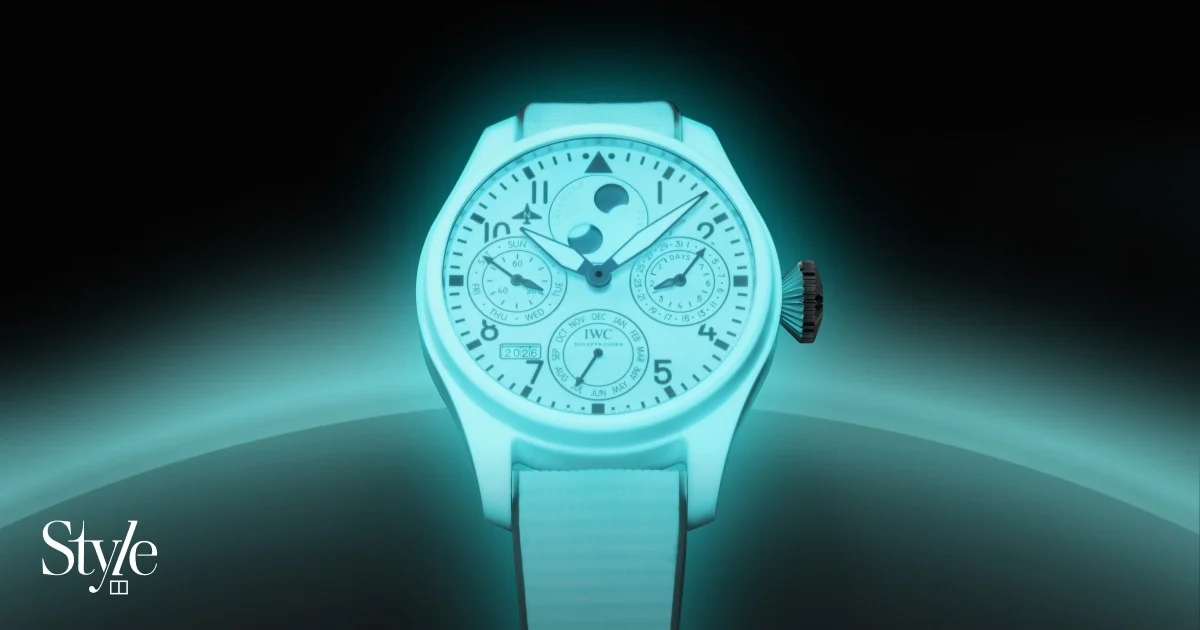
Luminous watches are trending, from IWC to Panerai and A. Lange & SöhneLuminescence has become one of watchmaking’s coolest flexes. At this year’s Watches and Wonders in Geneva, there was a lot of buzz centred on glow-in-the-dark timepieces. It cropped up at heritage brands like Panerai and A. Lange & Söhne, while the horological trend was epitomised by IWC Schaffhausen’s new, lustrous blue take on its Big Pilot’s Perpetual Calendar.Bell & Ross BR-X3 Night Vision. Photo: HandoutToday, watches that shine in the dark may have become big business, but the hype – and history – surrounding these designs has been bubbling up for quite some time.Since the early 20th century, luminescent materials have been applied to the hands, numerals and indices of watches designed for military use – whether for pilots, divers or soldiers – for whom effectively operating on the battlefield extended to times when legibility in low light was essential.The earliest examples used a luminous paint that combined zinc sulphide with radium, the radioactive element discovered by Marie Curie and her husband Pierre in 1898, which, while effective in emitting light, was unfortunately also highly radioactive, and so was banned from use in watchmaking in 1968. Tritium, another self-luminous but less radioactive substance, was later used as a replacement.IWC Big Pilot’s Watch Perpetual Calendar Ceralume. Photo: HandoutEverything changed with the introduction of Super-LumiNova in 1993, which remains the go-to luminous material in horology today. Developed by Swiss company RC Tritec, it’s a photoluminescent pigment that functions like a battery that stores light, absorbing energy from either sunlight or artificial light and re-emitting it as a visible glow, a function that can be repeated indefinitely and carries none of the risks of its predecessors.Looking back, arguably no watchmaker has built a longer-standing relationship with luminosity than Panerai. The Florentine brand began supplying instruments to the Royal Italian Navy in the 1910s and by 1935 had developed its first dive watch prototype, the ref. 2533, with a luminescent Radiomir dial. Those technical specifications, which included exceptional luminescence, remained a military secret until 1993, when the watches first came to market.“Incorporating luminosity into our watches is not merely an option but a fundamental requirement, deeply rooted in our legacy as suppliers of military instruments where it was essential for underwater missions,” says Alessandro Ficarelli, the brand’s chief marketing officer.Panerai Submersible GMT PAM01495. Photo: HandoutPanerai’s latest Submersible GMT PAM01495, a 47mm tool watch introduced at Watches and Wonders, boasts a hefty 500-metre water resistance and DMLS titanium case, a 3D-printing technique Panerai first patented in watchmaking in 2012. It also features a skeletonised dial with a minute hand and dot on the rotating bezel that glow blue and indexes that glow green with Super-LumiNova.
Full-lume watches are the new flex, from heritage brands to indie upstarts
Luminescence was a stand-out trend at this year’s Watches and Wonders – here’s how makers are using innovative materials to light up horology.
452 words~2 min read