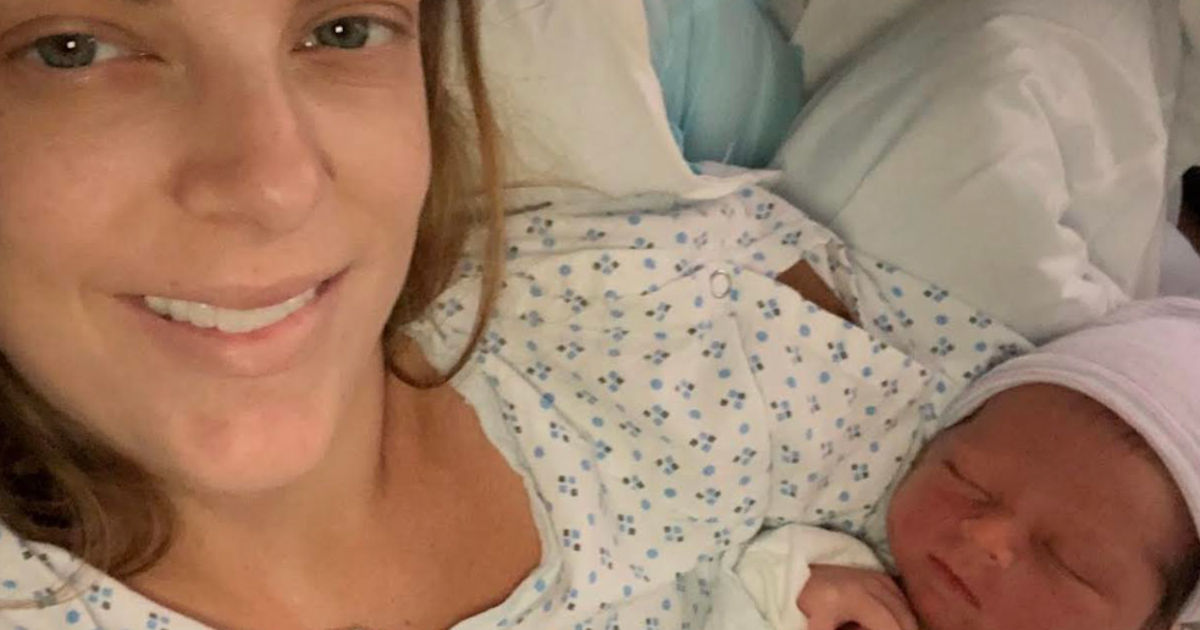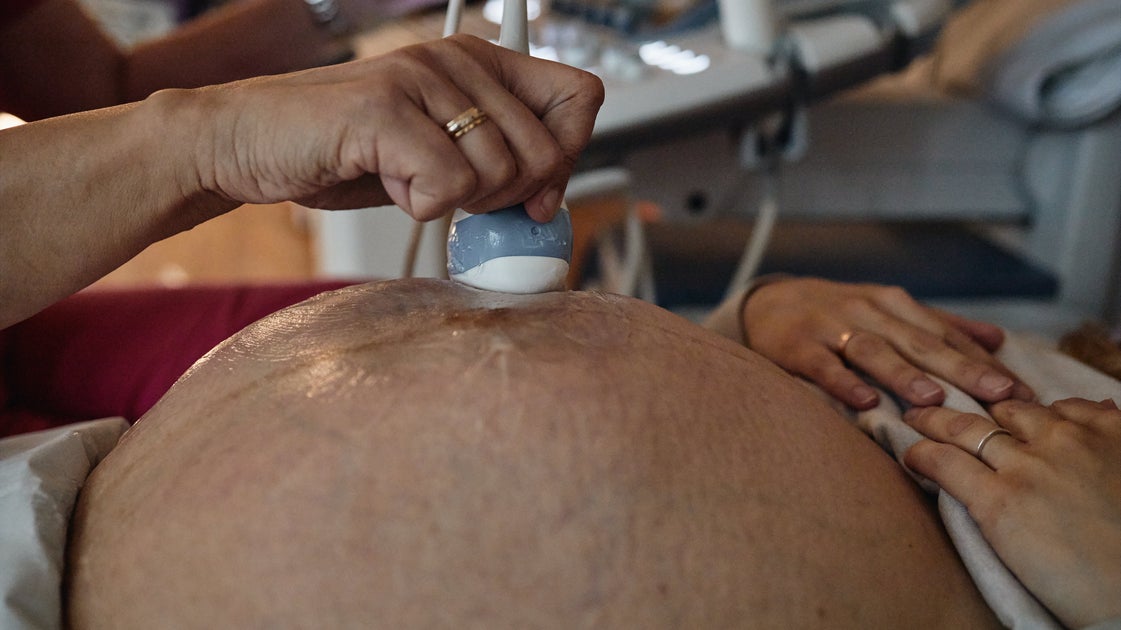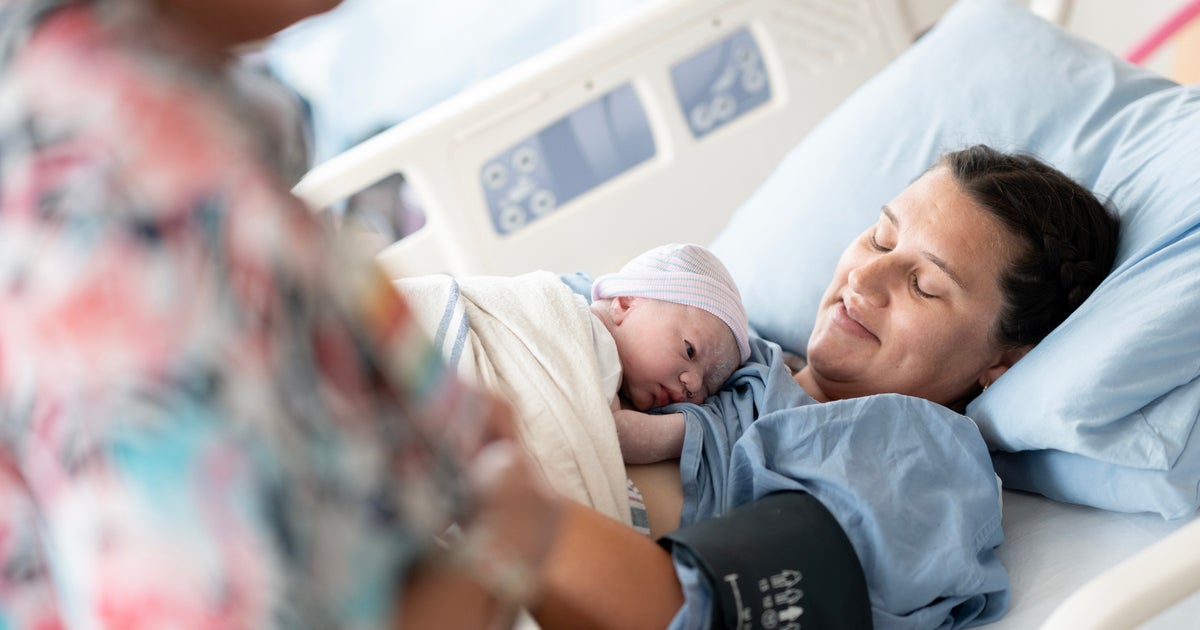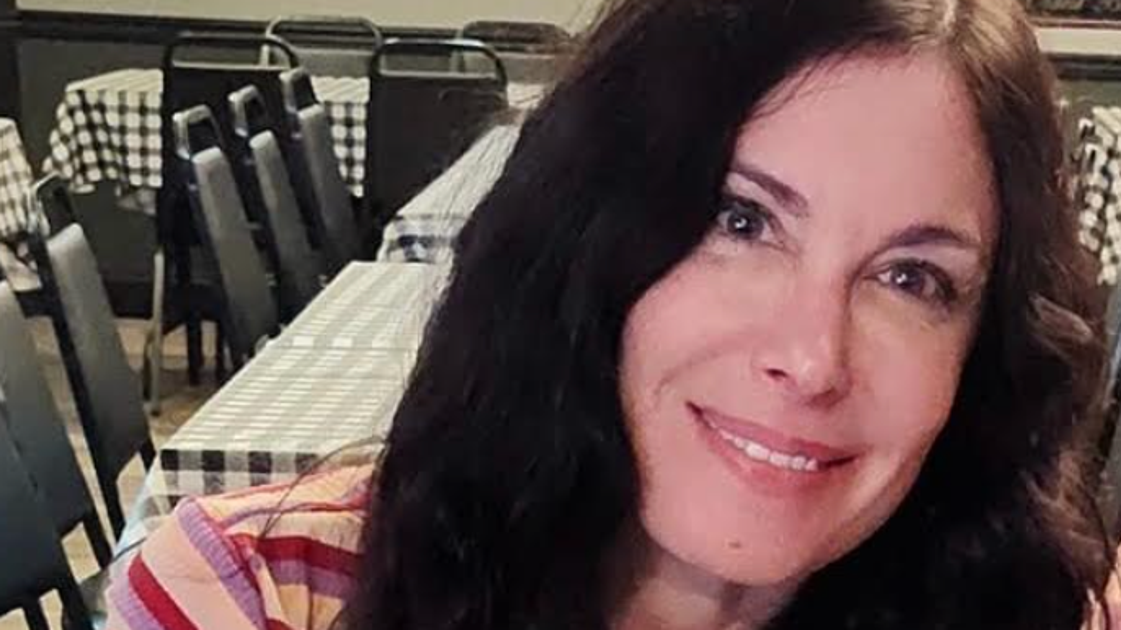
“Is someone coming?”I clutched my pregnant belly and looked around the room. Nearby, nursing students moved briskly through a crowd of emergency patients, checking vitals, calling out to each other. I knew I wasn’t their most urgent triage priority, certainly not compared to the bleeding patients on gurneys around me moaning, “Help me ... can someone please help me?”“We’ve called OB/GYN, and they’ll be here as soon as they can,” a young nursing student promised me.I closed my eyes and sighed. Help was on the way.At some point — I couldn’t tell you exactly when — my hand stopped seeking out my baby bump for reassurance, and located something else instead. It was small and square and adhered discreetly to my skin beneath my maternity shirt: an estrogen patch, oozing a steady dose of this miraculous hormone into my bloodstream.Because I wasn’t pregnant — I was pretty much the exact opposite. I was in the relentless grip of menopause, and I was playing a pregnant woman as part of a disaster simulation at a nursing school. The bloody patients calling out for help? They were mannequins, and their pleas were being remotely broadcast through microphones from a nearby control room. My baby bump? A prosthetic that had been velcroed in place.“Thanks everyone,” one of the managers in charge of the set called out, causing a few of us to break character with nervous laughter. I did need help — that part of this scenario was entirely true. Most urgently, I needed financial help. So this simulation was one of many part-time jobs I’d taken on after severe menopausal symptoms had, at least in part, driven me to quit my full-time job as a medical writer months before. The $160 estrogen patch had been on a national shortage. I had called around to several pharmacies before I was lucky enough to score one, out of pocket. The last time I felt this desperate for something this scarce was in fifth grade, when I competed with every other kid in my class for a Cabbage Patch Kid. Now, apparently, we had grown up and aged into hormone patch kids.To understand how I ended up here — menopausal, underemployed and incubating a pretend baby — you’d have to go back a few years, to a time when we were still wiping down our groceries and wondering if it was safe to touch the mail.The truth was, the pandemic had spoiled me.I am not going to say I enjoyed the pandemic, although I know I wasn’t the only one who guiltily noticed certain silver linings (serial plan cancelers and Zoom stockholders, I’m looking at you!). However, for me and the other women going through what my mother once quaintly called “the change of life,” the pandemic had, if you’ll forgive the expression, masked our pain. In my case, the menopausal symptoms snuck up so stealthily I didn’t realize what they were at first. Because I had never carried a baby or birthed a child, I felt no particular grief around my uterus being closed for business. And as a person whose knowledge of menopause had been mostly limited to cringy jokes about hot flashes, I was wildly unprepared for the range of symptoms it could cause. Itchy skin? Joint pain? Heart palpitations? Worsening of ADHD? Really?Meanwhile, the pandemic had basically put the whole world on pause, providing a work-life ratio that for me, for once, tipped toward life. Not only were we allowed to bring our laptops out into the fresh air while identifying white-breasted nuthatches, we were practically required to. It shouldn’t have taken a devastating viral outbreak for it to happen, but for women like me, many of whom were also navigating the difficult realities of nest-leaving children and aging parents, the pandemic offered a slow-paced, surprisingly gentle sanctuary in which to endure the hormonal crash-and-burn. However, when the N95 masks eventually came off and companies began to wrench employees back into the daily grind, I found myself unable to change out of a gardening apron and back into a suit jacket. I tried to make it work, but my company abruptly switched me from the job I’d had for years — one I knew well and felt confident doing — to a new position in which I felt completely out of my depth. It was yet another major “change of life,” and for me, two of those were one too many."This is a photo of me at a train wreck simulation where I played a pregnant woman," the author writes.Courtesy of Jennifer ByrneWhere once my job had consisted of writing long-form feature stories — work that played to my strengths — I was now tasked with summarizing highly technical scientific manuscripts about gastroenterology. The job also required me to promote these stories by crafting social media posts featuring a carefully curated selection of emojis. Between interpreting Ph.D.-level content about gut microbiota alterations and making sure I had pasted in at least two poop emojis, I had to vacillate daily between the functional intelligence of a postdoctoral researcher and a sugar-overdosed toddler. And I was already vacillating plenty on my own. I was experiencing what I would only later realize were the hallmark signs of severe menopause: brain fog, debilitating insomnia, memory issues and anxiety. Oh, the anxiety! I’d always been sensitive to criticism, but now the very sight of red strikethrough in my articles was enough to make me cry, which, for a professional writer, is a bit like a surgeon fainting at the sight of blood. What I didn’t do (what never even occurred to me to do) was tell anyone at work what was happening. I’m a Gen X woman. There are lots of great things about Gen X women, but the way we tend to quash our feelings in the name of being “chill” or “low-maintenance” is not one of them. We were raised to act tough, swallow our pain, and wash it down with water from the backyard hose. So I “hung in there” like that infamous motivational-poster kitten and said nothing. What would I even have said? When it came to understanding what was going on with me at the time, I was probably more clueless than anyone else. I will never forget the day I realized I wasn’t going to be able to keep hanging in there. I had taken a much-anticipated day off and was preparing for a relaxing trip to the beach. All of a sudden, ping! — a notification from my boss landed in my work inbox. It was flagging one of my social media posts for various keyword- and emoji-based offenses. He had copied our entire team. And here’s the thing: he wasn’t wrong. I was struggling, legitimately, and it was showing up in my work. From my employers’ perspective, I was simply an employee adjusting poorly to a minor workplace shake-up. From where I sat, though, I was a hormonally imbalanced mess who was having a very private midlife meltdown in full view of my peers. I’d like to say I was able to brush it off and enjoy my day at the beach. Maybe a former version of me could have. However, this version of me could not.“Wish you were here!” The souvenir shop postcards declared, and I felt directly called out, because in a very real way, I was not there. I’m going to quit this job, I told myself, the words coming to me as if spelled out in the summer sky like an aerial banner for all-you-can-eat clams. Maybe not today, but soon.And not long after that, I did.I had no real plan, other than a couple of freelance clients, a sparse 401k, and a vague, possibly delusional conviction that bold moves pay off. The move did not pay off — at least not right away. I forced myself to go for long walks to cheer myself up, only to come home crying. I made cautious forays onto LinkedIn, where any promising job posting had already been picked to the bone, and where any actionable information about which blurry-faced potential employer had viewed my profile would cost me $29.99 a month.Then one night, half-watching “Jeopardy!,” I learned that standardized patients — people trained to simulate medical conditions for student clinicians — were a thing. I looked it up, found a help wanted ad, and applied. There was something about this work that appealed to me in a way that was vaguely embarrassing. Sure, it provided money, but it was more than that. Someone in the room would be tasked with listening carefully, taking notes, asking follow-up questions. After months of feeling untethered and invisible, being paid to be on the receiving end of empathy felt like the best job in the world. I would later learn that my decision to quit my “real” job wasn’t as unusual as it seemed. According to a 2023 Korn Ferry survey of more than 8,000 women, 13% have left their jobs due to menopausal symptoms, and an additional 15% have seriously considered it. And yet, somehow, we are still treating this as a personal failing rather than a systemic one. My employer was not particularly cruel or negligent. That is exactly the point. "This is a random shot of me out enjoying my life," the author writes. "I'm trying to get back to that as I adjust to this phase of my life."Courtesy of Jennifer ByrneDuring my exit interview, the HR representative — a woman around my age — shared a sympathetic laugh with me about some of our shared menopausal symptoms. I told her I thought companies should offer more support for women going through this transition at work. She smiled in the way people smile when they agree with you but can’t do anything about it, and moved on to the next question. I still haven’t quite figured out exactly what this next stage of my life will look like — only that I intend to keep writing my way through it. The past several months have not been easy. They’ve been filled with 4 a.m. insomniac fears of financial ruin, a professional identity that is as all over the place as my hormones, and an accusatory voice deep inside of me that is convinced that I’m not just a person who quit, but a quitter. My insomnia and anxiety have left me looking and feeling about 1,000 years old.Still, I don’t regret my decision. I’m starting to find my equilibrium. The supplemental hormones are slowly doing their job. The freelance bylines are starting to accumulate. In the meantime, I keep muddling through — held together with my patches and willpower — hoping for the best. Back in that simulation, the kind-eyed nursing student told me help was on the way, and for a moment, even though I knew it was pretend, I felt the tiniest bit better.That’s all most of us are asking for. We want someone who’s going to listen — who’s not going to squirm and change the subject, or tell us to just power through it. We don’t need to be the top priority; we just don’t want to be the last.We’re still waiting.Jennifer Byrne is a freelance writer and journalist whose work has appeared in The New York Times, The New Yorker, The Guardian, The Cut, The Boston Globe, McSweeney’s, Popular Science, Atlas Obscura, and elsewhere. She received a 2022 prose fellowship from the New Jersey Council for the Arts. She is currently at work on a memoir. She lives in New Jersey.Do you have a compelling personal story you’d like to see published on HuffPost? Find out what we’re looking for here and send us a pitch at pitch@huffpost.com.
I Clutched My Pregnant Belly And Called For Help. No One Knew The Secret I Hid Under My Shirt.
“‘We’ve called OB/GYN, and they’ll be here as soon as they can,’ a young nursing student promised me.”
1,957 words~9 min read