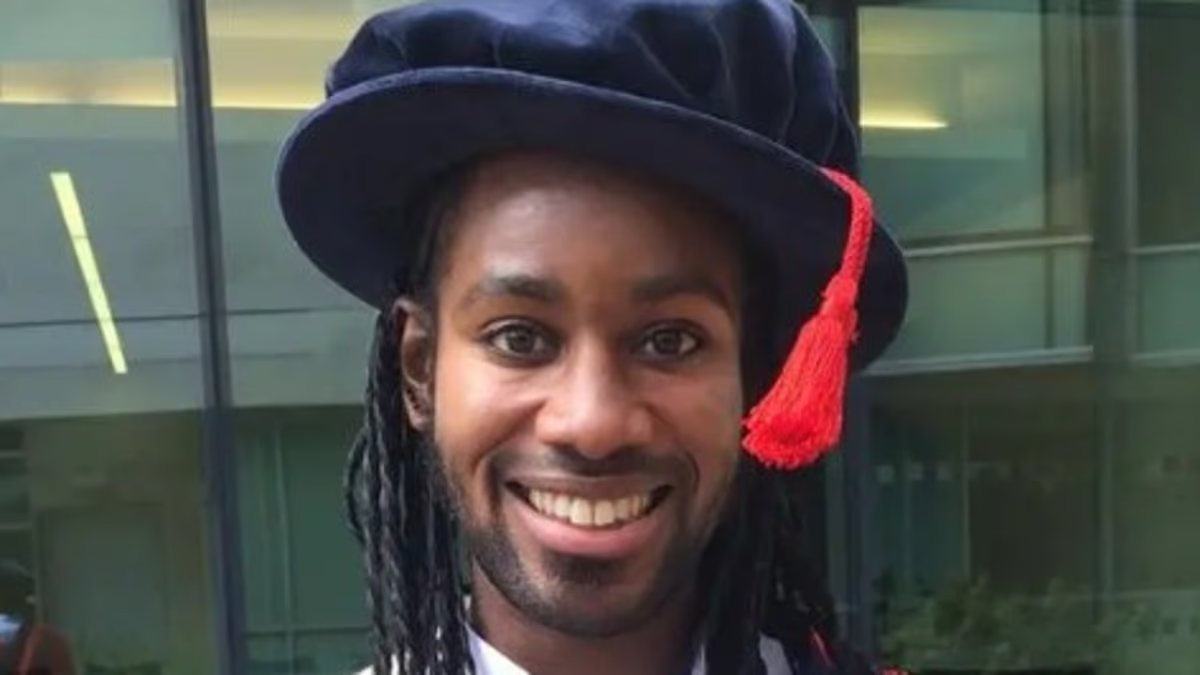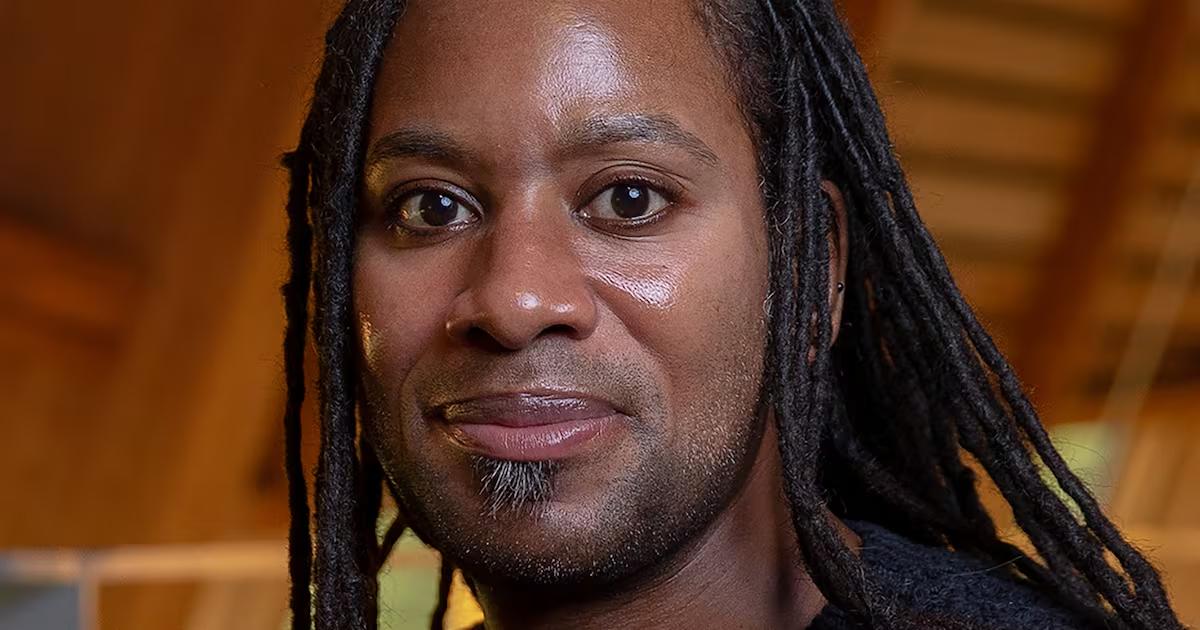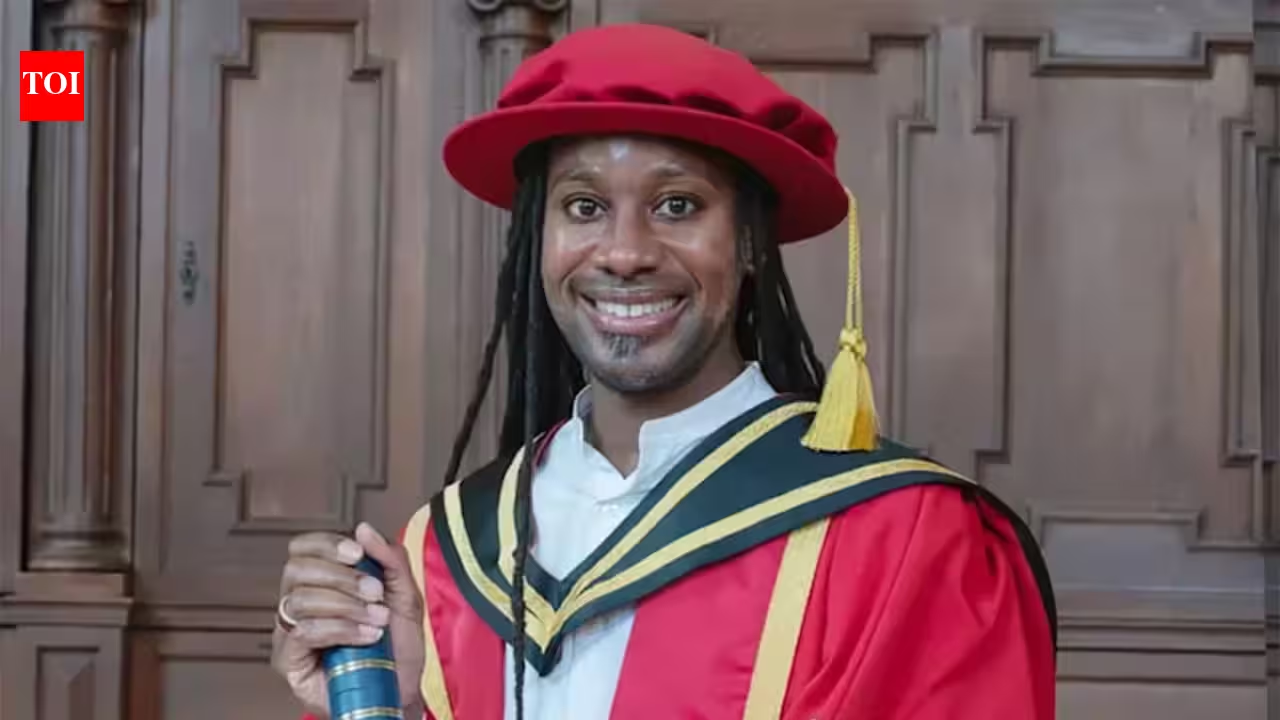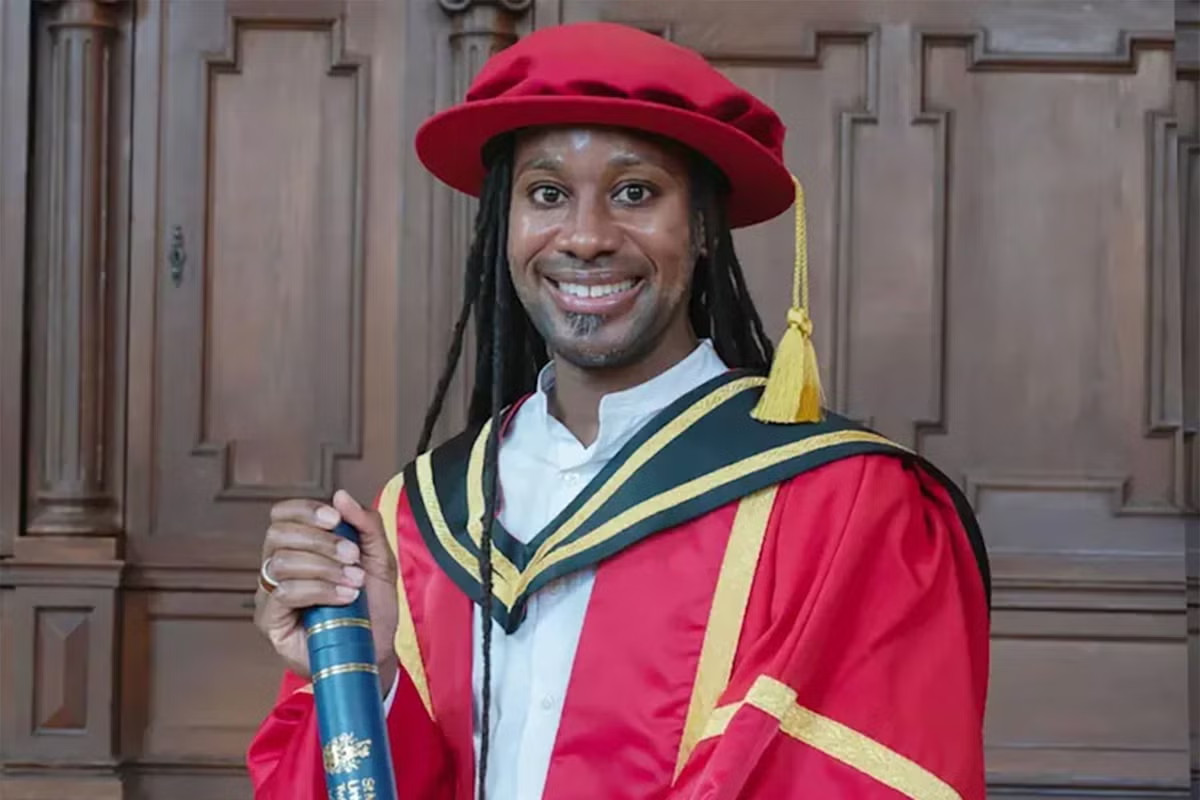
Skip to Content Subscribe Our Offers My Account Manage My Subscriptions FAQ Newsletters Canada Canadian True Crime Canadian Politics Health World Israel & Middle East Financial Post NP Comment Longreads Puzzmo Diversions Comics NP News Quiz New York Times Crossword Horoscopes Life Eating & Drinking Style Sponsored Play for Ontario Travel Travel Canada Travel USA Travel International Cruises Travel Essentials Culture Books Celebrity Movies Music Theatre Television Business Essentials Advice Lives Told Tails Told Shopping Buy Canadian Home Living Outdoor Living Kitchen & Dining Tech Style & Beauty Personal Care Entertainment & Hobbies Gift Guide Travel Guide Amazon Prime Day Deals Savings National Post Store More Sports Hockey Baseball Basketball Football Soccer Golf Tennis Driving Vehicle Research Reviews News Gear Guide Obituaries Place an Obituary Place an In Memoriam Classifieds Place an Ad Celebrations Working Business Ads Archives Healthing Epaper Manage Print Subscription Profile Settings My Subscriptions Saved Articles My Offers Newsletters Customer Service FAQ Newsletters Canada World Financial Post NP Comment Longreads Puzzmo Diversions Life Shopping Epaper Manage Print Subscription HomeBooksLifeNewsWorldWhat's in Jason Arday's memoir, due to be published days after he resigned from CambridgeA prophecy in a Rio favela, a thesis typed two fingers at a time, a brain tumour found months before the deadline. Here is what Jason Arday's memoir saysLast updated 10 minutes ago You can save this article by registering for free here. Or sign-in if you have an account.Jason Arday, a Cambridge University professor until he resigned this week amid plagiarism accusations which he denies, was illiterate until he was 18 years old, according to his publisher Simon & Schuster. Photo by Anselm Ebulue via Simon & ShusterWe independently select everything we recommend. Buying through us may earn us a commission, which supports our work.Jason Arday’s memoir goes on sale Tuesday, six days after he resigned from Cambridge as the university opened an investigation into his qualifications.Enjoy the latest local, national and international news.Exclusive articles by Conrad Black, Barbara Kay and others. Plus, special edition NP Platformed and First Reading newsletters and virtual events.Unlimited online access to National Post.National Post ePaper, an electronic replica of the print edition to view on any device, share and comment on.Daily puzzles including the New York Times Crossword.Support local journalism.Enjoy the latest local, national and international news.Exclusive articles by Conrad Black, Barbara Kay and others. Plus, special edition NP Platformed and First Reading newsletters and virtual events.Unlimited online access to National Post.National Post ePaper, an electronic replica of the print edition to view on any device, share and comment on.Daily puzzles including the New York Times Crossword.Support local journalism.Create an account or sign in to continue with your reading experience.Access articles from across Canada with one account.Share your thoughts and join the conversation in the comments.Enjoy additional articles per month.Get email updates from your favourite authors.Create an account or sign in to continue with your reading experience.Access articles from across Canada with one accountShare your thoughts and join the conversation in the commentsEnjoy additional articles per monthGet email updates from your favourite authorsSign In or Create an AccountorArday was 37 when Cambridge made him a professor in 2023, the youngest Black professor in the university’s history. The life behind it made international news. He writes that he was diagnosed with autism and developmental delays at three and did not speak until 11. His publisher, Simon & Schuster, describes him as illiterate until 18.He resigned from Cambridge and from Jesus College on Aug. 5, the same day the university said it had new information about his academic qualifications and honorary appointments. Weeks of plagiarism allegations against his 2015 doctoral thesis came first. Liverpool John Moores University, which awarded the PhD, cleared him, The Atlantic reported. Arday told The Times of London he had made mistakes but had not fabricated anything.Get a dash of perspective along with the trending news of the day in a very readable format.By signing up you consent to receive the above newsletter from Postmedia Network Inc.A welcome email is on its way. If you don't see it, please check your junk folder.The next issue of NP Posted will soon be in your inbox.We encountered an issue signing you up. Please try again“The relentless accusations, speculation and public commentary have taken a profound toll on me and on those I love,” Arday said in a statement posted by the Good Law Project. His decision to resign should not be mistaken for acceptance of the narratives around him, he wrote.The prologue and first chapter are available on the publisher’s website. The Atlantic read the finished book and obtained a copy of his book proposal. “The story that it tells should not be taken at face value; it differs notably from other versions of his life that Arday has shared in public and in private, including in the original proposal he sent out with his agent,” wrote senior editor Daniel Engber. Here are five things we learned from reporting on the memoir.The book opens on a prophecy. Arday writes that he was 21 and on a relief mission in Brazil in 2006, installing water pumps in Rio de Janeiro’s favelas. The woman translating for him put a hand on his arm and told him he was destined to do great things, and “destined for very sad and difficult things as well.”The Atlantic reported that Arday wrote that he was a teenager when a group of boys attacked him, an assault that left him epileptic. They were arrested. At sentencing he asked the judge not to jail them, he wrote in the book. Years later two of them were in his class at a London university he does not name, and had become coaches for at-risk youths. Both hugged him, and one asked him to be godfather to his child.While working on his doctorate, Arday taught by day, stocked a supermarket overnight from 11 p.m. to 5 a.m., then cleaned from 5:30 a.m. to 7:30 in the morning. What was left was the train. London to Liverpool, five hours each way. He writes that he did his 2015 thesis there, laptop on the tray table, typed two fingers at a time, The Atlantic reported.A brain tumour turned up on a scan months before the thesis was due, The Atlantic reported. Surgeons took it out. A ministroke followed and his short-term memory went with it. He had spent more than 30 months on it, he writes, and read it as if for the first time. One examiner at his thesis defence said she was struggling to see any original contribution, the standard a PhD has to meet. He passed.The tumour comes back and his marriage ends, The Atlantic reported. Then autistic burnout during the pandemic, an exhaustion that kept him in bed, and a decision to end his life. What interrupted it was a song. He put on the Eagles’ “Take It to the Limit,” and the pause was long enough for a relative to reach him. His decision to listen to the Eagles, he writes, likely saved his life. The cover of Jason Arday’s memoir, Great and Unfortunate Things. “The story that it tells should not be taken at face value; it differs notably from other versions of his life that Arday has shared in public and in private,” according to The Atlantic. Photo by Simon & SchusterArday sold the book on a 2024 proposal his agent sent publishers, which The Atlantic obtained. It tells parts of his life differently. In it he describes a car hitting him as a teenager and spending three months in a coma, conscious throughout because of locked-in syndrome, while doctors suggested withdrawing life support. He woke “miraculously,” he reportedly wrote. None of the coma is in the finished book, where those months pass at school with Arday sitting his final exams. The proposal also describes testicular cancer where the book only describes two brain tumours, The Atlantic reported.The prophecy is different too. In the proposal, the year is 2005, and the woman is a town elder known locally for foretelling people’s lives, whom Arday elsewhere calls a shaman woman. “Every event she described,” he wrote there, according to The Atlantic, “has since come to pass.” In the book he writes that “you might say” her prediction came true.The Atlantic asked his editors in the U.S. and Britain why the coma and the elderly shaman woman were not in the book. Neither answered.Simon & Schuster and Arday did not respond by deadline to requests from National Post for comment. The publisher told The Atlantic the company “is proceeding with publication.” The requests to Arday went through his literary agency and the Good Law Project.Great and Unfortunate Things goes on sale Tuesday. “This is not the end of my work,” Arday wrote in his resignation statement. “It is simply the end of this chapter.” Join the Conversation This website uses cookies to personalize your content (including ads), and allows us to analyze our traffic. Read more about cookies here. By continuing to use our site, you agree to our Terms of Use and Privacy Policy.
What's in Jason Arday's memoir, due to be published days after he resigned from Cambridge
Jason Arday's memoir goes on sale Tuesday, six days after he resigned from Cambridge. Here's what it says.
1,510 words~7 min read