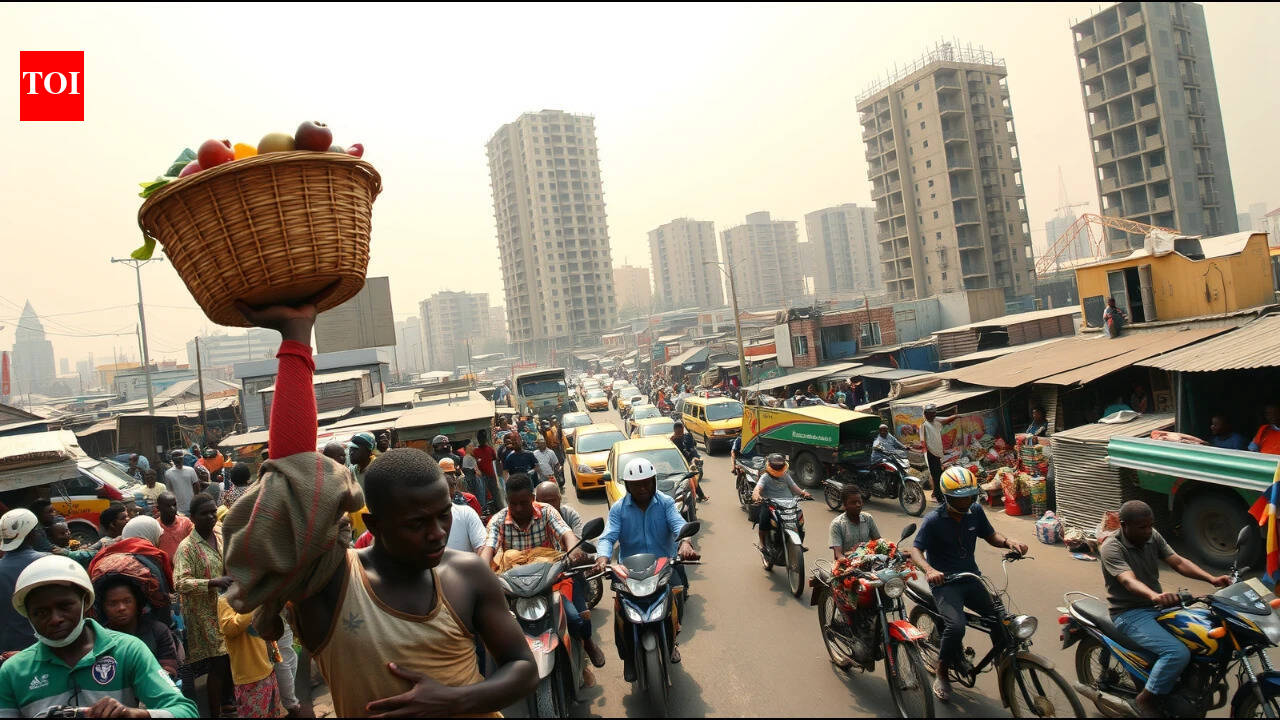
Kinshasa, the capital of the Democratic Republic of Congo, is expanding faster than almost any other city on the African continent, yet that growth has coincided with falling living standards for the overwhelming majority of its residents.
According to the World Bank, Kinshasa's population grew at an average rate of 5.1 per cent a year between 1984 and 2010, and if that pace continues, the city is projected to be home to roughly 26 million people by 2030, putting it on track to become the most populous city in Africa.
What makes Kinshasa's case unusual is not simply the scale of its growth, but how consistently that growth has failed to translate into broader economic improvement for the people living through it.How fast Kinshasa is actually growingAccording to a World Bank blog post drawing on the Democratic Republic of Congo Urbanisation Review, Kinshasa's population stood at an estimated 12 million people in 2016, already making it the largest and fastest-growing urban agglomeration in Central Africa.
A separate World Bank project appraisal document puts Kinshasa's projected 2030 population at 26 million, a trajectory that would place it among the largest cities anywhere on Earth and could see it overtake Lagos as the continent's most populous city.This growth is driven overwhelmingly by rural to urban migration rather than natural population increase alone.