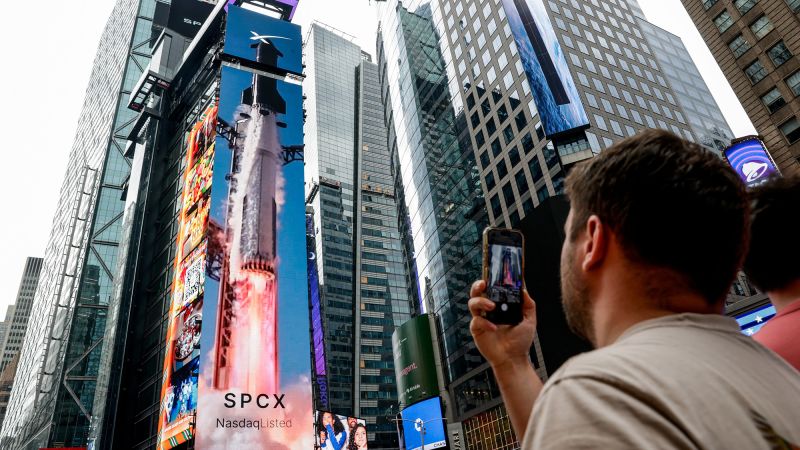
SpaceX’s first earnings report was a useful antidote to some of the enthusiasm that surrounded its market debut.The numbers looked impressive, with revenues soaring 92 per cent, losses narrowing, and Starlink – SpaceX’s profitable satellite internet business – continuing to grow.Nevertheless, shares sank as spooked investors focused on SpaceX’s AI spending plans. Piper Sandler analysts estimate capital expenditure will hit $65 billion (€56 billion) in 2027, $17 billion more than previously assumed.Shares have more than halved since June’s peak. Was the latest sell-off merited? The FT’s Lex column suggested SpaceX is the strongest case yet for dispensing with quarterly reporting. SpaceX’s value largely rests in businesses and markets that do not yet exist, argued Lex, so short-term financial statements tell investors remarkably little.Meanwhile, Elon Musk suggested people are “underestimating” Starlink. Just six weeks ago, Musk said revenues could top $1 trillion by 2031. Now, he expects to hit that number in 2030, with a “non-zero” chance of 2029.Perhaps Starlink is being underestimated, but this seems a difficult argument to make when it sits inside a money-losing company valued at $1.4 trillion.Similarly, the phrase “non-zero” is doing a lot of work. There is a non-zero chance of many things, but it’s generally better to focus on probabilities than possibilities.[ SpaceX is not just too big to fail. It is too essential to be allowed toOpens in new window ]This aside, there is a case that quarterly numbers are a poor guide to a company attempting to build the infrastructure for a new era of space exploration. Still, after an IPO (initial public offering) where analysts invoked civilisation-scale ambition and investors contemplated valuations based on what SpaceX might earn in 2040, the renewed focus on capital spending and cash flow was a refreshing return to reality. For all the talk of the future, investors still have to account for the present.
After the hype, SpaceX investors return to the numbers
For all the talk of the future, investors still have to account for the present
309 words~1 min read