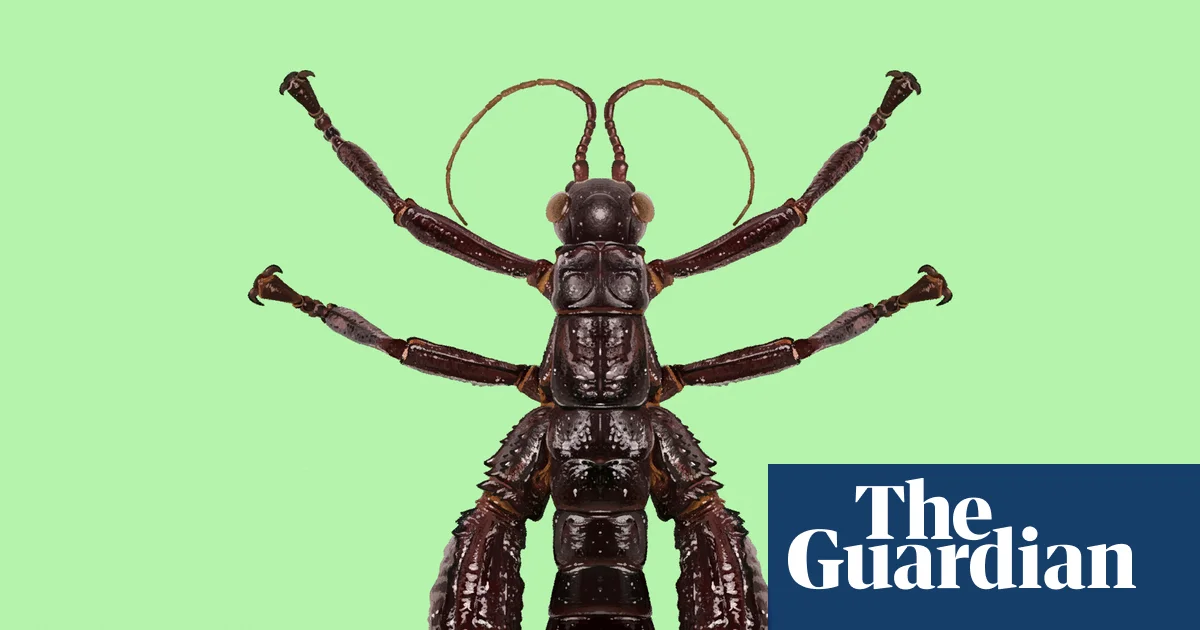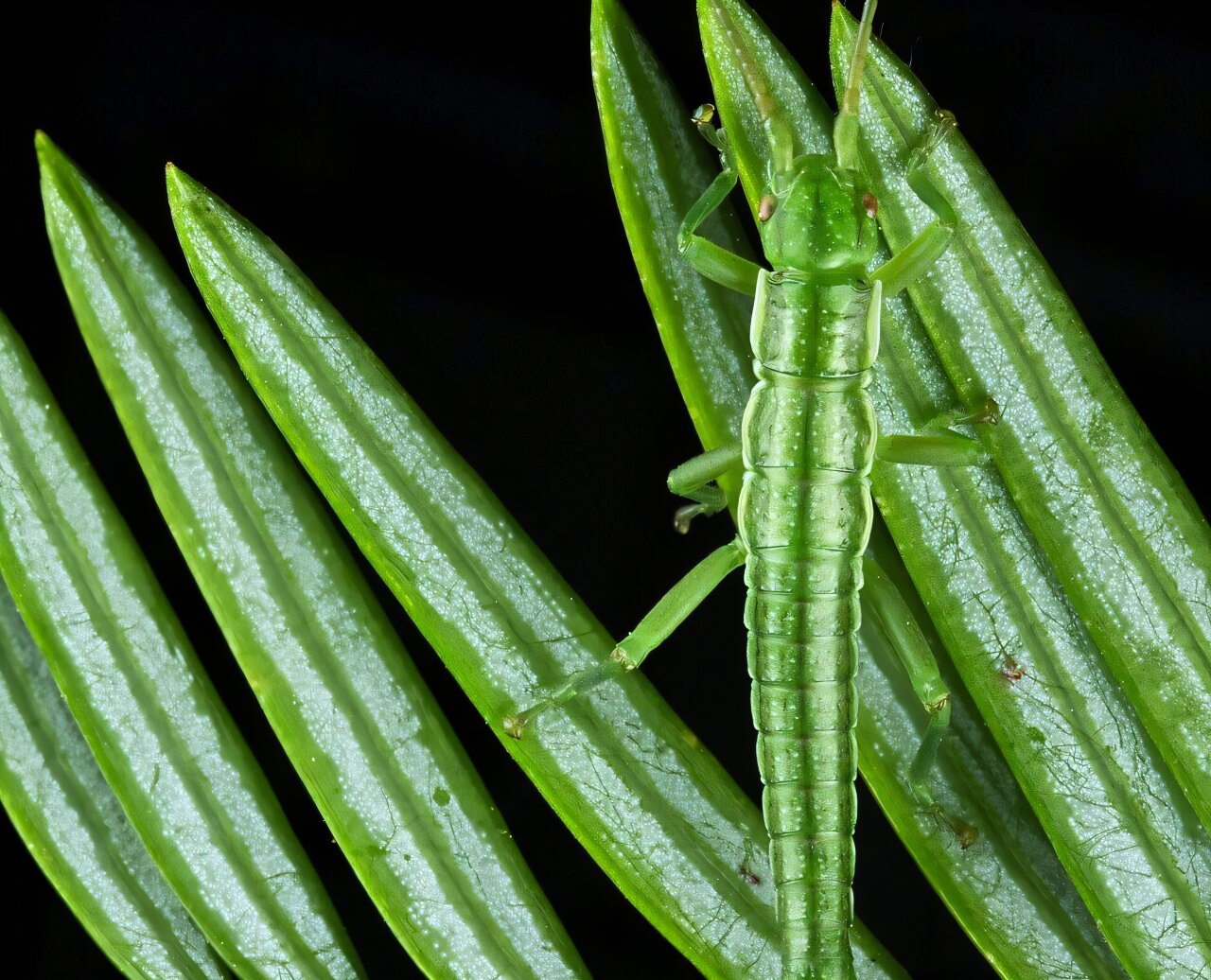
Timema poppense perfectly camouflaged on its host, Redwood Sequoia sempervirens, California. This and other, closely related, species are adapted to live on very different host plants and at different elevations. Credit: Moritz Muschick (University of Sheffield)
Scientists have made a surprising finding about how an asexually reproducing stick insect has evolved. Research led by Dr. Darren Parker, lecturer in evolutionary biology at Bangor University, studied the genes of several species of Timema (a type of stick insect), which have not engaged in sexual reproduction for 1 million years—the longest known asexual period for any insect.
The wingless stick insects are native to the far western United States and reproduce by a form of virgin birth in which an embryo develops from an unfertilized egg, bypassing the need for male fertilization. This phenomenon, known as parthenogenesis, occurs naturally in some animal species.
Because some species of Timema have reproduced without sex for so long, the scientists behind the study, published in PNAS, expected that the system that evolved to balance gene expression on the sex chromosomes would have eroded over time. But that was not the case.