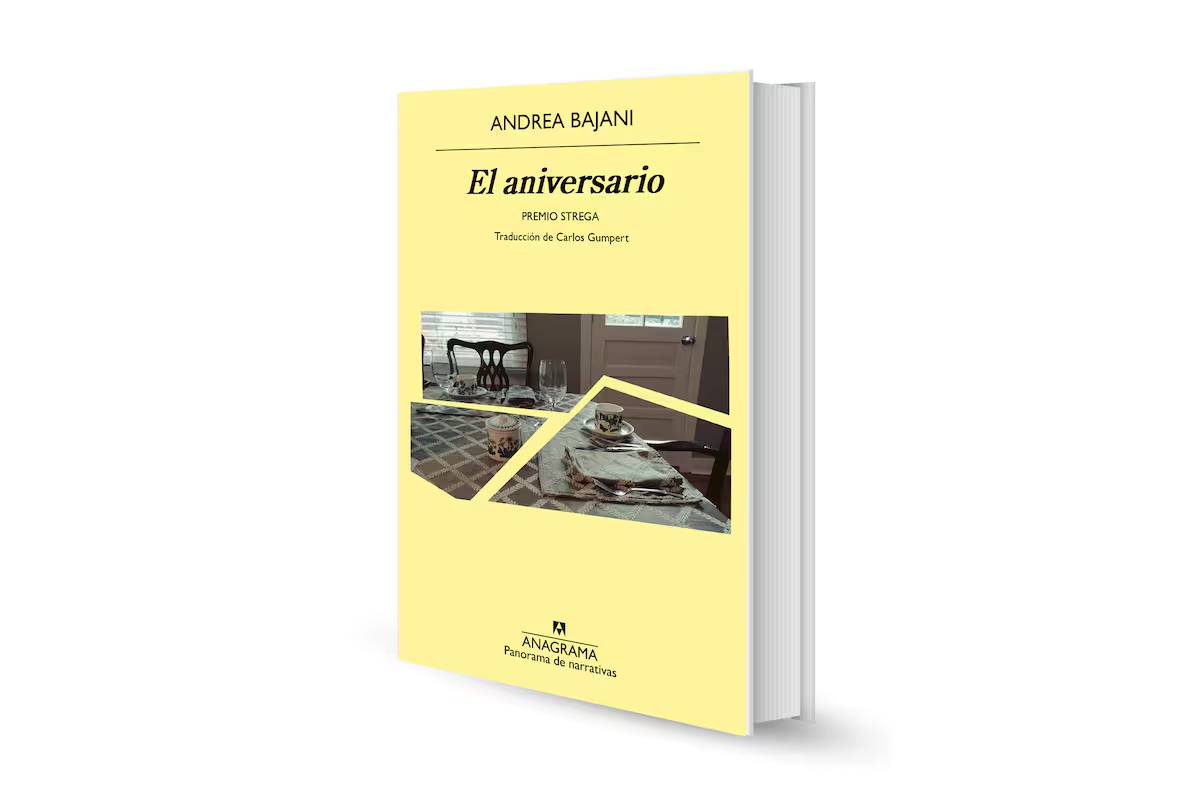
The Anniversary Author: Andrea Bajani (translated from the Italian by Geoffrey Brock)ISBN-13: 9780241766507 Publisher: Penguin ClassicsGuideline Price: £12.99; 144ppAt the end of Andrea Bajani’s penultimate novel The Book of Homes (2022), the protagonist recalls the last time he saw his mother and how she asked “Will you be back?” as they parted. His answer – “Sure” – is followed by the qualifier “not knowing yet that this would never happen.”Bajani reprises that disquieting exchange, or a version thereof, in the opening pages of The Anniversary, a brief novel-within-a-novel, which won the Premio Strega in 2025. It comes to us now in a superb translation by Geoffrey Brock. Once again, the interlocutors are mother and son. (Though nameless, they appear to have transmigrated from the previous book.) Now, ten years later, the anonymous first-person narrator dwells on his mother’s unexpected question. She wasn’t one “for parting phrases”, given her meek character and self-effacing blankness. Yet in this book too she senses, by instinct, “what had already taken place within her son” before he realises it himself. Her intuition soon acquires the weight of prophecy, for it happens, he never does see her or his father again. After breaking with his parents, he changes “phone numbers, houses, continents,” puts up an impenetrable wall and places an ocean between them – thereby creating the conditions for what he describes as “the best ten years of my life.” The narrator’s final sacrilegious act is to compose the present tale of familial estrangement. (Bajani says The Anniversary isn’t autobiographical but it certainly has the ring of emotional truth.) To circumvent the elusive and subjective nature of memory, the narrator distils certain incidents through the alembic of fiction. Thus he “extracts” his invisible, affectless mother from his totalitarian father (who in the wake of his son’s defection concedes, manfully, that he could be faulted only for “having fathered an excessively sensitive human being”). On one level, this provocative novel constitutes a critique of patriarchal society and the Roman Catholic teaching that families must stay together even if it kills them. On another, however, it’s about the narrator’s use of fiction to reconstruct a contentious past from, in Bajani’s phrase, “a landscape of shipwrecked memories”. That the book succeeds on both levels is a function of the author’s freshness of perception – he rejects the obvious at every pass – and to the quality of his spare, limpid prose. [ The Rise and Fall of American Europe: United States set to be much more transactionalOpens in new window ]
The Anniversary review: Andrea Bajani’s haunting novel of family estrangement
Italian author’s Premio Strega winner examines what it means to leave parents behind
422 words~2 min read