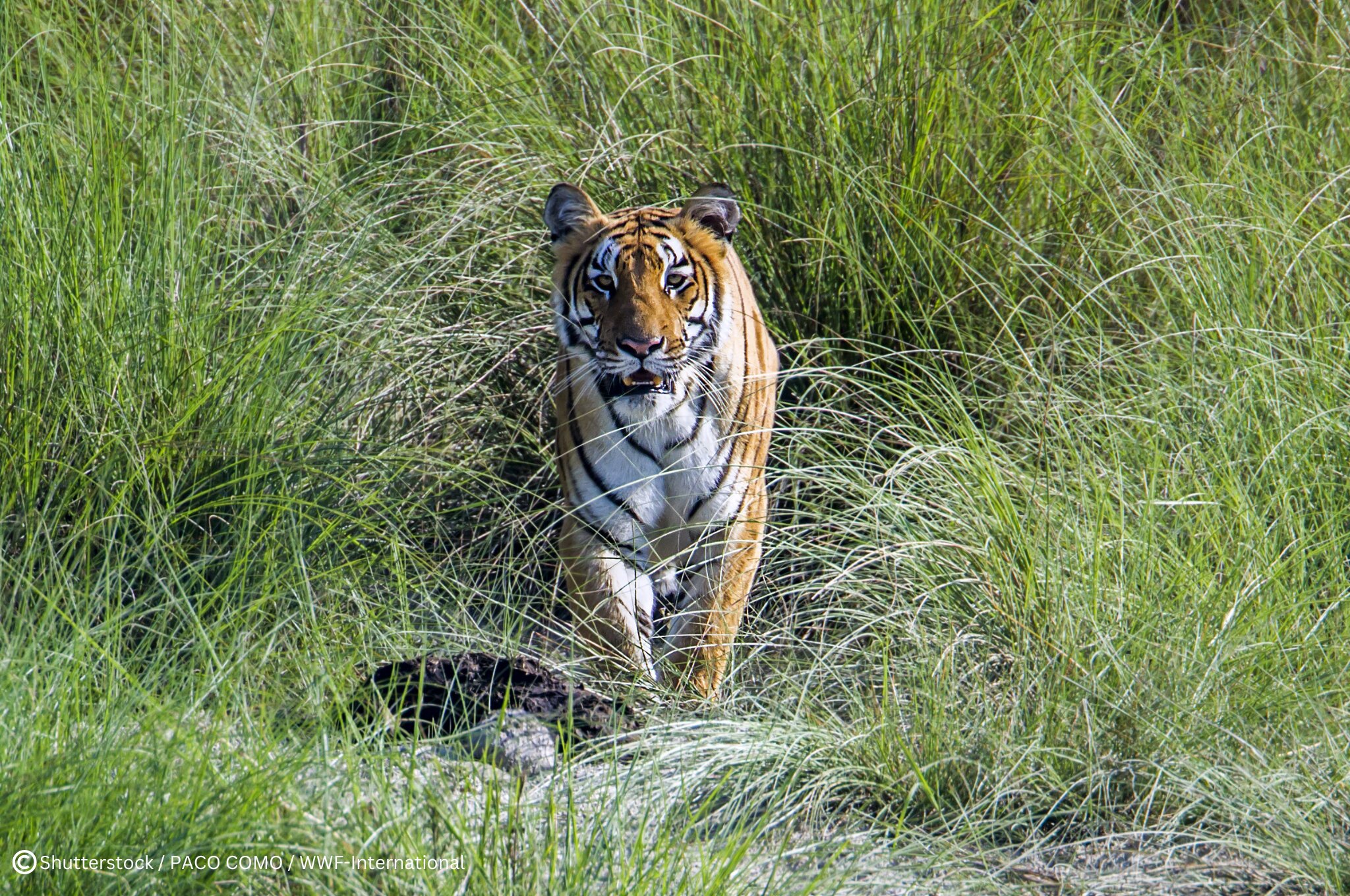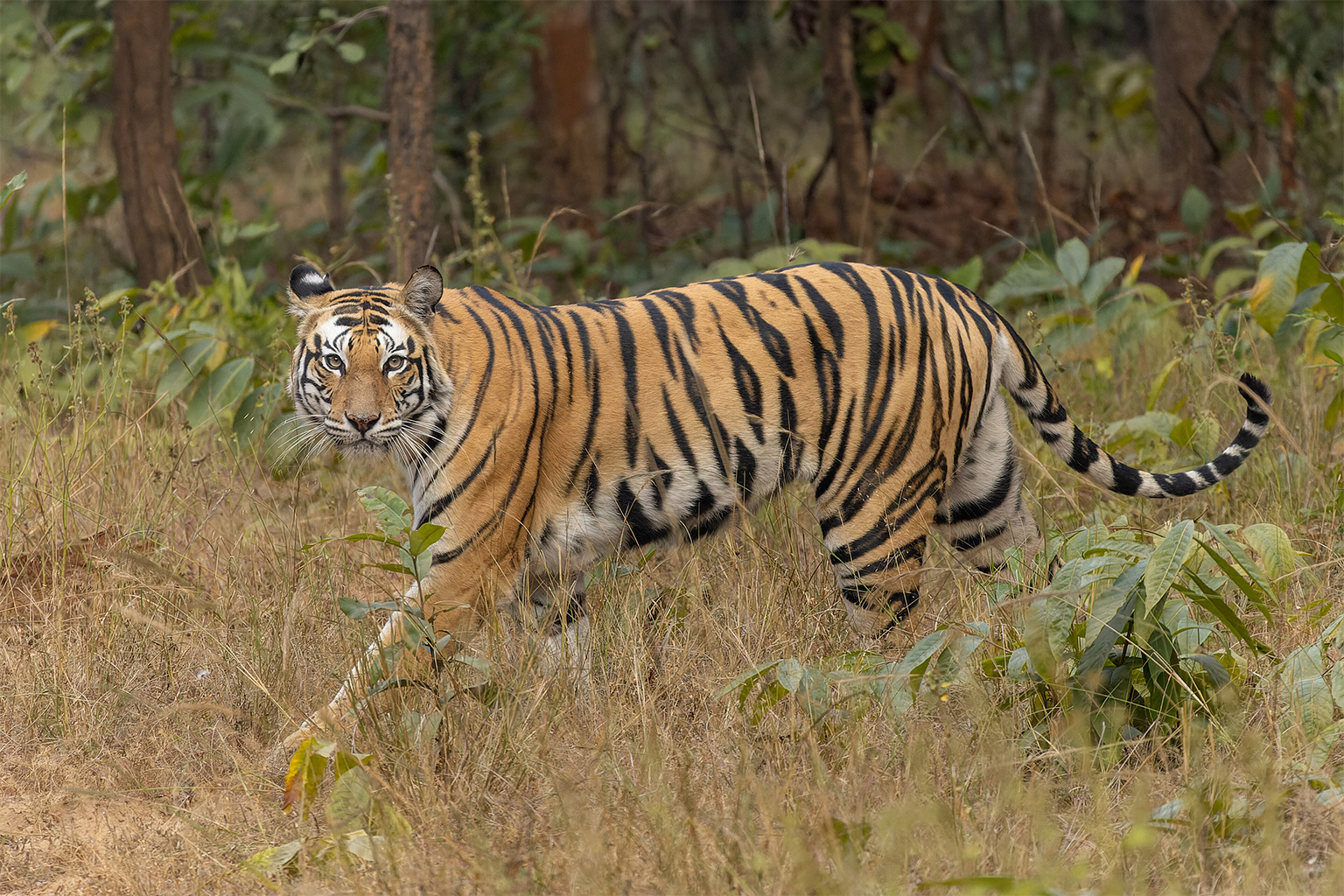
Public radio’s longest-running daily global news program.AboutContactDonateMeet the TeamPrivacyTerms of use©2026 The World from PRXPRX is a 501(c)(3) organization recognized by the IRS: #263347402.Nepal brought back its tigers. Now, it has to figure out how to live with them.As Nepal prepares to release the results of its latest national tiger census, the country’s conservation success has entered a new phase. Bringing back tigers is no longer the biggest challenge; it’s helping people and predators share the same landscape. AnimalsAugust 7, 2026Updated: August 7, 20266:25A woman walks into the Kumroj Community Forest in Nepal to cut grass.Twenty years ago, Birendra Mahato founded the Tharu Cultural Museum near Chitwan National Park — Nepal’s first national park and a UNESCO World Heritage Site — to preserve an Indigenous way of life he feared was fading. Inside, displays of practices of the Tharu people, who are native to Nepal’s southern plains, sit alongside reminders of when the nation’s forests were a hunting ground for the country’s elite. “These are sometimes very painful stories,” Mahato said, pointing to a photo of a former prime minister of Nepal in front of 300 tiger skins — nearly as many as the whole population recorded in the last tiger census.He said outsiders had nearly hunted a species of tiger to extinction that the Tharu had long lived alongside.“Even some years we lost our relatives, our ancestors from the tigers, but we didn’t mind because our ancestors thought: “We live in the same area, same region. Sometimes tigers [are] harmful for us, sometimes we are harmful to the tiger,” he said.Birendra Mahato stands outside the Tharu Cultural Museum near Nepal’s Chitwan National Park.Danielle Preiss/The WorldHunting and habitat loss had decimated tiger populations in Nepal and around the world. But after decades of decline, Nepal began one of the world’s most successful tiger recoveries. In 2010, Nepal joined 12 other countries pledging to double their numbers by 2022 — Nepal nearly tripled them instead. But now, locals are struggling to coexist with the predators.As tiger numbers have increased, so have concerns about deadly encounters with people. Panta says the solution is to keep tigers in protected areas while creating livelihoods for people outside them.“We are trying to support the local community in that way so that they do not require [entering] into the forest, putting their own life at risk,” said Ganesh Panta, the chief warden of Chitwan National Park, home to the country’s largest tiger population.A sign warning of tigers at Kumroj Community Forest in Nepal.Danielle Preiss/The WorldClose to the Indian border, the remote Madi Valley is surrounded by the park on almost all sides. Reaching its villages requires driving through the jungle, where langur monkeys, spotted deer and rhinoceros are common sights. At dusk, Sarita Bhote walked to the edge of her village, Pandav Nagar, to show where the jungle begins. A fence that was meant to separate people from wildlife had been broken by elephants. Rhinos also enter the area, as well as tigers that prey on livestock at night.Keeping people and wildlife apart is nearly impossible. Just a month earlier, Bhote’s neighbor, Bhanu Bhote, was killed by a tiger while fishing in a nearby river.“Fishing is the fastest way to earn money here,” Sarita Bhote explained, as a group of her neighbors emerged after fishing in the same river.Sarita Bhote stands at the edge of her village in Nepal’s Madi Valley.Salim Ali/The WorldThe dilemma was even clearer one morning in another village, where a group of women had gone to cut elephant grass inside the Kumroj Community Forest. Next to a sign forbidding entry before 10:00 a.m. and after 2:00 p.m. — when tigers are most active — the women climbed over the locked gate.Museum director Mahato explained that some of the residents have to work other jobs during the day and can’t avoid entering the forest in the morning.In the buffer zone around the national park, forests like this one are managed by the communities. Local residents can collect resources such as grass and firewood outside the national park’s protected area.“We are scared. But what can we do? We have to feed our goats and buffaloes,” one woman said.Water buffalo at Sarita Bhote’s house in Madi Valley, close to Nepal’s border with India.Danielle Preiss/The WorldFor families who depend on the forest, staying away isn’t an option. But tigers are showing up in these community forests more. They sometimes mistake people bent over cutting grass or collecting firewood for prey. Counterintuitively, conservationists say human disturbance can improve habitat for tiger prey.Sasank Poudel, the head of wildlife programs at World Wildlife Fund Nepal, said grass-cutting controls invasive plants and stimulates growth that attracts deer. Where prey thrive, tigers follow. One solution is to better manage the habitat deep inside the park.“If you can, provide enough cover, water and prey species for tigers to remain within the protected areas and within their home ranges and territory, so that they don’t have to venture out of the park, and so that there will be less direct confrontation,” Poudel said.The government is also hoping to expand wildlife tourism to create alternative sources of income. While Chitwan attracts over 150,000 visitors a year, Panta said places like the Madi Valley have seen little of that tourism. Chitwan National Park staff patrol the area while riding on elephants, Nepal.Salim Ali/The WorldIt has transformed Sarita Bhote’s life, who used to collect edible ferns and bamboo shoots from the forest to earn money. She lived in constant fear of encountering tigers or bears, and of not making enough. Today, she runs a homestay for the few visitors who make it to Madi, hoping to spot wildlife. Some of her guests recently saw a tiger on a guided tour.“I quit going into the jungle,” she said.But she is one of few entrepreneurs in this isolated valley with limited public infrastructure like roads and reliable electricity. For now, few tourists make the trek through the jungle to reach Madi.While Nepal’s tigers have made a stunning comeback, the challenge now is making sure the people who live alongside them aren’t left behind.
Nepal brought back its tigers. Now, it has to figure out how to live with them. - The World from PRX
As Nepal prepares to release the results of its latest national tiger census, the country's conservation success has entered a new phase. Bringing back tigers is no longer the biggest challenge; it's helping people and predators share the same landscape.
1,015 words~5 min read