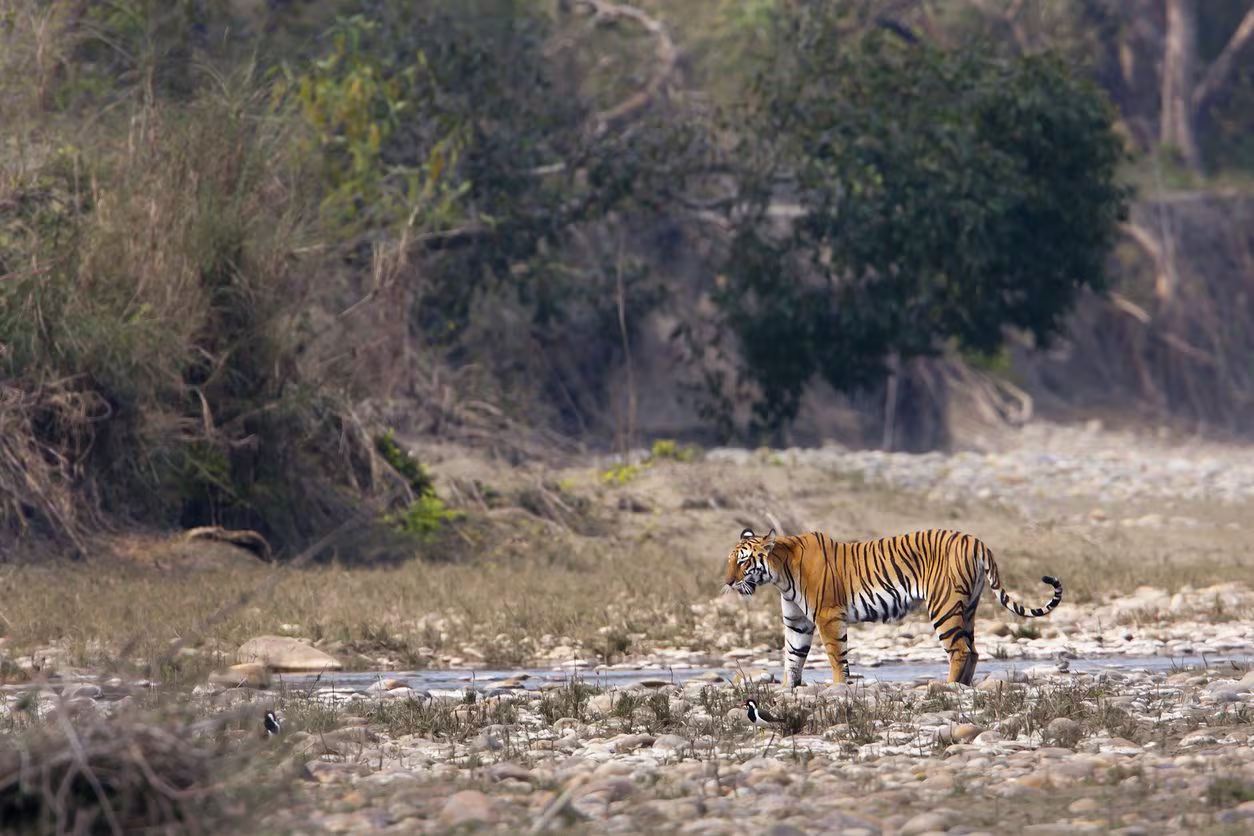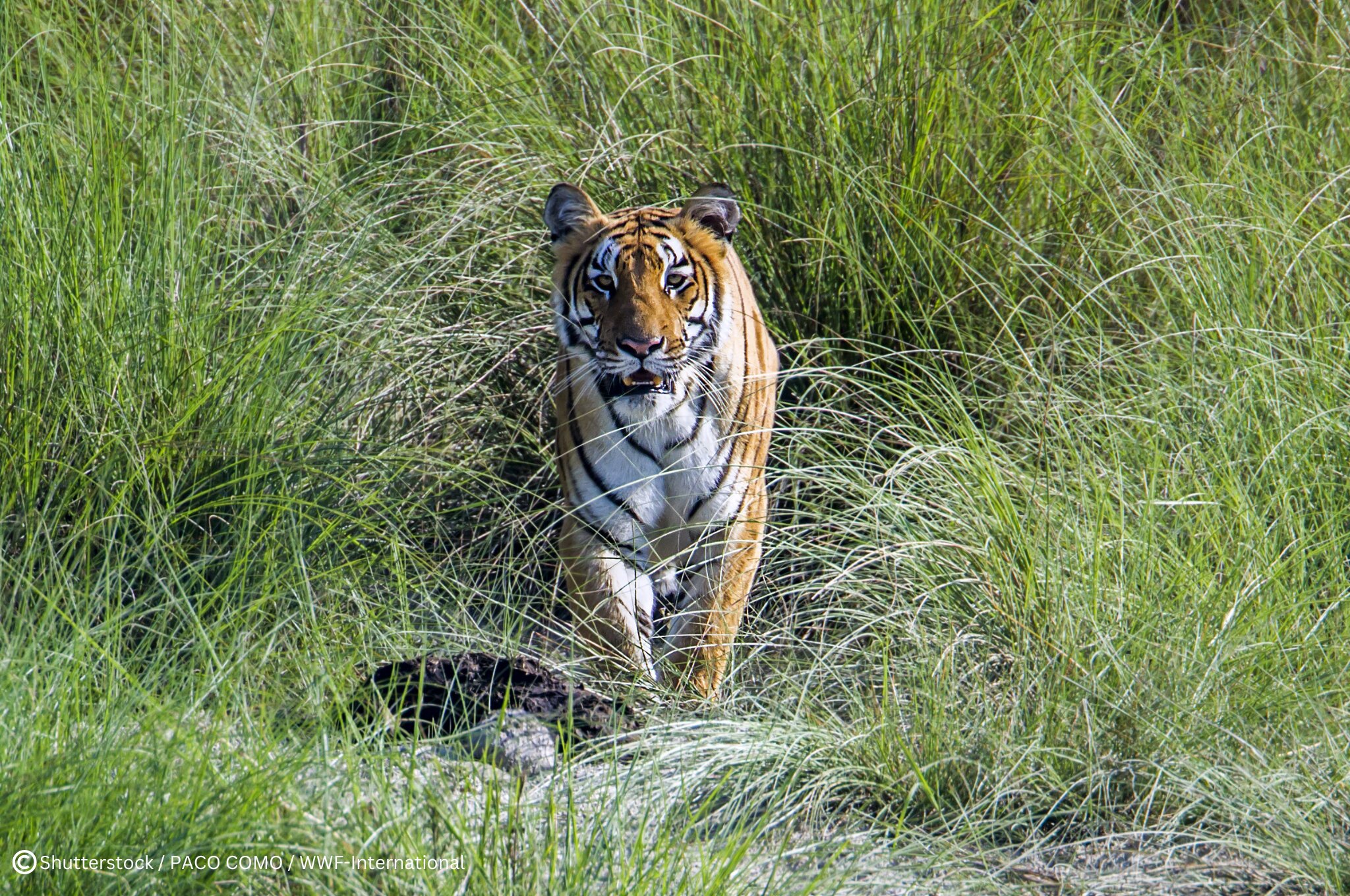
Nepal’s tiger count hit a record 429, but growth is concentrated almost entirely in the country’s newer national parks. Meanwhile Bardiya, the second-oldest park, declined 10%.Researchers point to three drivers behind the split: drought pushing tigers toward parks with better water infrastructure, cross-border habitat connectivity with India, and invasive weeds degrading grazing land in the older parks.Prey density doesn’t track with tiger growth the way expected — Bardiya’s prey density actually rose 74% (the largest gain of any park) even as its tiger numbers fell, suggesting water management, not food scarcity, is driving movement across park boundaries.Amid ongoing protests over human-wildlife conflict, some Bardiya residents suspect the government undercounted tigers there, while researchers flag a related emerging concern tigers displacing leopards into human settlements.
KATHMANDU — Nepal is now home to an estimated 429 wild tigers, up from 355 four years ago and nearly four-fold from 16 years ago, the country’s conservation officials reported on the occasion of World Tiger Day.
As the country celebrates this historic achievement, a closer look at the latest numbers reveals an uneven recovery. Nepal’s youngest national parks are driving nearly all the growth, while Bardiya, the country’s second-oldest park, has fewer tigers. This could lead to more conflict between not just people and tigers, but people and leopards as well in and around the new national parks, according to recent studies.