Imagine letting an autonomous AI agent write its own code on the fly to solve a complex user prompt. It dynamically spins up a custom data-transformation script, crunches gigabytes of intermediate metrics, and returns the result. Sounds like the ultimate dream of self-directed problem-solving, right?
Now, imagine that same AI hallucinates, slips into an infinite synchronous loop, or—worse—accidentally (or maliciously) writes a snippet that grabs your database credentials from the host process environment, executes a remote shell command, and takes down your entire production microservice architecture.
Welcome to the wild west of autonomous agent execution. When we build systems that allow Large Language Models (LLMs) to dynamically synthesize and execute code, we cross a massive architectural Rubicon. We move away from deterministic, statically engineered software and dive straight into probabilistic, dynamic execution pipelines.
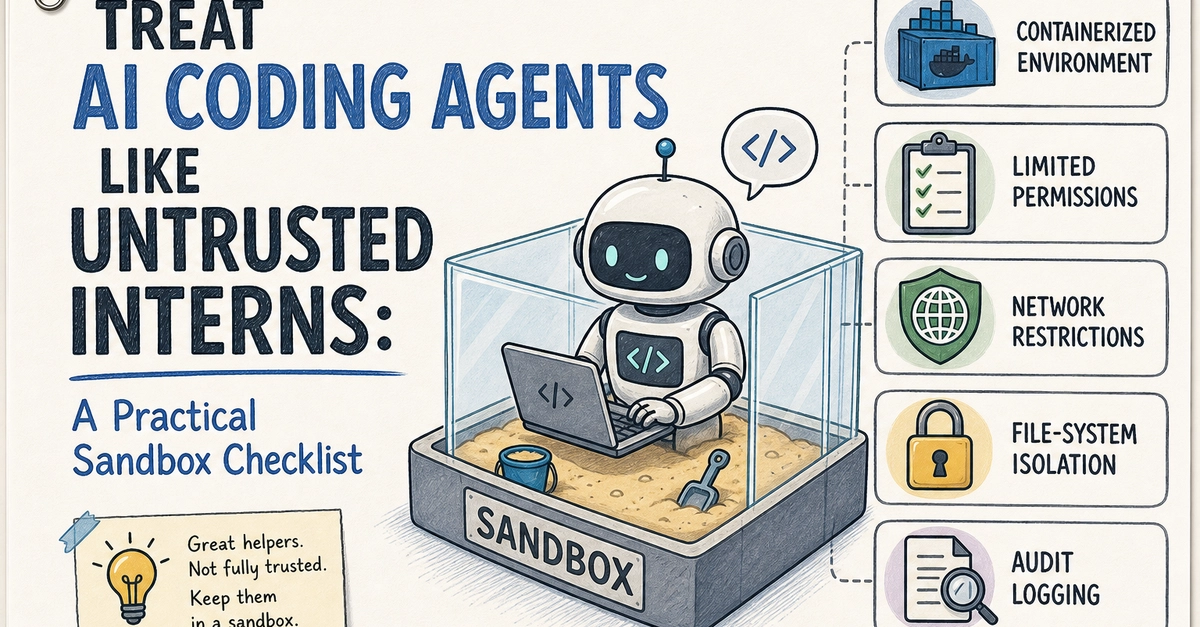
If you are building advanced AI agents in Node.js or TypeScript, you cannot afford to treat security as an afterthought. You need robust, impenetrable sandboxing mechanisms. Let’s dive deep into the theory, the hidden pitfalls, and the practical implementation of isolated code execution environments in JavaScript.