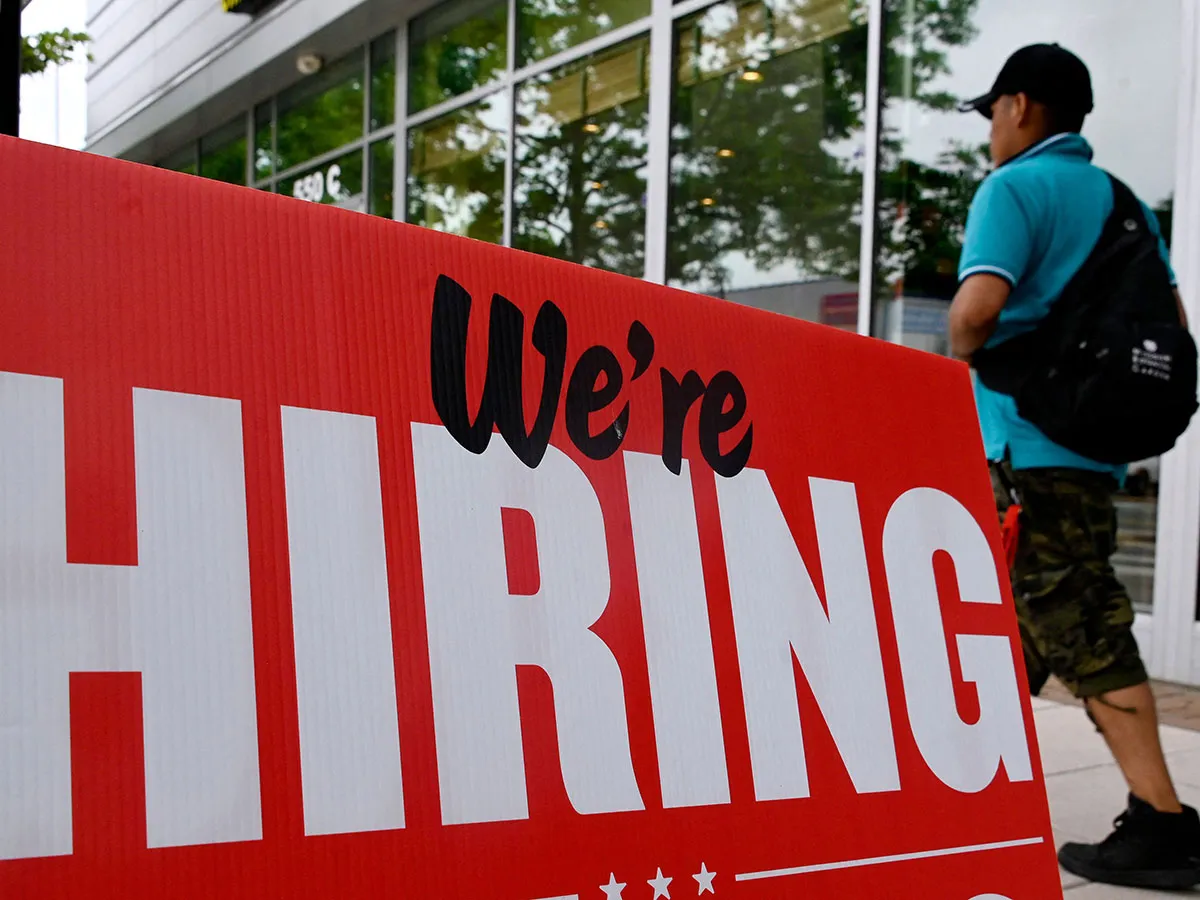
Skip to Content News Archives Economy Energy Oil & Gas Renewables Electric Vehicles Mining Commodities Agriculture Real Estate Mortgages Mortgage Rates Finance Banking Insurance Fintech Cryptocurrency Work Wealth Smart Money Wealth Management Investor Personal Finance Family Finance Retirement Taxes High Net Worth FP Comment Executive Women Puzzmo Newsletters Financial Times Business Essentials More Innovation Information Technology FP500 Podcasts Small Business Lives Told Tails Told Shopping Financial Post Store Obituaries Place a Notice Advertising Advertising With Us Advertising Solutions Postmedia Ad Manager Sponsorship Requests Classifieds Place a Classifieds ad Working Profile Settings My Subscriptions Saved Articles My Offers Newsletters Customer Service FAQ News Economy Energy Mining Real Estate Finance Work Wealth Investor FP Comment Executive Women Puzzmo Newsletters Financial Times Business Essentials HomeNewsEconomyBlockbuster jobs growth unlikely to push Bank of Canada off sidelinesEconomists say labour market is showing 'clear signs of recovery' You can save this article by registering for free here. Or sign-in if you have an account.July’s job gains were “much stronger” than economists had expected. Photo by OLIVIER DOULIERY/AFP via Getty ImagesCanada’s unemployment rate fell to a two-year low of 6.4 per cent in July as the economy added 75,000 jobs across a wide range of industries, Statistics Canada said Friday.Subscribe now to read the latest news in your city and across Canada.Exclusive articles from Barbara Shecter, Joe O'Connor, Gabriel Friedman, and others.Daily content from Financial Times, the world's leading global business publication.Unlimited online access to read articles from Financial Post, National Post and 15 news sites across Canada with one account.National Post ePaper, an electronic replica of the print edition to view on any device, share and comment on.Daily puzzles, including the New York Times Crossword.Subscribe now to read the latest news in your city and across Canada.Exclusive articles from Barbara Shecter, Joe O'Connor, Gabriel Friedman and others.Daily content from Financial Times, the world's leading global business publication.Unlimited online access to read articles from Financial Post, National Post and 15 news sites across Canada with one account.National Post ePaper, an electronic replica of the print edition to view on any device, share and comment on.Daily puzzles, including the New York Times Crossword.Create an account or sign in to continue with your reading experience.Access articles from across Canada with one account.Share your thoughts and join the conversation in the comments.Enjoy additional articles per month.Get email updates from your favourite authors.Create an account or sign in to continue with your reading experience.Access articles from across Canada with one accountShare your thoughts and join the conversation in the commentsEnjoy additional articles per monthGet email updates from your favourite authorsSign In or Create an AccountorHere’s what economists had to say about the latest jobs numbers and what they could mean for the Bank of Canada’s future interest rate decisions.Beyond the job gains, July’s lower unemployment rate was “encouraging,” given that hiring outpaced the “sizeable” 61,000 gain in the labour force, said Andrew Hencic, director and senior economist at TD Economics.“This shows the economy was able to absorb more labour market slack in July,” Hencic said in a note. “When coupled with the strong bounce-back in activity in the second quarter, some additional momentum on jobs in July is nice to see.”SUBSCRIBER EXCLUSIVE: FP West: Energy Insider brings you behind the oilpatch’s closed doors with exclusive insights from insiders every Wednesday morning.By signing up you consent to receive the above newsletter from Postmedia Network Inc.A welcome email is on its way. If you don't see it, please check your junk folder.The next issue of FP West: Energy Insider will soon be in your inbox.We encountered an issue signing you up. Please try againHencic said the labour market is showing “clear signs of recovery,” but the country’s 6.4 per cent unemployment rate “continues to signal an economy operating with some slack.”“Together with the prospect of new tariffs coming into effect on August 19th, the downside risks to the economy remain,” he said. “We continue to expect the unemployment rate to gradually decline in the coming months as the economy deals with the volatility in energy prices and potentially more trade headwinds.”Against this backdrop, TD Economics expects the Bank of Canada to hold its benchmark interest rate at 2.25 per cent for the rest of the year.July’s job gains were “much stronger” than the 15,000 economists had expected, Capital Economics Ltd. senior North America economist Ariane Curtis said in a note.“There was really nothing in the report to dislike, with the strength in employment reflecting a rise in both full-time and part-time employment and driven entirely by the private sector and to a lesser extent self-employment, while the number of public sector employees fell,” she said.Average hourly wages were up 2.8 per cent year-over-year in July but down from 3.3 per cent in June, which Curtis said will provide some “comfort” to the Bank of Canada that the recent employment gains haven’t contributed to stronger wage pressures yet.“While the Bank of Canada is likely to sound more hawkish following the fall in the unemployment rate, they are unlikely to rush into tightening policy given the ongoing softness of wage growth core inflation,” she said. “Indeed, for now we are sticking to our view that the Bank will remain on hold this year.”KPMG Canada chief economist Ali Jaffery said in a note that after holding back due to worries about trade, businesses are “getting on with it” and starting to hire again.“These job gains are not being driven by new entrants, because population and labour force growth remain relatively soft,” he said. “Rather, they reflect unemployed workers finding jobs. The number of unemployed people has declined for three consecutive months, for a cumulative decrease of 112,000.”Jaffery said the Bank of Canada shouldn’t be “too worried” about remaining slack in the economy, as “a soft housing market and subdued wage growth” are keeping inflation pressures muted.“That combined with rising global long-rates and Canada’s long-run growth rate being dented from trade tensions and lower immigration will give the Bank the bias to support Canada’s recovery for as long as it can,” Jaffery said. “We expect the BoC will stay on hold for the remainder of this year and at least into the start of next year.”Laura Ulrich, director of economic research at Indeed, said it’s worth noting that StatCan’s July jobs report showed improving trends in youth employment.Unemployment among youth ages 15 to 24 years old was 12.6 per cent in July, virtually unchanged from June but down 1.9 percentage points from a year ago. Ulrich said the summer job market is an important part of the story.“Returning students posted a 15.1 per cent unemployment rate, down more than two points compared to last summer, and for those aged 20 to 24, the rate fell to 6.3 per cent, its lowest for any July since 2018,” Ulrich said in a note. “For younger Canadians, the labour market looks a little brighter in 2026.”Ulrich said that while July’s report is “overwhelmingly positive,” the overall trend still looks “a lot more like stabilization from last year’s softness rather than true acceleration.”“But three straight months moving in the right direction is exactly how turning points begin — and if the breadth we saw in July holds into the fall, stabilization could quietly become the momentum Canada has been waiting for,” Ulrich said. Join the Conversation This website uses cookies to personalize your content (including ads), and allows us to analyze our traffic. Read more about cookies here. By continuing to use our site, you agree to our Terms of Use and Privacy Policy.
Blockbuster jobs growth unlikely to push Bank of Canada off sidelines
Canada's job growth beat expectations in July and the unemployment rate hit a two-year low. Read what the economists say
1,253 words~6 min read