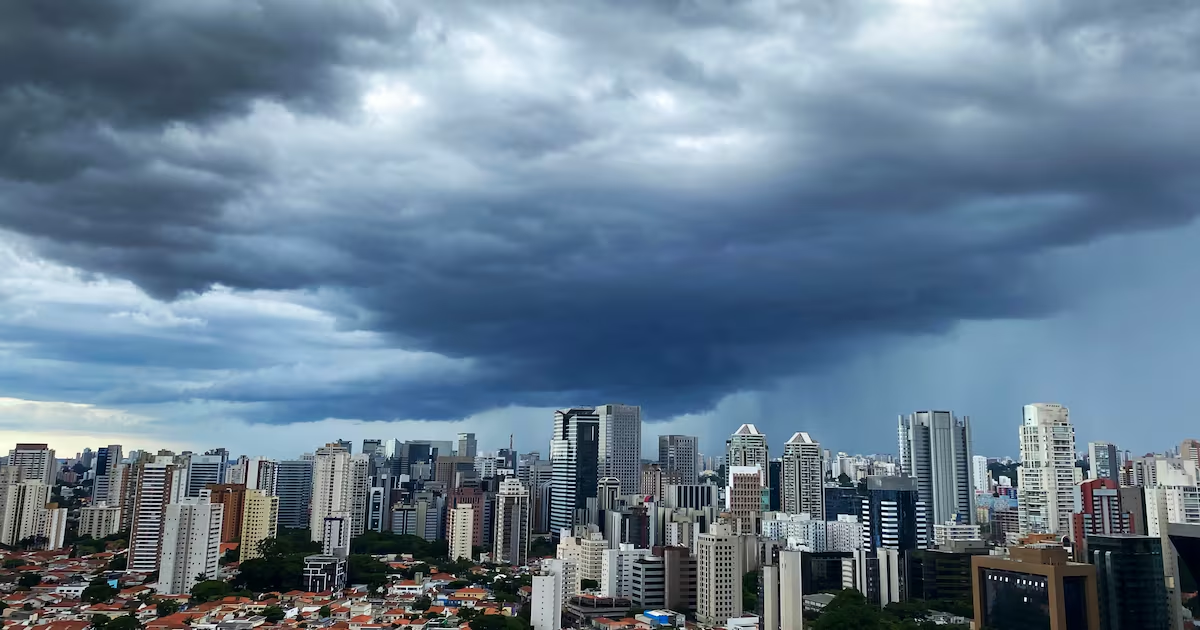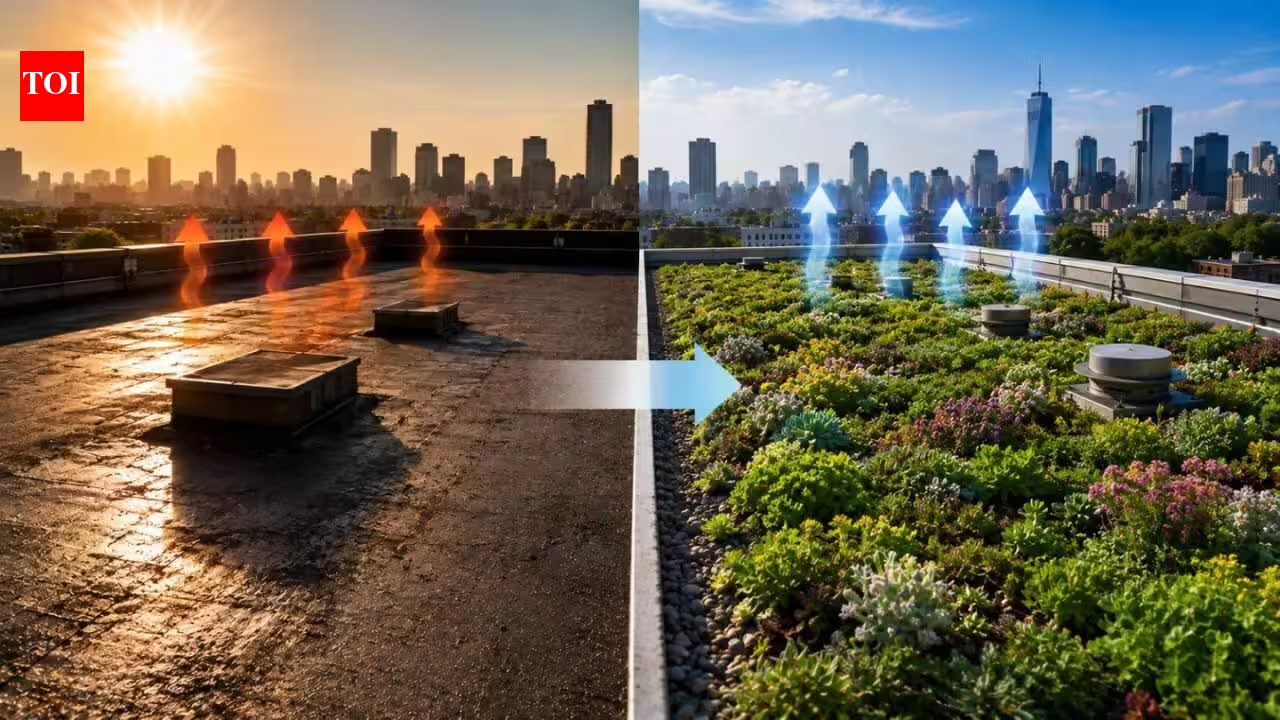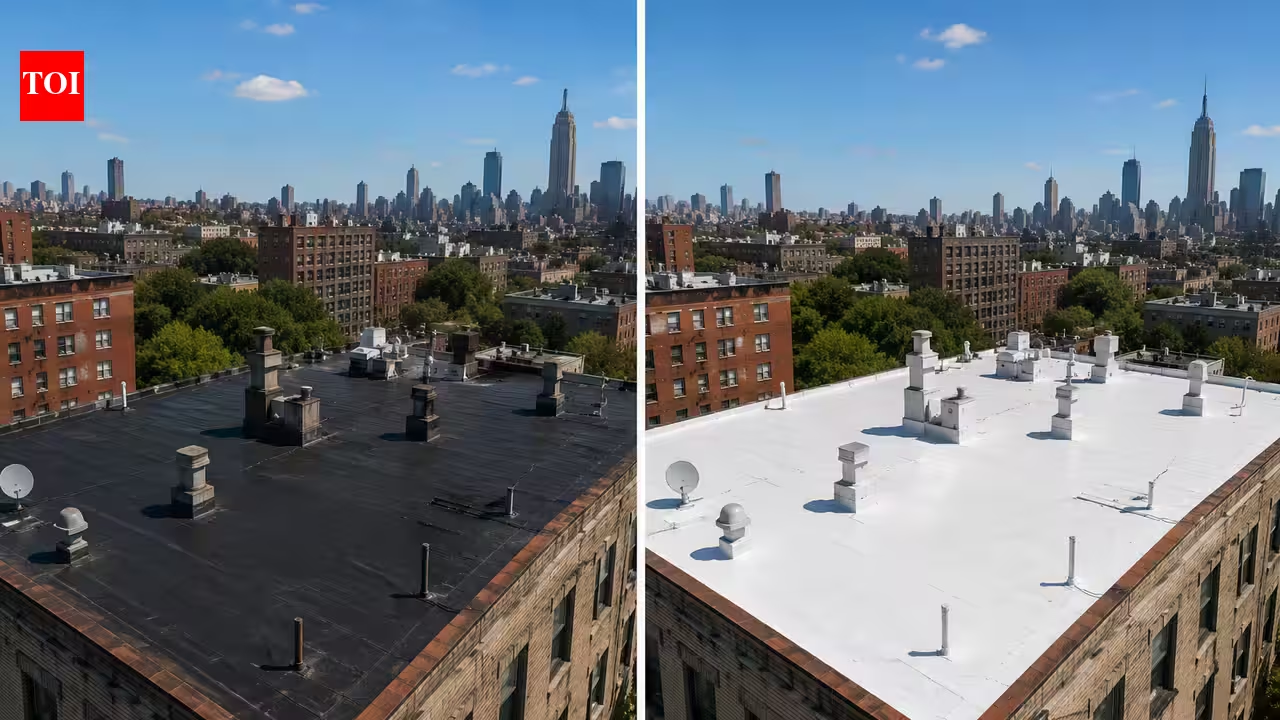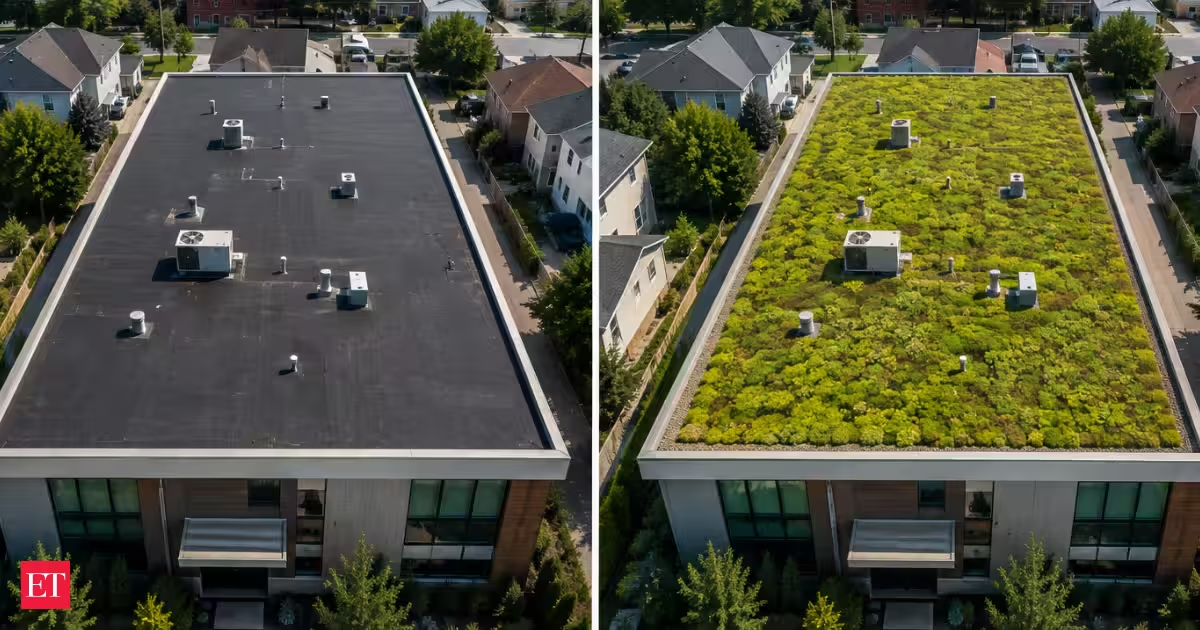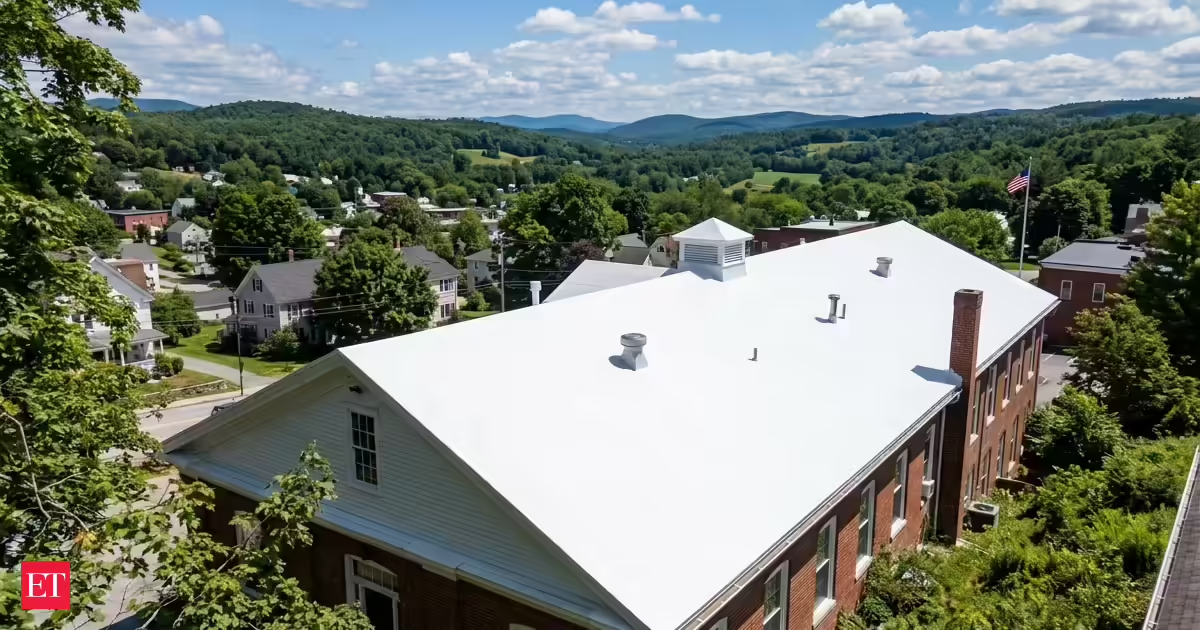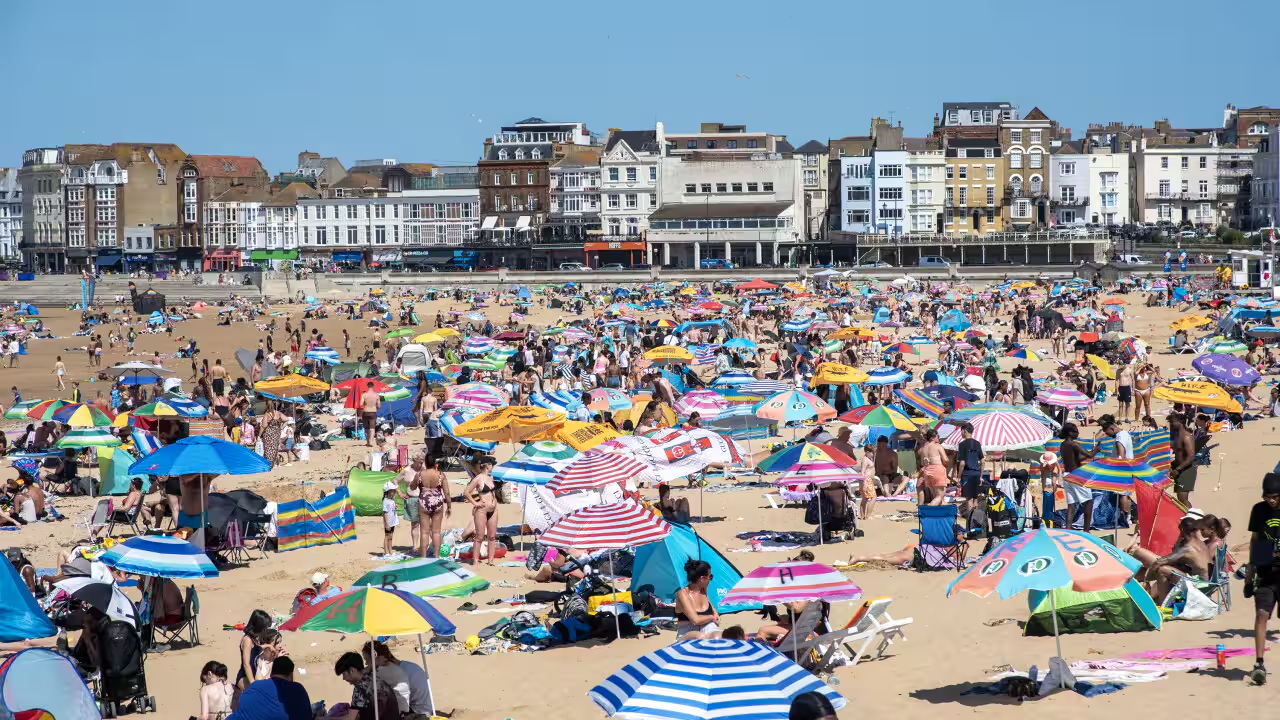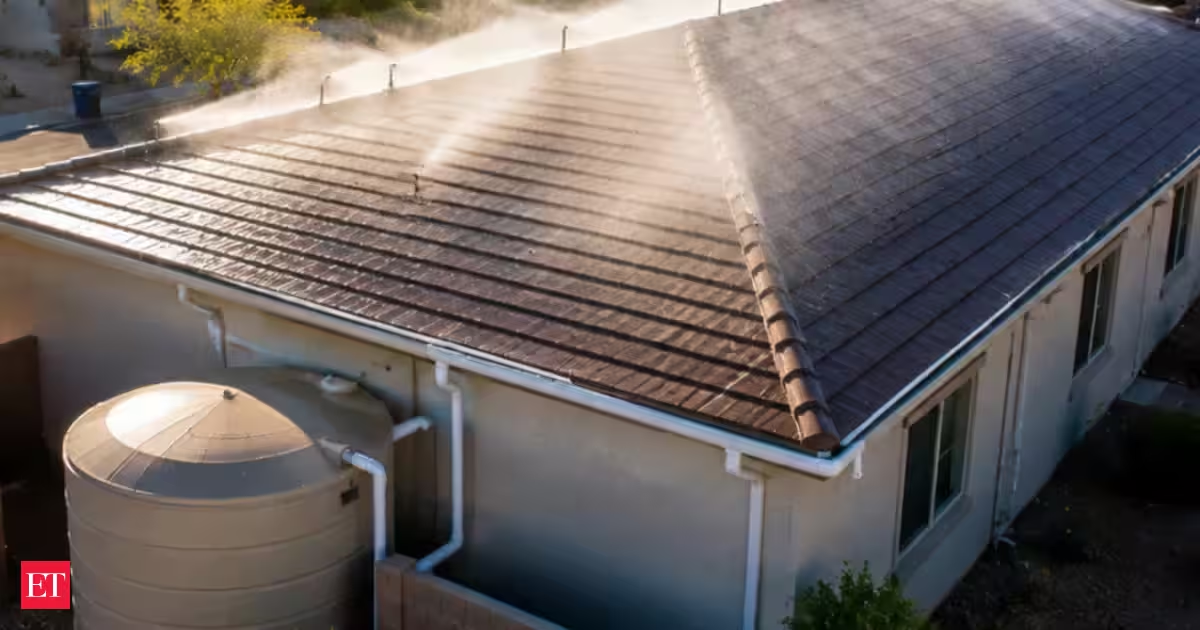
Could rooftop rainwater help cool cities during a heatwave? Researchers say it might. According to a study led by researchers at the University of Manchester, collecting rainwater in advance and spraying it onto rooftops when temperatures rise could lower cooling costs and help reduce heat stress under modeled urban conditions.Published by the journal Earth's Future, the study, "Optimizing the Rainwater Harvesting and Roof Sprinkling System to Adapt to Urban Extreme Heat," used Tokyo as a test case, applying process-based numerical simulations alongside AI optimization to model how such a rainwater-cooling system would perform. Researchers installed rooftop tanks that stored rainwater and released it as a spray when roof surfaces became too hot, drawing on water collected during earlier rainfall rather than rain falling at that moment.The simulation did not just evaluate spray timing and tank size. The study combined process-based simulations and AI to specifically evaluate tank capacity, activation threshold temperature, and sprinkling intensity. In Tokyo, the best-performing setup cut peak roof temperatures by several degrees and reduced cooling demand enough to make the system especially effective during the hottest hours, while the authors note that the benefits depend on the available roof area and local rainfall.Why the findings matter for US citiesSummers in America have become hotter in recent years, and that is not just a subjective impression. Data from the US Environmental Protection Agency shows that heatwave frequency, duration, and season length have steadily increased across major US metropolitan areas since the 1960s, intensifying the urban heat island effect.While the study modeled Tokyo's climate and rooftop density rather than US cities, researchers suggest the core strategy banking rainwater ahead of heatwaves and releasing it at critical temperatures could translate to other dense urban environments, provided local rainfall and roofing conditions align.Rooftop rainwater cooling will probably not replace air conditioning or proper insulation, but it uses infrastructure cities already have.What actually happens when you spray a roofThe system uses evaporative cooling: as sprayed rainwater absorbs heat and evaporates from the roof, it lowers roof temperatures and reduces heat transfer into the building. Lower cooling demand also reduces the waste heat released by air conditioners, which can make cities warmer. The model projected fewer heatwave days and less severe extreme-heat events in the simulation.As Dr. Zhonghua Zheng put it, air conditioning helps protect people from extreme heat, but it uses a lot of energy and releases additional heat into the city. Collecting rainwater from rooftops can help address both problems, especially in hotter years.Timing beats tank sizeThe research team found that the spray timing mattered more than the tank size. The exact parameter that exerts the greatest control over the system's efficiency is the temperature threshold selected to activate the sprinkling. While this dictates the timing of the spray, the underlying metric evaluated by the optimization loop is the specific degrees Celsius threshold rather than a temporal schedule. The study notes that larger tanks delivered diminishing returns and that increasing the water application volume did not yield more cooling. However, the paper reports that extra water failed to boost efficiency because it remained on the roof instead of evaporating, rather than reducing cooling efficiency due to a generic physical pooling mechanism.That finding could help cities with limited budgets, since it suggests effective cooling may depend more on timing than on large tanks.Final thoughtsNo one is suggesting that installing roof sprinklers alone would solve all the problems in the United States. The researchers introduce this approach alongside other means recommended by the EPA, such as cool roof technology, growing urban trees, and light pavements.With extreme temperatures expected to rise in the United States over the next few decades, cities may want to consider approaches like these. Further research would be required to test the effectiveness of this strategy. Rooftops can help cool the surrounding area, offering one way to reduce summer heat in American cities.
Rooftop rainwater could help cities stay cooler and cut heatwave days, study finds
A recent study reveals that rooftop rainwater collection could significantly reduce heat stress in urban areas, lowering cooling costs and improving city temperatures during heatwaves, especially relevant in the context of escalating summer heat in US cities.
644 words~3 min read