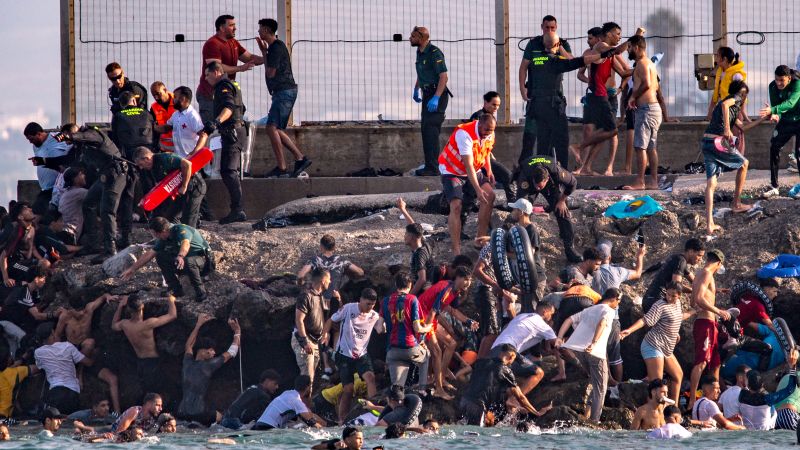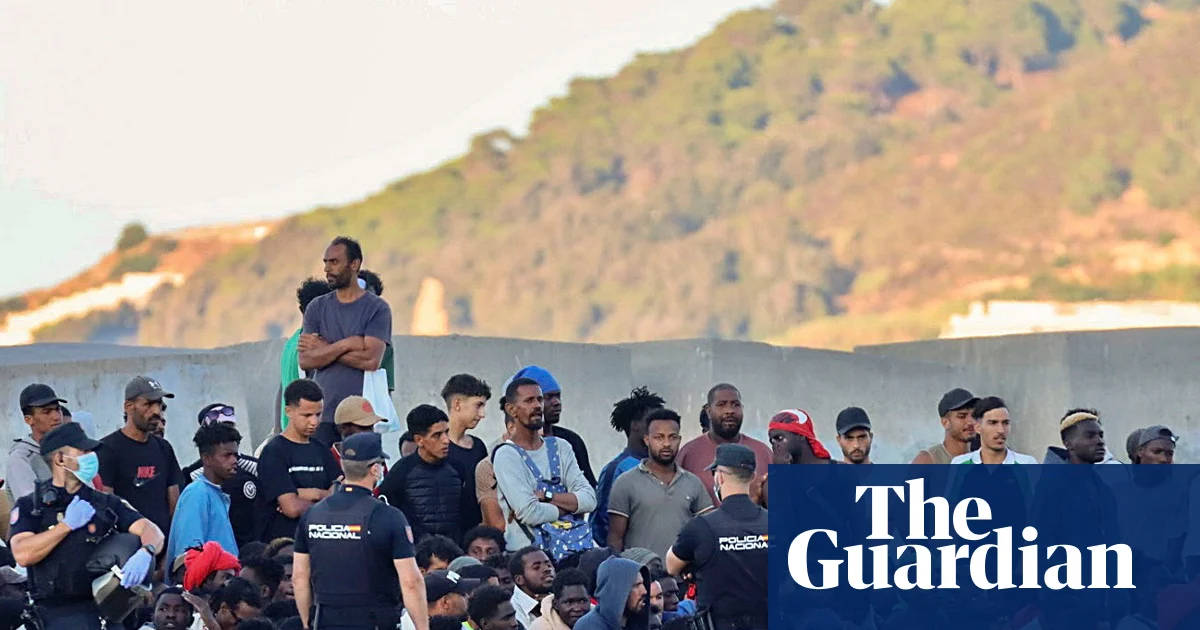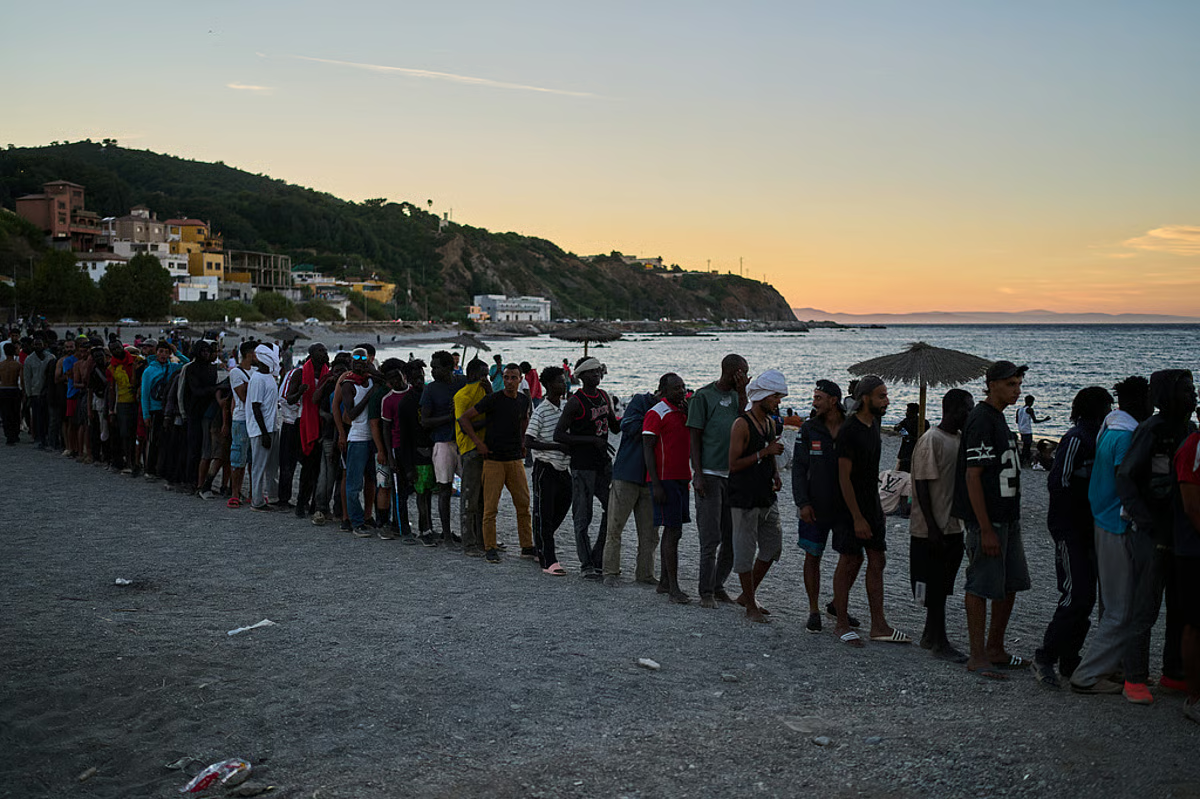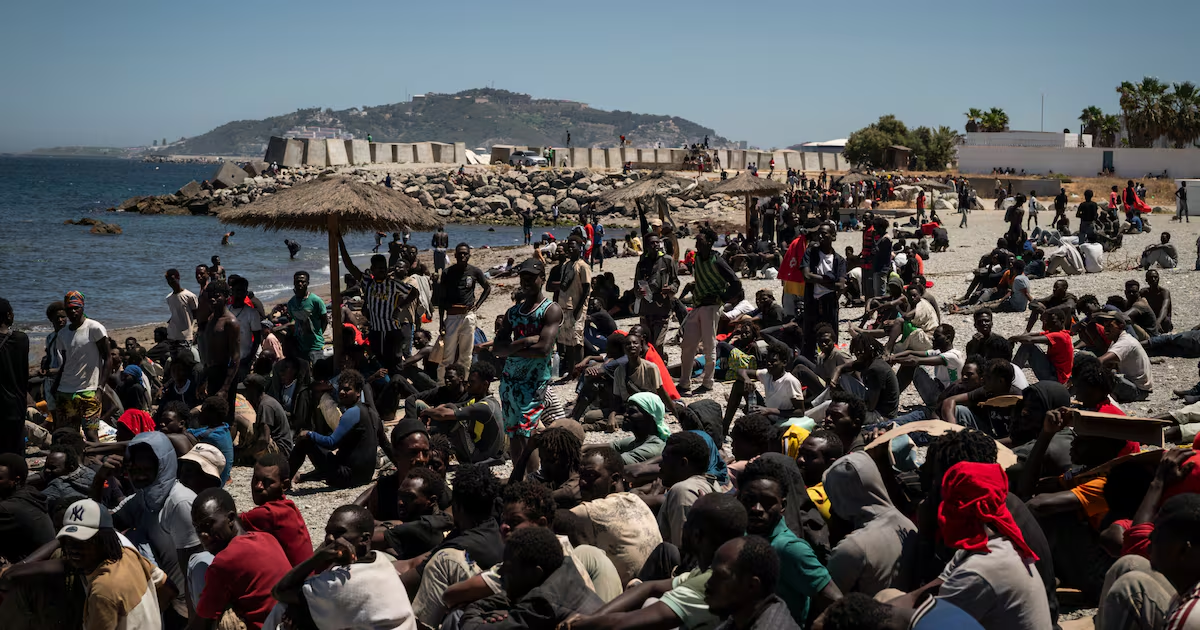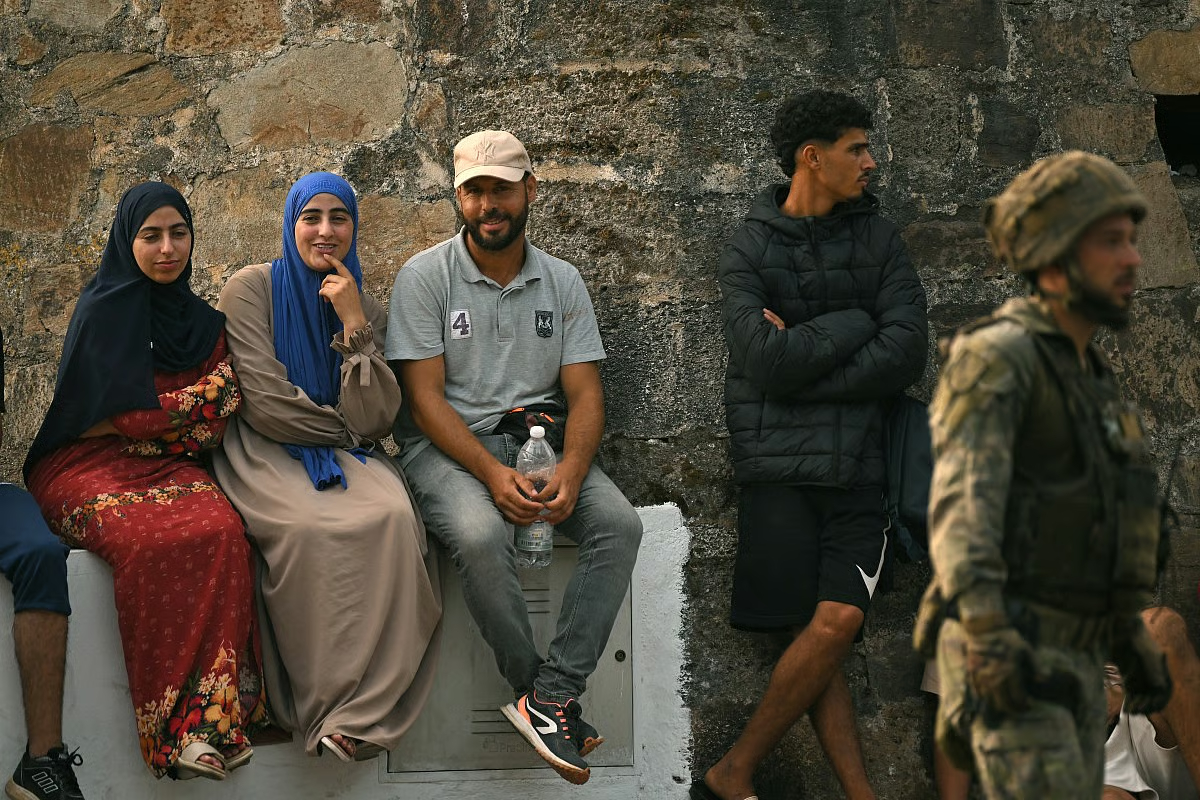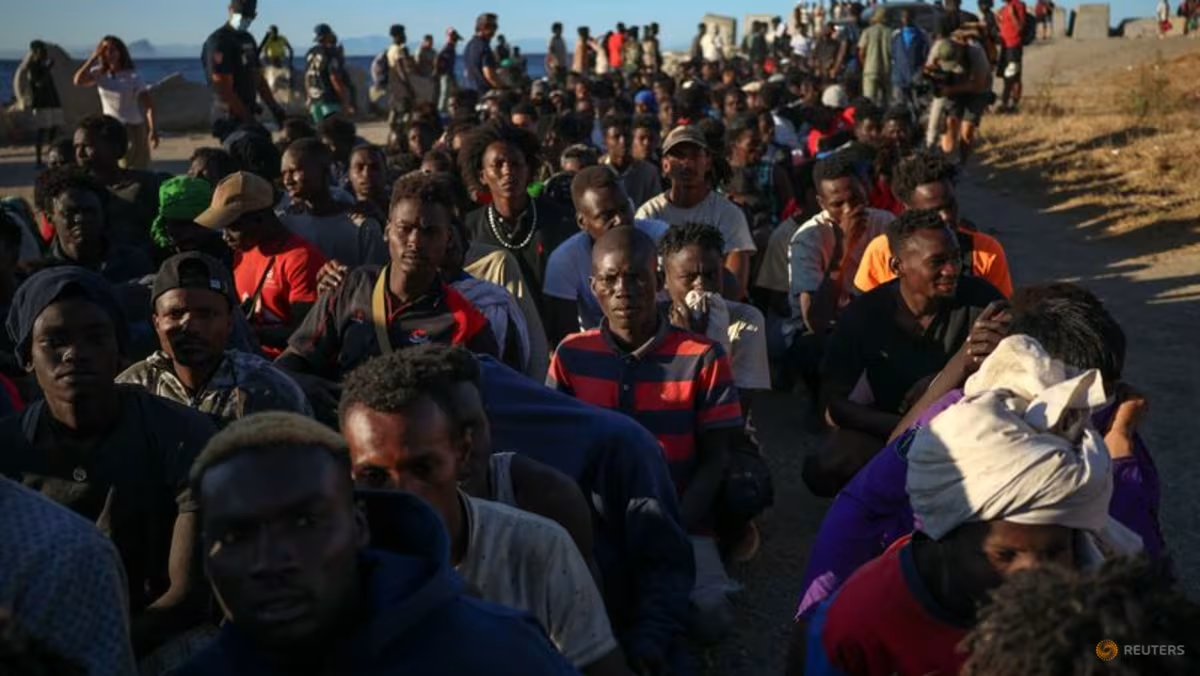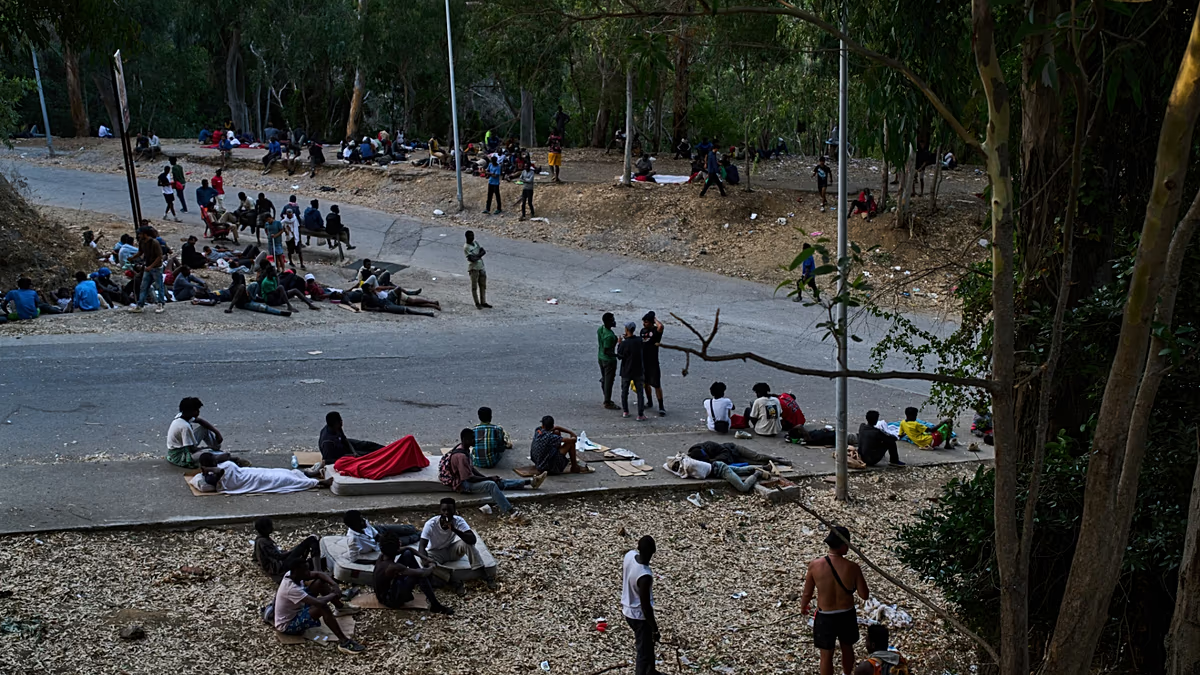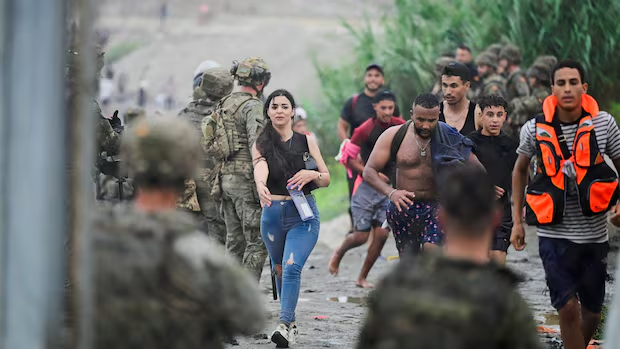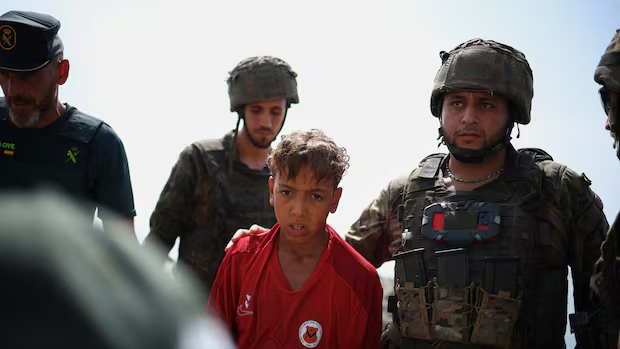
World·AnalysisUnder pressure from far-right factions, European Union politicians blamed Spain for the mass crossing at its border with Morocco last week. Their reaction missed the larger human tragedy at play, say migration researchers.Within hours of crossings, EU member states rushed to blame SpainVerity Stevenson · CBC News · Posted: Aug 07, 2026 4:00 AM EDT | Last Updated: 6 hours agoListen to this articleEstimated 6 minutesThe audio version of this article is generated by AI-based technology. Mispronunciations can occur. We are working with our partners to continually review and improve the results.A migrant from Morocco is escorted by Spanish security forces on Aug. 1 after attempting to cross from Morocco into Ceuta, Spain. (Pedro Nunes/Reuters)In Ceuta, the small Spanish territory at the tip of North Africa where more than 72,000 people crossed from Morocco last week by swimming around the border, asylum seekers wait to learn what comes next.Dozens were seen resting on a small beach on the outskirts of town this week, as the enclave's few shelters were full, mostly with women and children, according to Spanish newspaper El Pais.Aid groups that were largely absent when exhausted swimmers first stumbled ashore now distribute food and water to those who were not forced to return to Morocco. (Moroccan nationals cannot claim asylum in Spain under an agreement designating Morocco a safe third country.)While humanitarian organizations respond to the aftermath on the ground, the debate across Europe has largely been about how to prevent another mass crossing. European lawmakers debated the Ceuta crossings and migration policy in Brussels on Wednesday, after last week's events triggered one of the bloc's sharpest political disputes over migration in years.Within hours of the crossings last week, member states of the European Union rushed to blame Spain, saying decisions by Prime Minister Pedro Sánchez's government had encouraged migrants to attempt the journey. Ceuta grapples with child migrants as Spain approves millions to deal with crisisFRONT BURNERSpain’s mass border breach fuels anti-migrant backlashItaly temporarily suspended passport-free Schengen travel arrangements with Spain, even though they do not apply to Ceuta. And 22 of the European Union's 27 member states called for stronger external border controls. WATCH | Hundreds of migrants are stuck in Ceuta:Ceuta faces humanitarian challenge after surge of migrantsAugust 4|Duration 2:06Roughly 2,000 migrants are left in the Spanish enclave of Ceuta after 70,000 surged into the autonomous city last week, leaving humanitarian organizations stretched to their limits.European Commission President Ursula Von der Leyen called the crossings "unacceptable," and German Chancellor Friedrich Merz demanded Morocco "take back illegal migrants immediately."Yesterday's meeting shifted the rhetoric of the past week somewhat, with interior ministers releasing a statement in solidarity with Spain and condemning attempts to divide the bloc. But the sentiment remains. Over the weekend, new British Prime Minister Andy Burnham visited Dover, where asylum seekers land after crossing the Channel from France on boats. His visit came after Reform UK Leader Nigel Farage said that if elected, he would employ the Royal Navy to return migrants crossing the Channel back to France.Migrants wait at a beach in Ceuta on Aug. 3 following deadly mass crossings of migrants on foot and by sea from Morocco into the Spanish territory. (Violeta Santos Moura/Reuters)The reactions to Ceuta are a reflection not only of disagreements over migration policy but domestic political calculations, said Davide Colombi, a migration researcher at the Centre for European Policy Studies."Member states' governments are still acting according to their own national electorate," Colombi said, rather than in the interest of Europe. When they blamed Spain for the events in Ceuta, "they acted in their own defence rather than in co-operation." Migrants seen as security threatFor José Javier Olivas, an associate professor of political science at Spain's UNED university, the significance of Ceuta lies in how it has been discussed.He says politicians across Europe rapidly adopted language portraying the crossing as an "invasion," framing it as a security threat rather than a humanitarian emergency. Migrants hold signs reading 'asylum' in Spanish while waiting in line to receive food and beverages from the Red Cross in Ceuta, Spain, on Aug. 3. (Violeta Santos Moura/Reuters)"They have managed to impose the terms in which we discuss about the issue," Olivas said, arguing the far right's greatest victory was shifting the conversation away from the people still stranded in Ceuta. Spain has increasingly found itself out of step with much of Europe on migration. Earlier this year, Prime Minister Sánchez expanded a program allowing 500,000 undocumented migrants, many of them from Latin America, already living in Spain to regularize their legal status.Meanwhile, countries like Italy, Denmark and the Netherlands have emphasized migrant returns and tougher border enforcement. Colombi described Spain as "going in a very different direction" from many of its European partners. Possibly misleading claimsExactly what prompted tens of thousands of people to attempt the Ceuta crossing last week remains disputed.Researchers point to a combination of misleading online claims, confusion over a recent Spanish Supreme Court ruling affecting return procedures for migrants arriving by sea and questions over Morocco's border enforcement. Migrants wait outside Ceuta's temporary migrant centre (CETI), which is currently at full capacity, on Aug. 3. (Pedro Nunes/Reuters)Colombi said there was evidence of widespread misinformation encouraging people to believe anyone reaching Ceuta would be allowed to remain in Spain, while adding that Morocco's precise role remains unclear. In the days before the crossing, videos circulated widely on social media claiming migrants who reached Ceuta would not be deported. Other posts falsely suggested Spain's regularization program was about to close, creating a sense of urgency for people hoping to reach Europe.Most of those videos have since been removed.1,100 unaccompanied minors remainEuropean leaders are now focused on reinforcing borders instead of debating the fate of thousands of asylum seekers still awaiting legal assistance, shelter or asylum decisions, Olivas said. "Very few people are talking about the fact that there are thousands of people still in the streets in Ceuta who don't have water, who don't have food, who don't know what's going to happen to them," he said.Many of the remaining crossers are from other parts of Africa, having spent years travelling north in search of protection in Europe. In photographs taken by news agencies, some hold handmade reading "Asilo." One Yemeni man who fled his country's civil war five years ago told El Pais he lost his brother in the sea near Ceuta. More than 80 people drowned or were crushed in last week's rush across the border, according to official figures. Meanwhile, roughly 1,100 unaccompanied minors remain in Ceuta because they cannot be summarily deported, according to local authorities. Many are staying in makeshift accommodation or sleeping rough as charities and neighbourhood groups struggle to care for children, pregnant women and others left stranded.ABOUT THE AUTHORVerity is a reporter for CBC in Montreal. She previously worked for the Globe and Mail, Toronto Star and the New Brunswick Telegraph-Journal.With files from Nahlah Ayed, Angela Johnston and Reuters
ANALYSIS | 80 people died trying to get to Ceuta. In Europe, politics could eclipse the tragedy | CBC News
Under pressure from far-right factions, European Union politicians blamed Spain for the mass crossing at its border with Morocco last week. Their reaction missed the larger human tragedy at play, say migration researchers.
1,156 words~5 min read