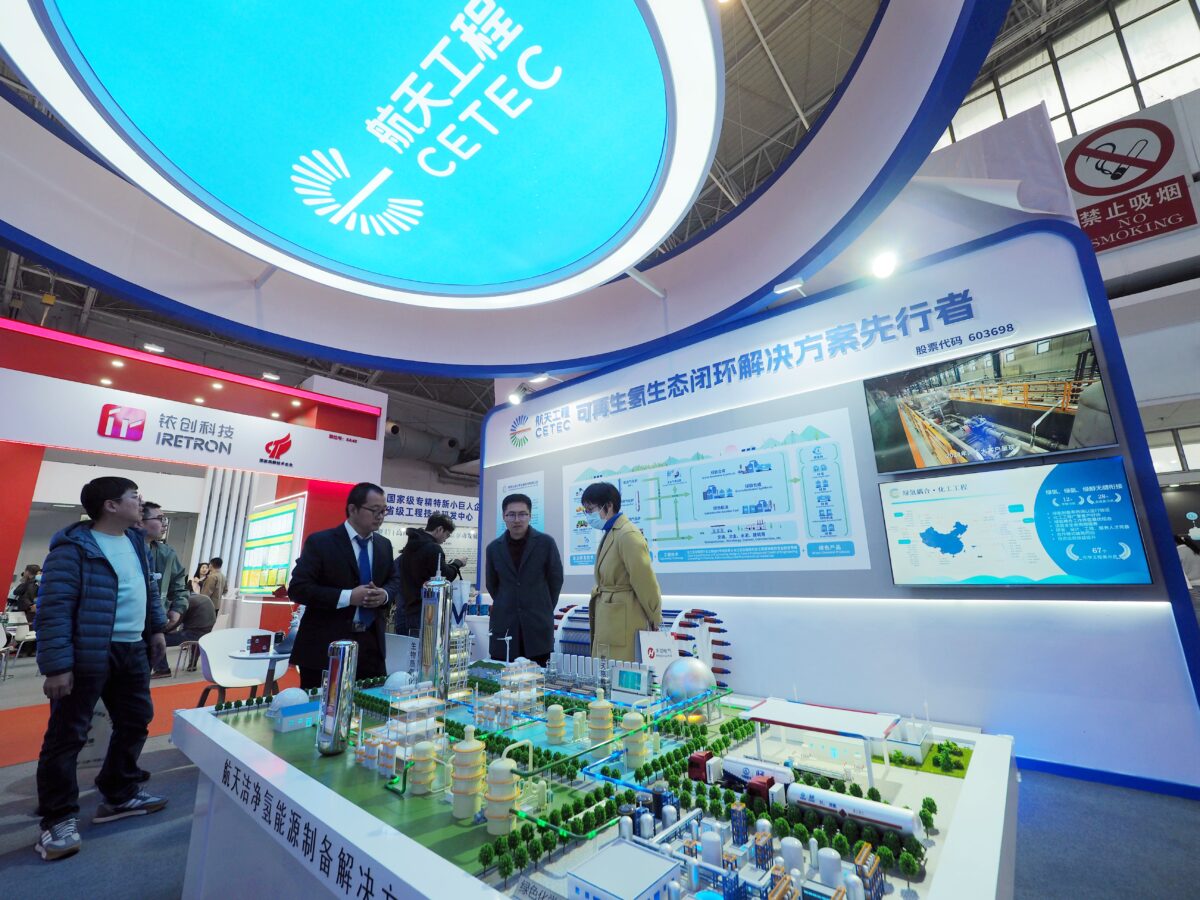
China is increasingly recognising green hydrogen as a critical element of the economy’s decarbonisation, particularly in sectors where direct electrification remains difficult. Behind a wave of ambitious announcements lies a deliberate strategic bet, and the real question is whether it will pay off.
China’s fossil fuel-driven economic development has seen coal, oil and gas become deeply embedded in industrial processes, engineering practices, transport networks and energy infrastructure. While this model delivered extraordinary growth, it also left the country heavily dependent on imported oil and gas, exposed to volatile global commodity markets and saddled with mounting environmental costs. Global markets are becoming more climate-sensitive and transforming the energy baseline is increasingly recognised as a necessary undertaking to protect economic growth.
Beijing frames the energy transition as ‘a systemic socio-economic transformation of broad and profound significance’, an undertaking which requires decarbonation on every level — from production and supply to end use. Central to this effort has been electrification, anchored by the rapid expansion of renewable power. Electricity made up 30 per cent of China’s final energy use in 2025, up from 23 per cent in 2015. Beijing aims to raise that share to 35 per cent by 2030.