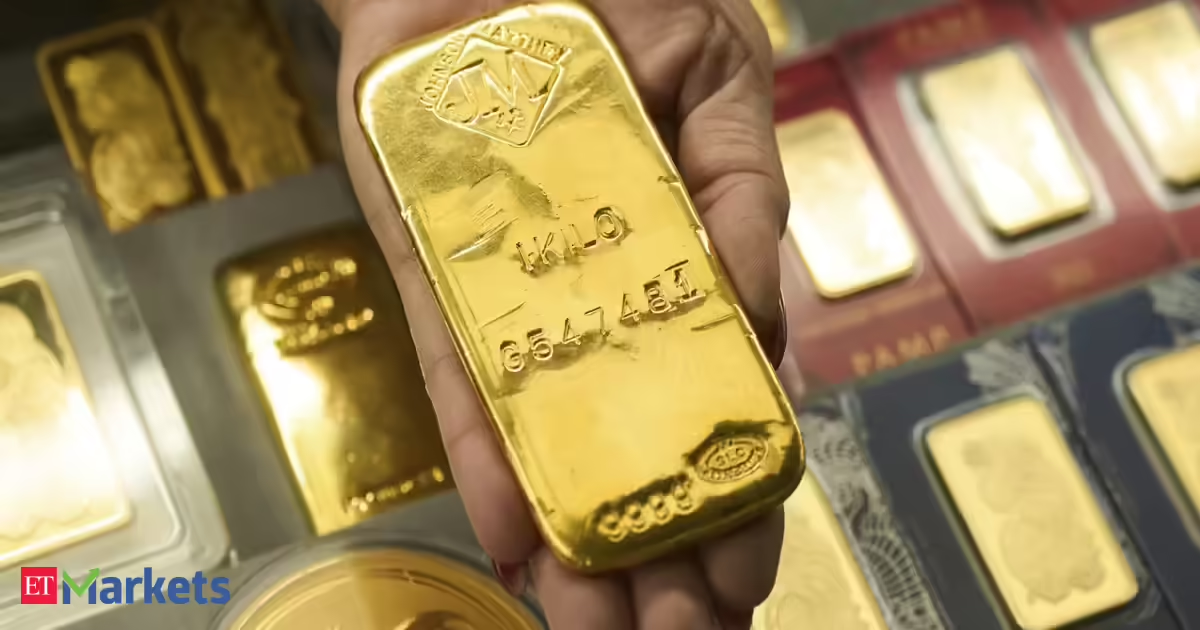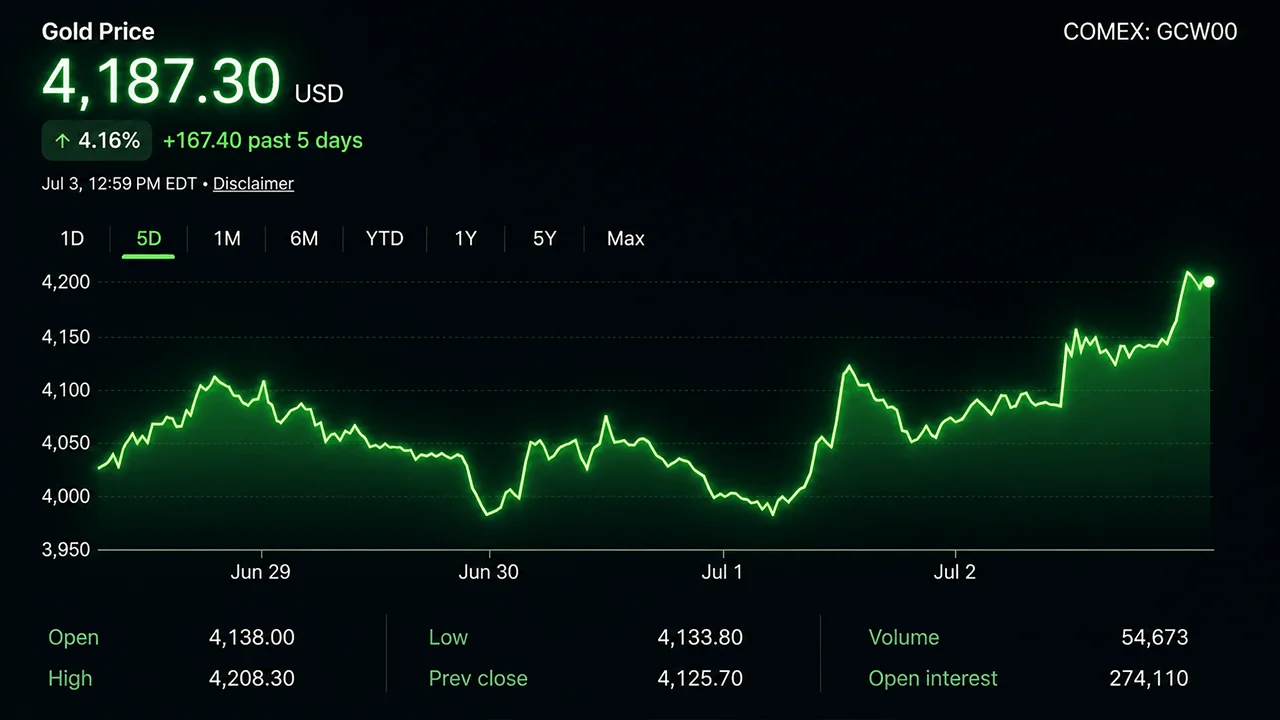
Bonds and gold prices surged while the U.S. dollar weakened following the release of disappointing nonfarm payrolls data for July. The report revealed a surprising loss of 23,000 jobs, contrary to expectations for job gains. This development has prompted market participants to reassess the likelihood of a near-term interest rate hike by the Federal Reserve, pushing Treasury yields lower and boosting gold prices, which have reached approximately $4,254 per ounce. As a result, the probability of a rate hike in the near future has diminished in the eyes of market observers.
The impact of the payrolls data is reflected in the prediction markets, where expectations for gold prices by the end of December have shown modest changes. The scenario of gold reaching $6,000 by the year’s end currently holds a 10% likelihood, an increase from previous levels. Other gold price targets for December show smaller probabilities, such as a 2.5% chance of hitting $15,000. The shift in gold pricing is associated with reduced rate hike expectations, which traditionally support higher gold prices.
The broader market response also includes a notable decline in the U.S. dollar’s value, as the weaker employment numbers raise questions about the Federal Reserve’s next moves. The declining rate-hike odds are consistent with a supportive environment for gold, as lower interest rates typically reduce the opportunity cost of holding non-yielding assets like gold.