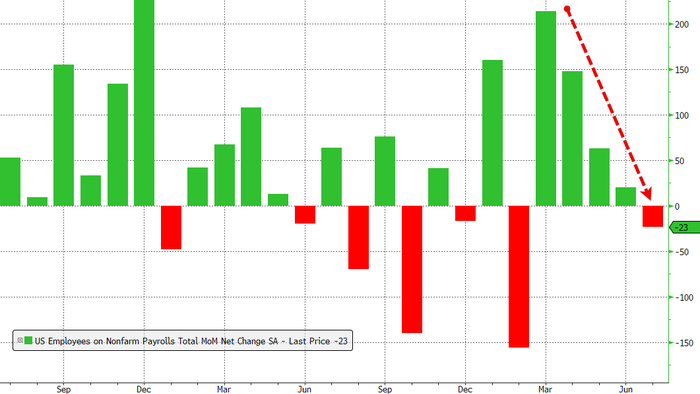
The economy lost 23,000 payroll jobs in July, the Bureau of Labor Statistics reported Friday, as businesses contended with the ongoing energy supply shock from the war with Iran.Forecasters had expected payroll job growth to be 88,000, adjusted for seasonal variations, so the report was a major miss and a bad sign for the health of the economy. The gains from the previous two months’ reports were also revised down, pointing to an overall slowdown in hiring.The unemployment rate, though, fell a tenth of a percentage point to 4.1%. The fact that unemployment fell in the month to a historically low rate is an encouraging signal.
Mark Hamrick, chief economic analyst for the Hamrick Brief, told the Washington Examiner that, broadly speaking, the report was disappointing.“You have the first negative print on payrolls since February,” he said. “Now we’re ratcheting back the average jobs creation for all of this year on a monthly basis, so the monthly average is 61,000.”Hamrick also pointed out that the decline in the unemployment rate was because labor force participation declined last month.“But, clearly, lack of substantial jobs creation is a problem,” he added.Friday’s report suggests more trouble ahead for President Donald Trump, who has been weighed down by historically low consumer sentiment and voter frustration over too-high inflation.Much of the recent surge in prices is a result of higher energy prices stemming from the war in Iran, which sent gasoline prices much higher, dragging up overall headline inflation.Months later, the conflict is still not fully resolved and has been characterized by start-and-stop negotiations and many open questions. The halt of oil tankers through the Strait of Hormuz at various times has driven major increases in the price of oil.The July jobs report adds to Trump’s list of economic concerns. A slowdown in the labor market would compound the problems facing Republicans heading into the midterm elections.