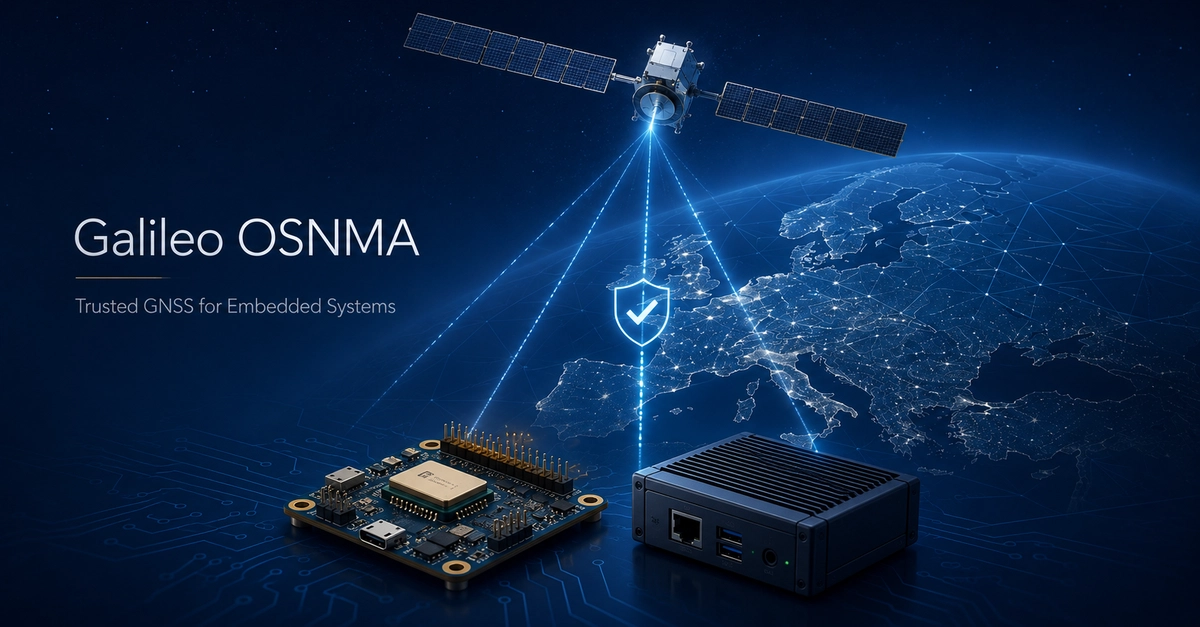
Galileo OSNMA and Galileo HAS are changing how an embedded system can use satellite navigation. The job is no longer limited to calculating coordinates: a compatible receiver can verify the authenticity of Galileo navigation messages, use high-accuracy corrections, and contribute to a more resilient PNT architecture for drones, robots, vehicles, industrial systems and distributed infrastructure.
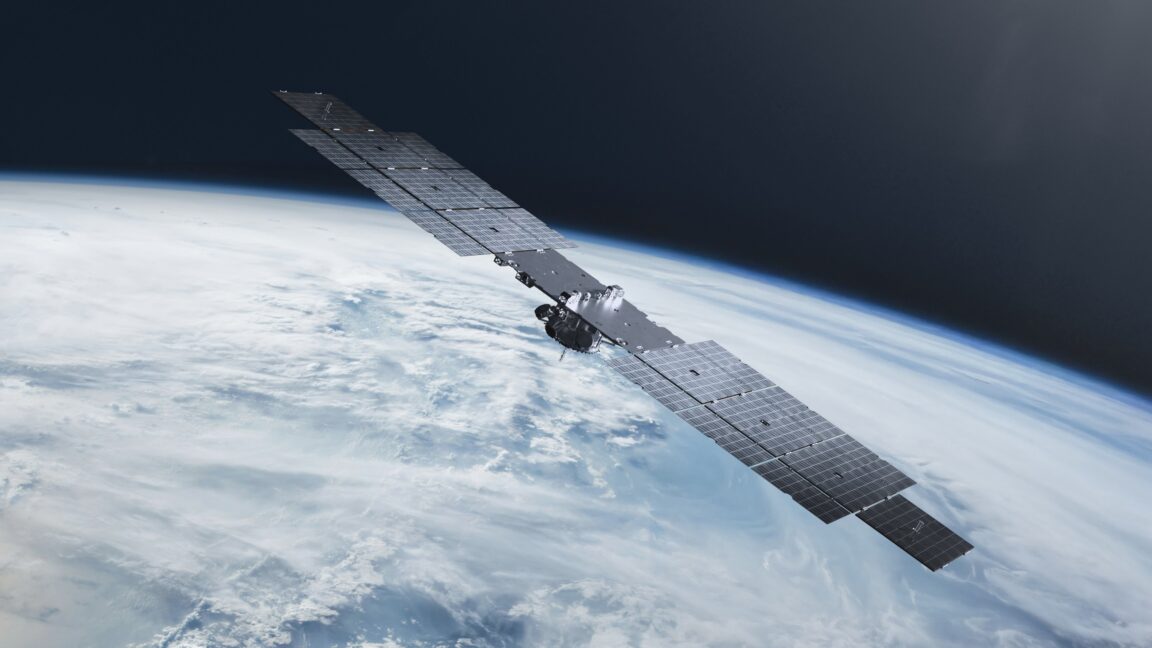
When people casually say “GPS”, they often mean a multi-constellation GNSS receiver. GPS is the United States system, while Galileo is the European Union's Global Navigation Satellite System. Modern receivers normally combine these and other global or regional constellations to improve availability and solution quality.
Galileo gives Europe its own infrastructure for Positioning, Navigation and Timing (PNT). Its value is not just the existence of a European constellation: services such as OSNMA and HAS add authentication and high-accuracy functions that can be designed into real embedded products.
For an introduction to constellations, NMEA messages, electronic modules and positioning techniques, see our guide to GPS and GNSS in embedded systems. This article focuses on Galileo OSNMA, Galileo HAS, development boards, Linux, SDR and the design of resilient PNT systems.