llms.txt is a plain markdown file you put at yourdomain.com/llms.txt that summarizes your site for AI models. It's worth adding, it takes an afternoon, and it costs you nothing. But don't confuse it with an actual AI visibility strategy: no major AI product has confirmed it reads the file, and the things that really determine whether your site gets crawled and cited by AI answers are the same things that determine whether Google can crawl it.
Where llms.txt came from
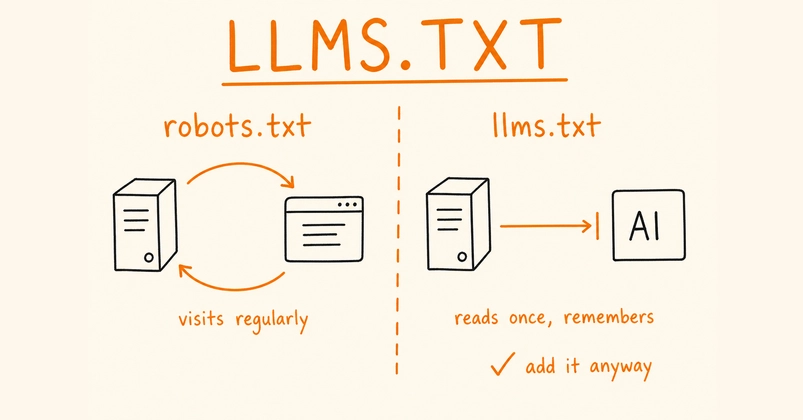
The spec was proposed in late 2024 by Jeremy Howard at Answer.AI, modeled loosely on robots.txt: a single, predictable location where a site tells automated readers what matters. The idea is that a language model has a limited context window and can't (or shouldn't have to) crawl your entire site to answer a question about it, so you hand it a curated index instead: your product pages, your docs, your pricing, in one short file with links and one-line descriptions. The full spec is at llmstxt.org.
It's a reasonable idea. The problem is adoption. As more than one developer has pointed out publicly this year, nobody has confirmed their crawler actually fetches it. OpenAI, Anthropic, and Google have not published documentation committing to parse llms.txt as part of how ChatGPT, Claude, or Gemini answer questions about your product. That doesn't mean it's useless, it means you should size the investment to match the uncertainty.