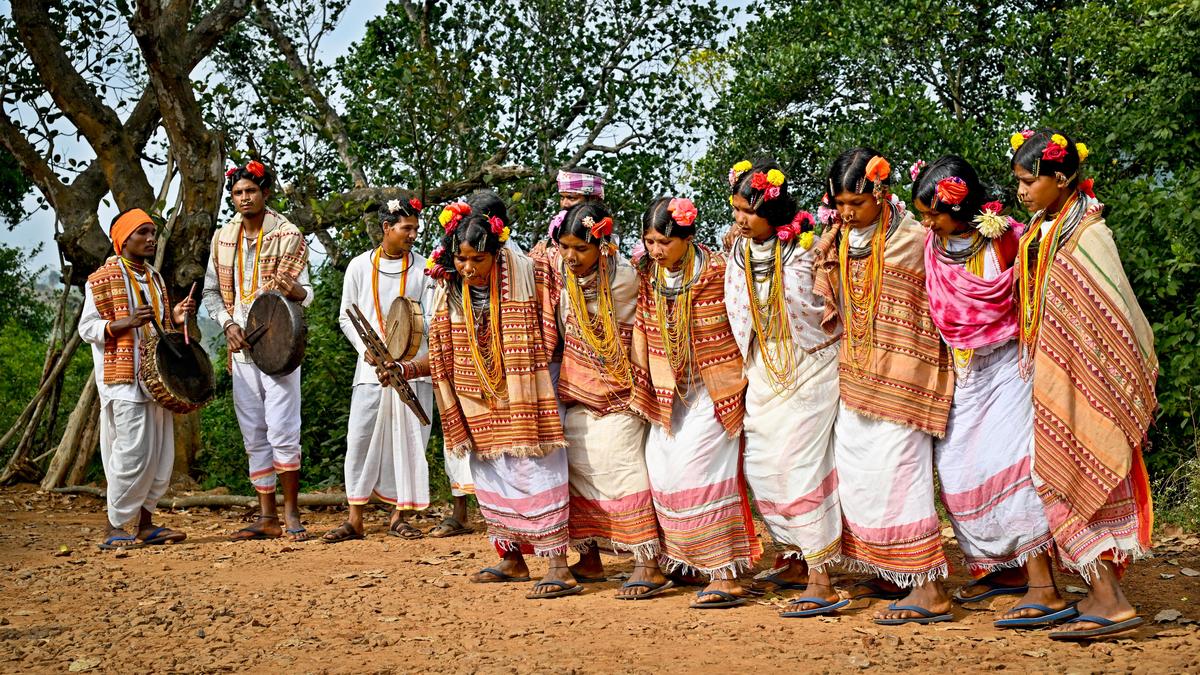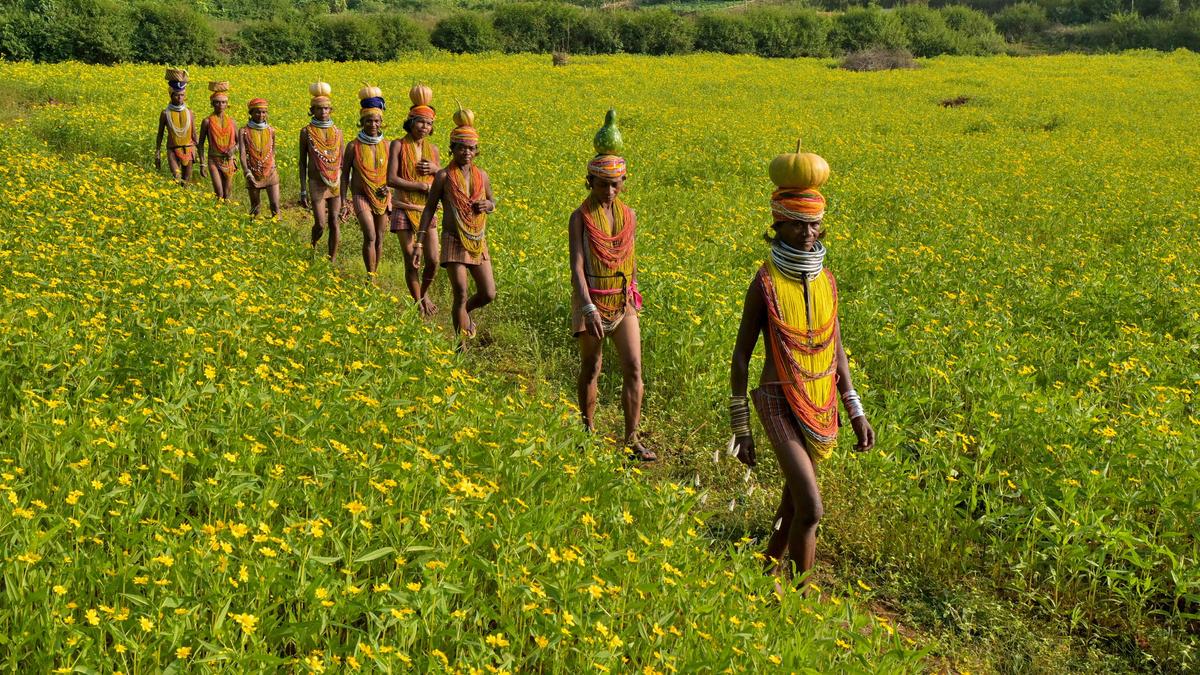
“Every Ringa we weave carries our family’s story,” says Muduli, gently running her hand over the striped cloth she has just taken off the loom in Gokharipada village of Odisha’s Malkangiri district.The Ringa is the traditional handwoven garment worn by Bonda women as a wraparound skirt. Woven with striking horizontal stripes with bands of red, maroon, black, white and blue, it has long been an emblem of the Bonda tribe, one of India’s Particularly Vulnerable Tribal Groups (PVTGs).Living in the Bonda Hills of Malkangiri district, the community has safeguarded its language, customs and weaving tradition over generations. In this matriarchal society, women carry forward much of that cultural memory, preserving the art of weaving even as the modern world steadily reaches their remote villages.Anthropologists believe the Bondas are descendants of one of the earliest waves of modern humans to leave Africa nearly 60,000 years ago, though this remains a subject of ongoing research. Their language, Remo, distinct customs and attire have endured despite increasing contact with the outside world. The Bondas accord women a central place in family and community life. Women cultivate crops, collect forest produce, negotiate at the weekly Thursday shandy and preserve traditions such as weaving, passing them from one generation to the next.Every Thursday, women from villages such as Gokharipada descend from the hills to the weekly shandy at the Onukudelli market. Layers of brightly coloured bead necklaces cover their torsos, aluminium neck rings gleam in the sun, blue shawls draped across their shoulders and the handwoven Ringa wraps around their waist.From kerang to cottonHistorically, the garment was woven using fibre extracted from the Kerang tree (a small wild shrub native to the Eastern Ghats). Cotton yarn gradually replaced bark fibre as markets became more accessible, although the visual identity of the textile has remained largely unchanged.“What makes the Bonda weaving tradition unique is that it has always been closely tied to the community’s identity rather than to commerce,” says Navaldeep Thareja, a textile engineer from Sangrur in Punjab. Over the past several years, he has travelled to little-known weaving and craft clusters across India, documenting textile traditions that seldom find space in mainstream conversations. Through his initiative, Behrupiaa Arts, he has recorded the stories of artisans whose creations are deeply rooted in local culture and organises curated tours for visitors.
National Handloom Day: Bonda Tribe's Handwoven Ringa
On National Handloom Day, discover how women of Odisha's Bonda tribe preserve the handwoven Ringa, a symbol of identity in Malkangiri's Bonda Hills
1,080 words~5 min read