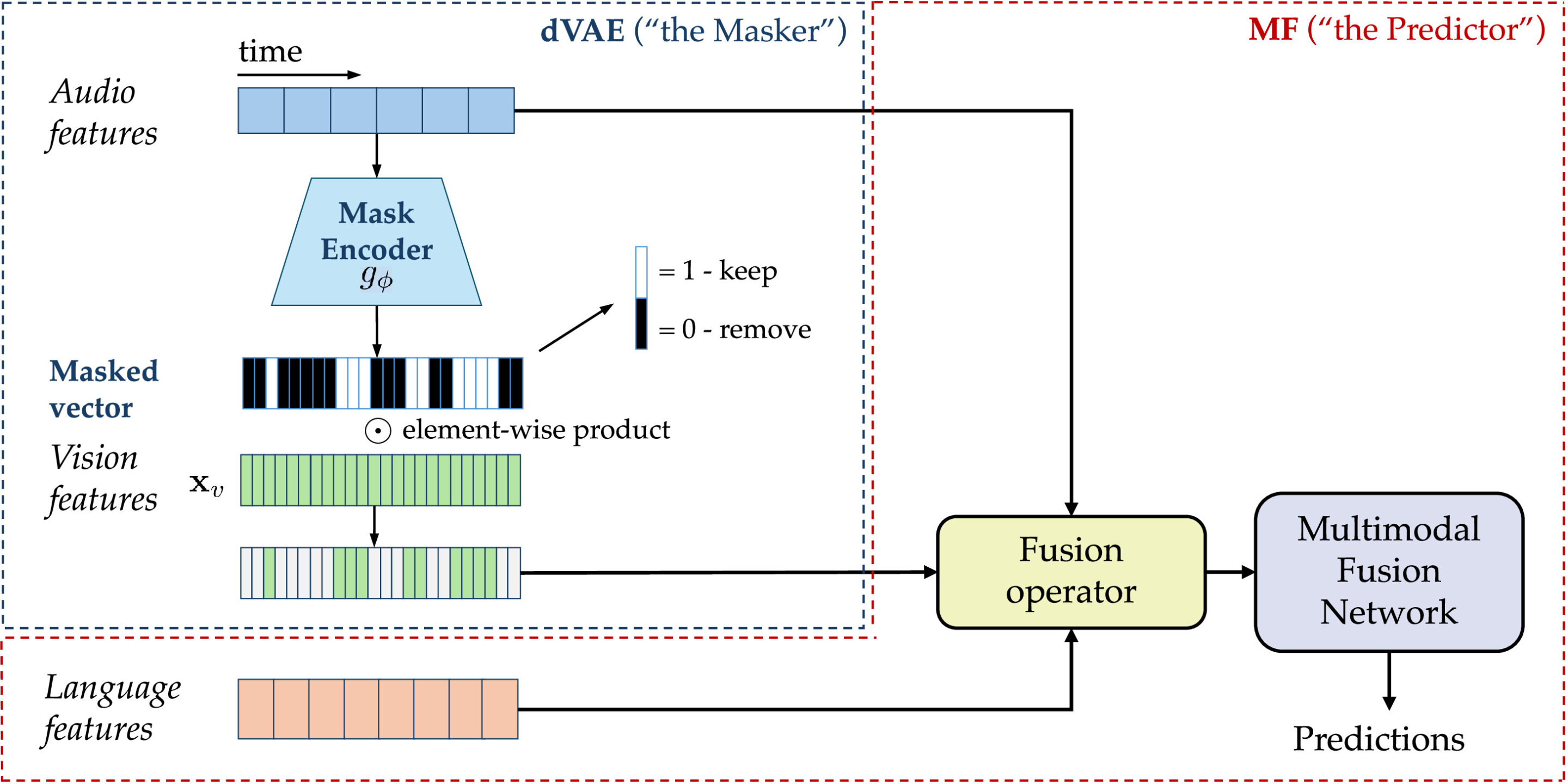
The proposed EMF-dVAE framework. Credit: Information Fusion (2027). DOI: 10.1016/j.inffus.2026.104613
Artificial neural networks were originally inspired by the human brain, but they are still far less efficient at processing information. One reason the human brain is so efficient is its ability to focus only on the most relevant information and allocate cognitive effort based on the task.
As artificial intelligence (AI) systems increasingly analyze multiple types of data, such as text, video, audio and images, this ability to focus on the most important information is becoming increasingly important for reducing computational time and resource use. Most video frames contain little useful information, yet conventional AI systems still analyze them all, increasing computational costs and sometimes introducing noise that can reduce prediction accuracy.
A research team led by professor Shogo Okada from the Japan Advanced Institute of Science and Technology (JAIST) in Japan, along with doctoral student Hung Le from JAIST, has developed an AI model that identifies key moments in a video, reducing the processing time for a 2-minute clip from 52 seconds to 18 seconds.
The research is published in the journal Information Fusion.