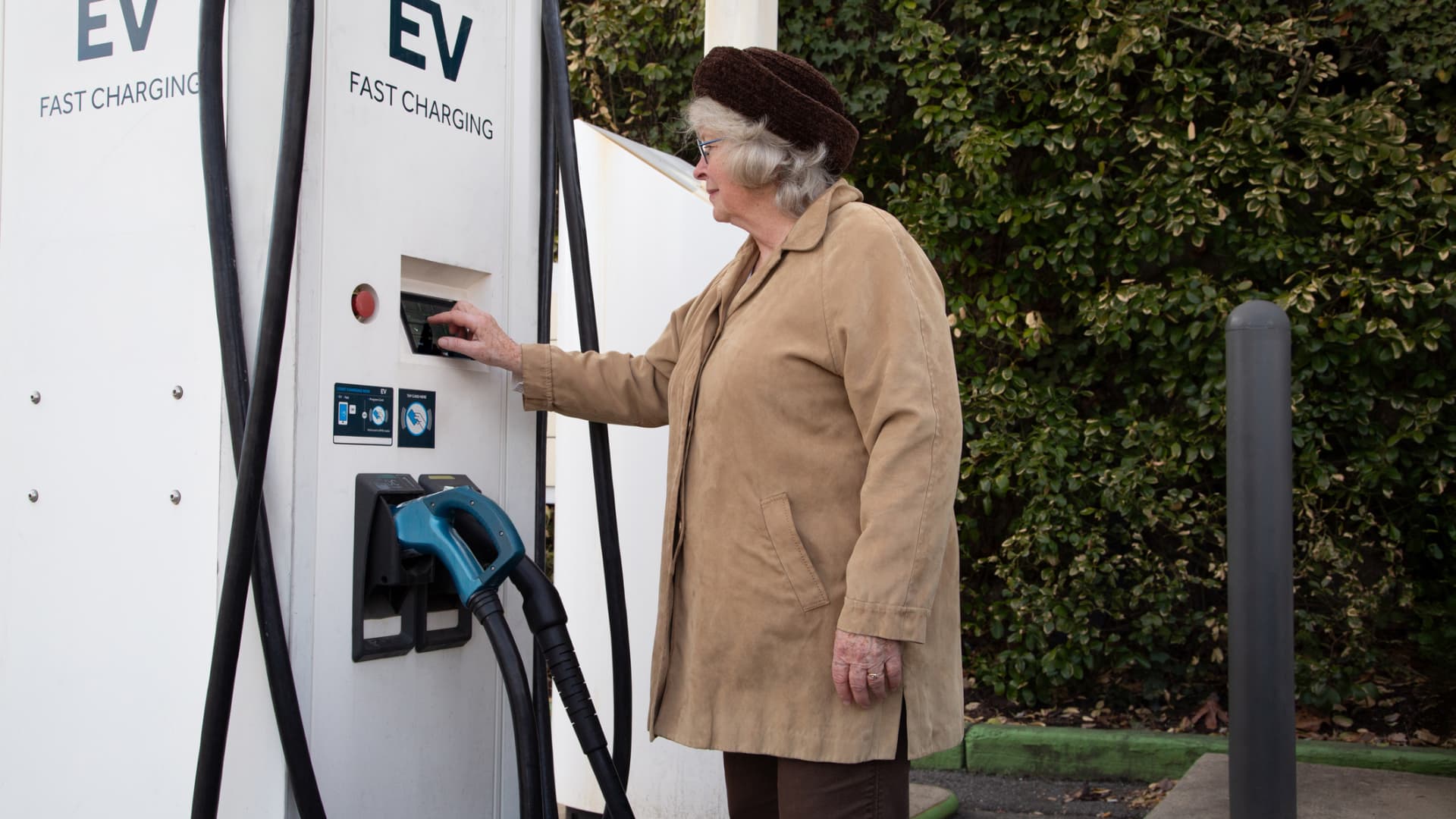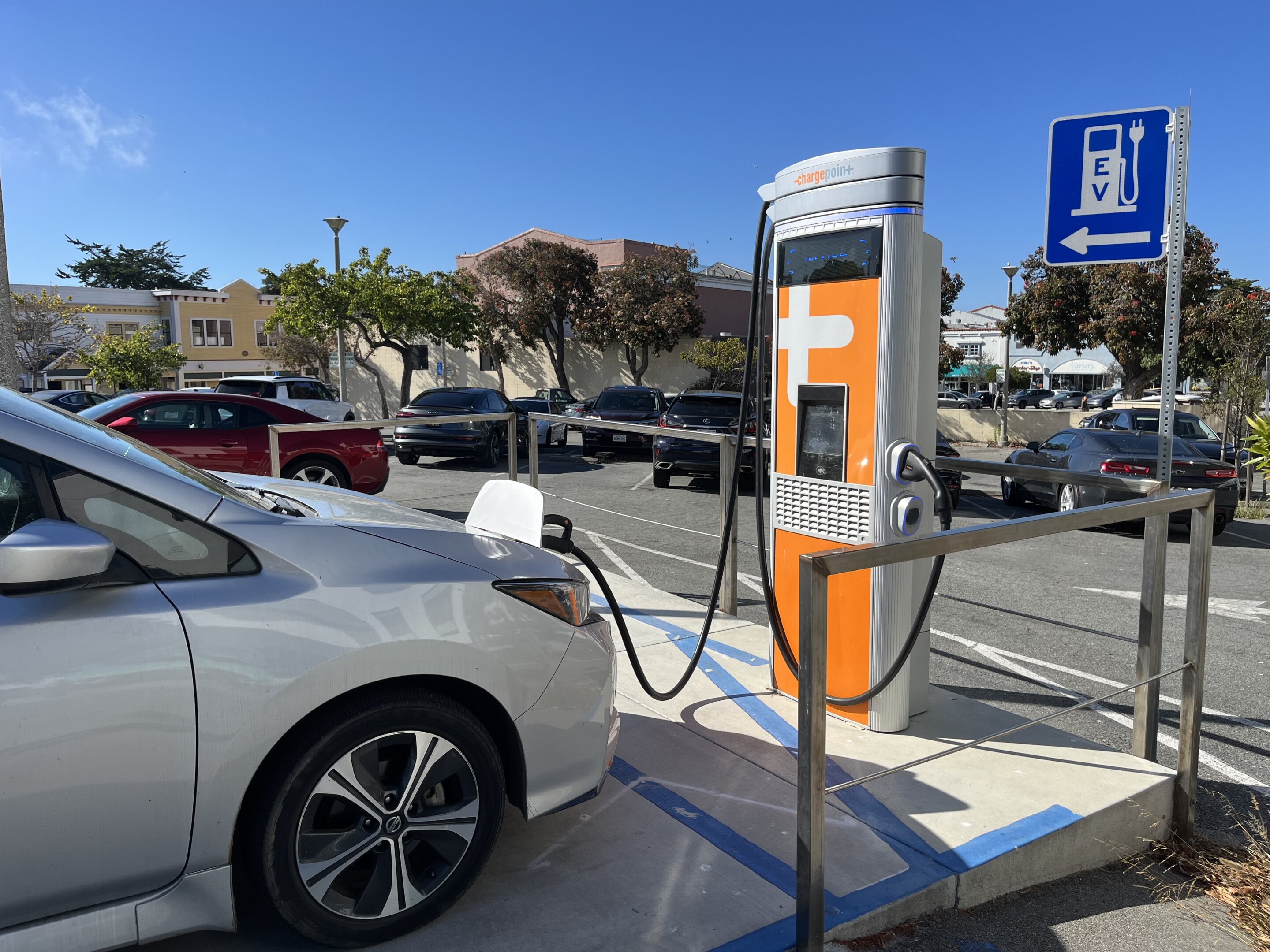
An electric vehicle plugged in at a public fast-charge station in Pacific Grove, California. Credit: Allison Arteaga Soergel/UC Santa Cruz
In recent months, American drivers have felt the pain of increased prices at the gas pump. There's some evidence that higher prices may be fueling interest in greener ways of getting around. Battery electric cars, more commonly called electric vehicles or EVs, can be cheaper to own and operate than gas-powered internal combustion engine cars, and they offer considerable sustainability benefits. But just how much better for the planet are electric vehicles, really?
As it turns out, from a carbon emissions standpoint, you'd be better off sending a brand-new internal combustion engine car directly to the scrap heap to replace it with a battery electric car. That's the surprising new finding from research led by the University of California, Santa Cruz, that explored the carbon footprint trade-offs of vehicle trade-ins.
The research team doesn't actually recommend scrapping a car you just bought, especially amid a nationwide cost-of-living crisis. But for drivers already making a decision about future transportation, the new study, published in the journal Science, makes the sustainability case for EV ownership crystal clear.