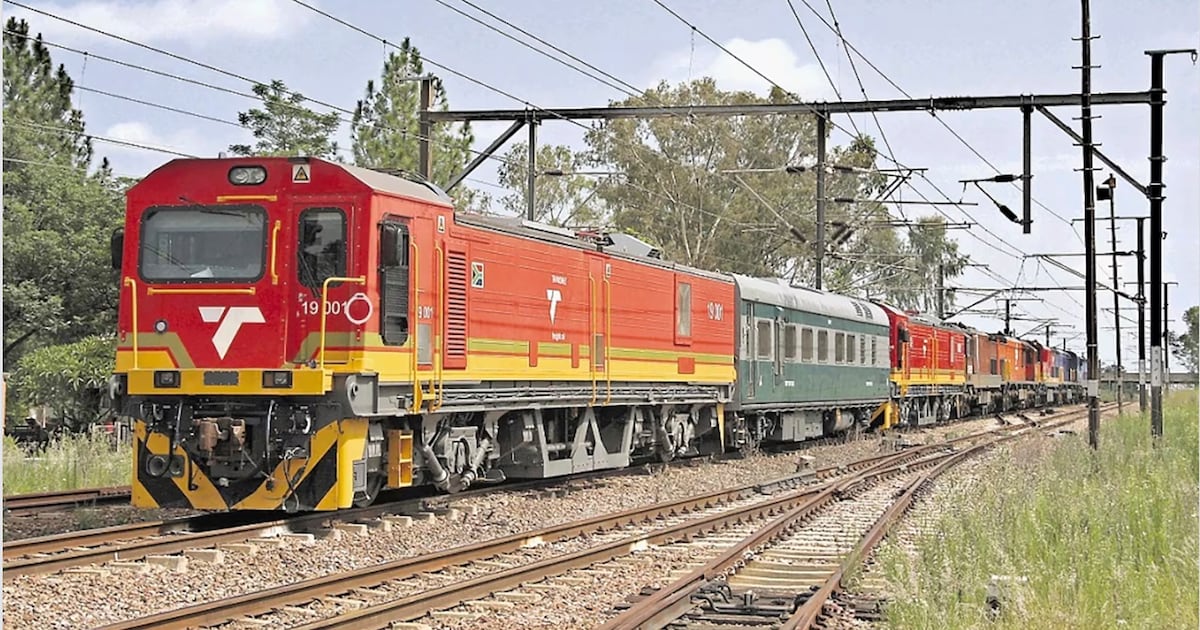
In her magnum opus on “imperfect competition” published in the early 1930s, British economist Joan Robinson suggested that a “monopsony” is one of the most awkward market structures in economics. Competition is not only “imperfect”, but it is so due to uneven power dynamics between buyers and sellers. It is in this sense political: an outcome of not just brute economic strength (from quality or scale) but also a matter of rules (written and unwritten) and conventions designed in favour of one at the expense of another. Anyone who has bought livestock from a farmer or haggled with a seller in a West African market will tell you that such bargaining is often far from symmetrical. In the case of a monopsony a sole buyer can artificially depress prices below the marginal cost of production. Yet much of our policy discourse assumes fairness in bargaining when none exists. A recent colloquium hosted by the portfolio committee on trade, industry & competition highlighted this. One industry and interest group after the other agitated for guaranteed offtakes and volume guarantees, the use of public procurement and more tariff protection. Some called for preference and priority, even under the cover of free trade, ostensibly to protect against the vagaries of market competition. This for industries spawned in an entirely different era, an industrial structure battling to wean itself from the impulses of control boards, cost-plus arrangements in the minerals-energy complex and favourable export quotas into “friendly” Western nations to mop up surpluses. Under such a system producer (seller) welfare was established by state policy through control boards anointed by the state and run by farmer groups in agriculture. “Cost-plus” enabled integrated production in mining and heavy industry, with products sold on at administered prices downstream. These arrangements (including the need for control board permission to import certain agricultural products) created a captive ecosystem driven by “accounting prices”, as economist Oskar Lange has suggested, with predictable demand. And, by fiat, delinked from any external price volatility-driven world markets for goods. Until things changed. The past three decades have tilted the scales and revealed deepening buyer power in product markets, unimaginable in the broederskap of old. What has changed? The flour mills and beverage makers now have access to imported raw materials (wheat and sugar) without having to get an import permit from a control board.Despite high tariff ceilings, the option to import without a permit remains just that, an option. As world market prices rise or tank, the option to import becomes prohibitive or attractive, even in the face of tariffs. The problem manifests differently in state monopolies, which in some instances receive administered rather than competitive prices for what they produce. There, as seen in rail and other forms of heavy steel used in the freight and passenger rail sector, or the categories of steel used in electricity generation and transmission, they also yield considerable buyer power. This is mediated in certain ways by imports, which (often cheaper or of similar or better quality) can discipline the price formation process domestically. The combination of being the sole buyer, with relatively convenient access to imports, gives rise to a particular form of buyer power. Industrial policy should consider how such buyer power is exercised and mediated and how its effects (in narrower investment upstream) navigate crises such as sanctions, embargos or, in the case of agricultural staples, export bans such as those periodically imposed by India. In medicines, as the pharma lobby told legislators this week, the state is the prized buyer. How it uses its powers is as much a matter of industrial concern as the model choice and locational decisions of multinational-driven production networks such as in the vehicle sector. All are matters of power, which, while not explicitly named by legislators and presenters, occupy the room without announcing their presence. We would do well to discuss how such power is restrained or enabled in anticipation of future crises in an increasingly hostile trade environment. • Cawe is chief commissioner at the International Trade Administration Commission. He writes in his personal capacity.Business Day
AYABONGA CAWE | Buyer power shaping SA’s shifting economy
Industrial policy should address the implications of concentrated monopsony, particularly amid more volatile, competitive global trade
681 words~3 min read