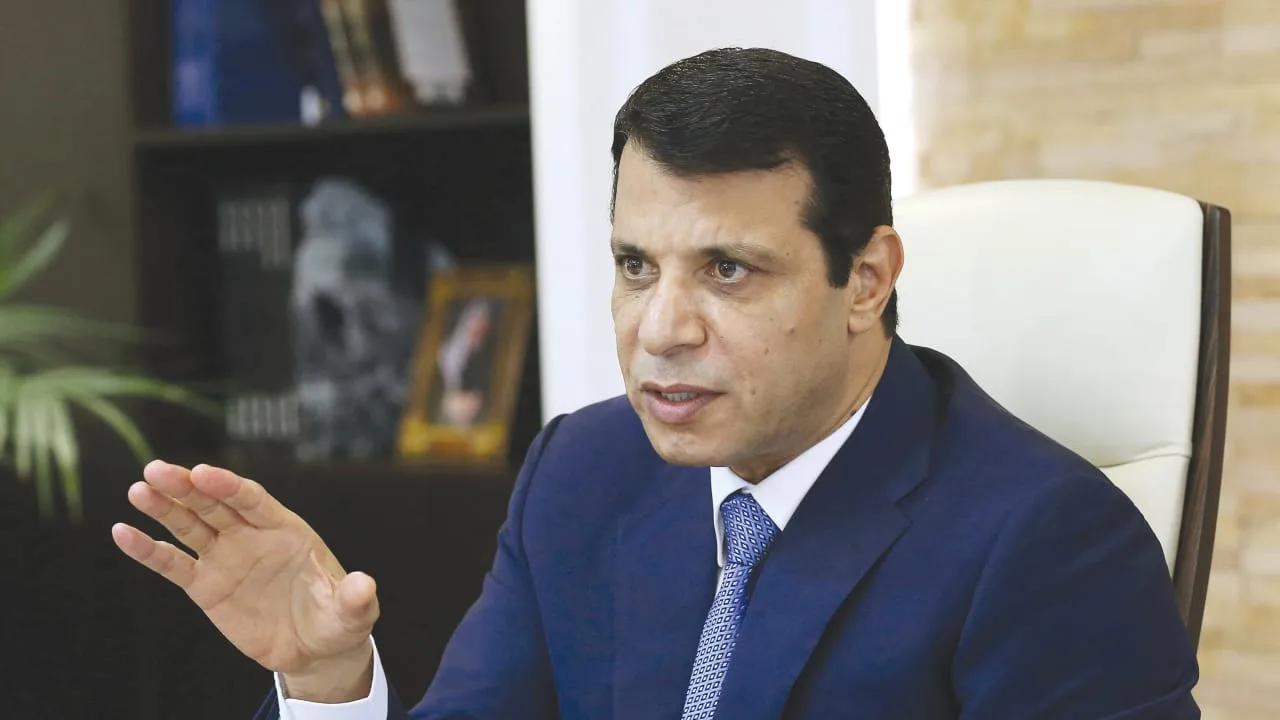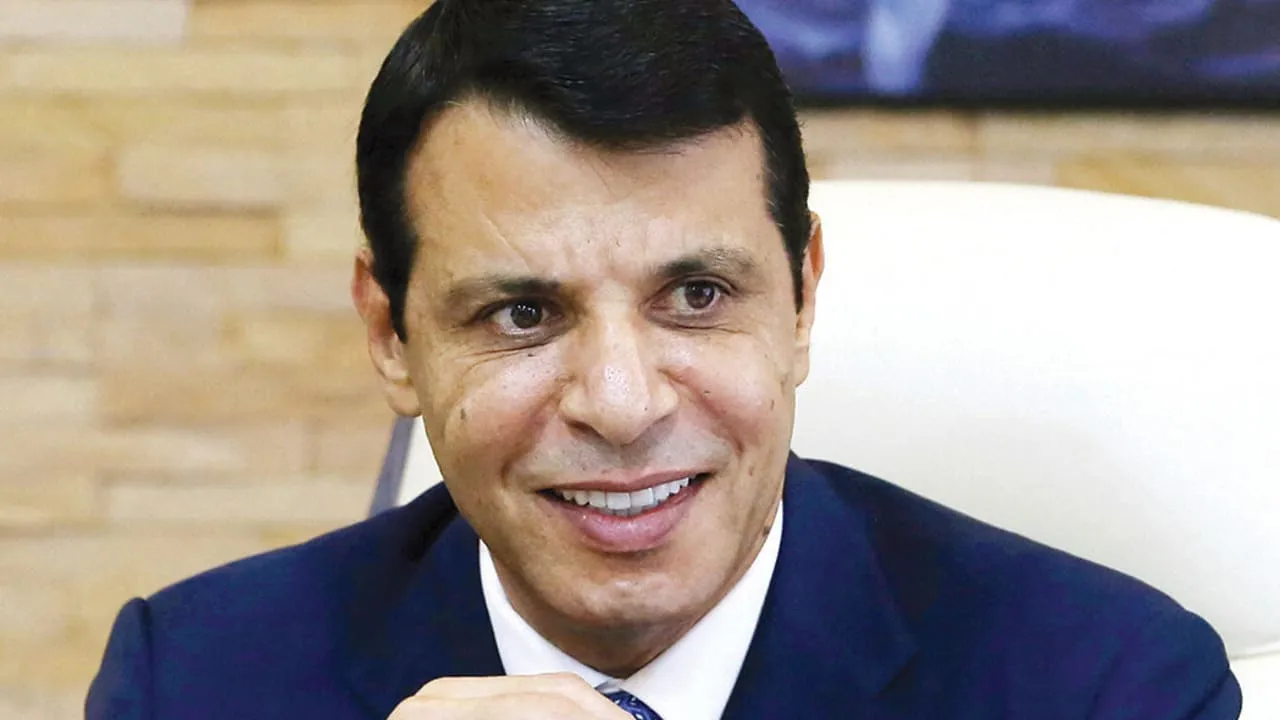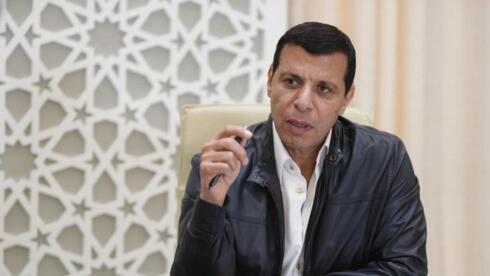
Analysis: Mohammed Dahlan has reemerged as a key player in plans for Gaza’s future, leveraging ties with Hamas, Arab states and Washington while seeking to position himself as the alternative to both Hamas and the Palestinian AuthoritySince the start of the war, Mohammed Dahlan — Abu Fadi — has frequently been mentioned in discussions about an alternative to Hamas rule in Gaza. This week, he was mentioned more prominently than at any point since October 7, after a long period in which he maintained a relatively low media profile. The background to his renewed appearance was the announcement of the agreement to implement the second stage of the arrangement in the Strip (the 15-point plan formulated under the auspices of the Board of Peace), with Dahlan seeking to establish his image as a central broker of the initiative.It was an especially turbulent week, both diplomatically and militarily. In conversations with senior figures in Dahlan’s camp, known as the “Democratic Reform Bloc,” the following version of the events of the past week is presented, in which they claim Abu Fadi’s role stands out:Gallery Mohammed Dahlan (Abu Fadi). He has frequently been mentioned in discussions about an alternative to Hamas rule in Gaza“The shift occurred when Dahlan succeeded in convincing Hamas leaders to accept the 15-point plan, at the center of which was agreement on a relatively general formulation regarding the organization’s disarmament and the establishment of a technocratic government. Following this, about a week ago Dahlan reached an understanding with Jared Kushner regarding a Trump announcement on the agreement and the promotion of a ceasefire, the implementation of which Dahlan was the first to announce already on Sunday.Even if there is some degree of exaggeration in the description, it appears that most of it is accurate. This is a figure who fits many of the criteria: Dahlan, who speaks Hebrew, was head of Gaza’s Preventive Security Services during the Oslo years and is known to Israel’s leadership, fits the demand for “neither Hamas nor Abbas” (in this context, the unusual meeting between him and Shin Bet chief David Zini in the United Arab Emirates about two months ago should be viewed).He is perceived as an alternative to Abu Mazen (Mahmoud Abbas) among international actors who have lost faith in the 90-year-old president, who sees Dahlan as a sworn enemy and removed him and his supporters from Fatah in 2011 after suspecting that he was working against him.He is popular among many in the Arab world, particularly in the United Arab Emirates, where he lives and is considered close to the ruling family. He enjoys relatively significant influence in the Strip, where he was born (in the Khan Younis refugee camp, like Sinwar and Deif), and he maintains close ties with Hamas’ leadership despite the organization’s hostility toward him, stemming from its claim that he was responsible for the killing of many of its operatives during the struggle that preceded its takeover of the Strip in 2007 (a failure that is largely attributed to Dahlan, who was viewed as the strongman of Gaza).The media outlets identified with Dahlan, led by the television networks Al-Kofiya and Al-Ghad, which operate from Cairo, launched a special broadcasting format this week that presented the advancement of the arrangement plan as a dramatic turning point. They brought numerous interviews with senior figures in Dahlan’s camp and commentators who highlighted his efforts, as well as Gazan civilians filmed in the huge tent cities who declared:“We are with you, Abu Fadi. You are the one who will put an end to our suffering and you are the source of our hope. You never left us and you never disappointed us.”Sufian Abu Zaida, one of the leaders of Dahlan’s camp, explains: “Dahlan is the key to the breakthrough of the past week, and all the shifts would not have occurred without him.”Tent city in Khan Yunis (Photo: Bashar Taleb/AFP)Imad Mohsen, spokesman for Dahlan’s camp who lives in Khan Younis, continues: “The Americans know that the arrangement in Gaza must be based on Dahlan because he has deep influence among the public, familiarity with the area and ties to all the factions.”“Dahlan faced harsh criticism and was very embarrassed by Israel’s return to fighting after he announced that the end of the strikes was near,” explains in a conversation Samer Sanjalawi, a prominent political figure in the West Bank identified with Dahlan.Abu Zaida adds: “These are ongoing strikes that go far beyond the need agreed upon in the ceasefire to remove immediate threats [according to the Palestinians, more than 1,200 people have been killed in all strikes since October 2025]. This is the background to a sharp post published by Dahlan this week, in which he claimed: ‘From an early stage, we understood that Netanyahu would do everything to eliminate the opportunity that Trump worked on together with Egypt, Turkey and Qatar [...] We swear to our people that we will act day and night to stop the aggression.’”It took less than two days until a slowdown — and then a halt — was recorded in Israeli strikes in the Strip.Meanwhile, Dahlan has been steadily consolidating his power inside Gaza in several ways: increasing civilian aid efforts for the public promoted through an Emirati foundation called “The Noble Knight” (Al-Faris Al-Sham); deepening ties with key figures in Gazan society, led by heads of clans and tribes; and maintaining close ties with the technocratic government based in Cairo, many of whose members are identified with him.Along the way, Dahlan is working to dry up the idea that the Palestinian Authority will return to Gaza in any form, while presenting himself as the person who holds the real power in the area.“There is great doubt regarding the Authority’s desire to play a role in managing the Strip, and it failed even at the minimum required level in dealing with the suffering of the area’s residents,” explained Samir al-Mashharawi, Dahlan’s deputy, this week.Dahlan’s true weight in the Palestinian arena in general and in Gaza in particular is a mystery, among other reasons because elections have not been held for 20 years, and because he and his people are not permitted to participate in Fatah institutions (for example, the eighth general conference recently held).It can be cautiously estimated that at least among the current identified with the PLO, and perhaps also among the Gazan public, he has considerable influence, probably greater than that of Abu Mazen.A poll conducted by the Palestinian Arab World for Research and Development (AWRAD) Institute last May found that if presidential elections were held, 38% of Gazans would vote for Dahlan, 21% for Marwan Barghouti and 14% for Hussein al-Sheikh, Abu Mazen’s deputy, while Hamas candidates would receive barely 5%.Khalil Shikaki, director of the leading polling center in the Palestinian system, explains:“All Palestinian leaders have a popularity problem, and Dahlan is trying to compensate for it and return to influence in the Strip by promoting projects that provide responses to the population’s existential needs.”Researcher Tarek al-Masri adds: “Alongside the civilian effort, Dahlan is also carving his political path through the extensive regional network of connections he has woven, which many in Gaza attribute great value to.”Against the backdrop of the complex and constantly shifting reality, a major question mark stands out regarding Hamas’ disarmament. The organization, for its part, claims — as do the mediators, Turkey, Egypt and Qatar, as well as Dahlan — that its agreement to the 15 points reflects significant flexibility and a change in the positions it has taken until now.In practice, Hamas continues to oppose full and immediate disarmament, as demanded by both Netanyahu and the Board of Peace (in the wording it published immediately after the meeting between Netanyahu and Mladenov). It demands that a withdrawal be carried out even without any disarmament and makes clear that it is willing to discuss partial and gradual disarmament, as well as steps such as storing or depositing weapons or integrating its operatives into bodies of the future technocratic government, which there is reason to suspect are merely a cover for continuing to preserve military power.Doubts are also required regarding Hamas’ willingness to accept the technocratic government and transfer all authority (in practice, the burden) over civilian affairs in Gaza to it, when the intention is apparently to continue maintaining influence behind the scenes in all spheres, exactly like Hezbollah in Lebanon.Like many critical issues concerning Israel, the Gaza question depends primarily on Trump, who appears to be more restrained regarding the granting of broad freedom of action to Israel in Gaza, as it has had since the ceasefire took effect last October. This appears to be influenced by his growing frustration over the war with Iran, into which he was drawn under Netanyahu’s significant influence.It is not unlikely that pressure on Netanyahu to limit or halt offensive strikes in the Strip will soon increase, and additional demands may accompany it: allowing broad deployment of the multinational stabilization force — ISF (the cabinet voted in favor of the entry of a force of about 200 soldiers ahead of Netanyahu’s trip to the United States, apparently as a gesture to Trump, but since then Smotrich and Strook have reversed their positions, claiming they were misled); withdrawing to the Yellow Line, which has gradually expanded since the ceasefire to about 65% of the Strip; allowing the technocratic government to enter the Strip and operate; advancing reconstruction even before Hamas’ full disarmament; and dismantling the militias operating in areas under Israeli control that were intended to serve as an alternative to Hamas but are viewed by most of the Palestinian public as a dubious collection of collaborators who received the derogatory nickname “Jaysh Lahad,” and which, like the South Lebanon Army, will also have to find refuge in Israel in the future.Hints of a reduction in Israeli freedom of action in Gaza can be found in a report about an IDF directive issued this week, according to which every targeted killing in the Strip will from now on require the personal approval of the chief of staff.International dissatisfaction with the continuation of the strikes was expressed in a post by Mladenov this week, in which he wrote:“Two days of strikes across Gaza killed civilians and destroyed medical equipment that people depend on. This followed intensive efforts by the Board of Peace and the mediators (Egypt, Turkey, Qatar and the United States) to bring the Palestinian factions in Gaza to agree to a roadmap for the full implementation of President Trump’s plan, the transfer of civilian governance and the disarmament of the factions.”Abu Zaida estimates in this context that external pressure on Israel will soon increase:“Despite the longstanding and strong relationship with Washington, anyone who believes Trump cannot force things on Israel is mistaken, especially at the present time when Netanyahu’s personal standing in the American arena is at a severe low.”The promotion of the idea of a Gaza arrangement this week is not a “storm in a teacup,” as senior Israeli officials are seeking to convey, alongside the claim that supposedly nothing has changed in our conduct in the arena from which the most difficult war in the country’s history began.The accelerated discussion of the issue reflects growing international impatience, including American impatience, with Israel’s conduct, which is based on a combination of continued use of force, slow seizure of more and more territory and pushing away discussion of a “diplomatic leg” that always ends with an American dictate that does not align with Netanyahu’s declarations and goals.The proposed arrangement and the restriction of Israeli activity in the Strip, where Hamas continues to be a dominant actor even after three years of bitter war, are taking place at the sensitive timing of the eve of a fateful election, and therefore there is also a reasonable concern of growing friction between Jerusalem and Washington soon.With the need to focus on the Iranian nuclear threat, which has not been resolved and may even have intensified following Operation “Roaring Lion,” and which requires close coordination with Trump, it is important not to reach a confrontation with Washington over the Gaza issue, all the more so not to plan a dangerous military adventure on the eve of the elections.Accepting the arrangement based on the technocratic government is an alternative filled with negative aspects for Israel, chief among them the fact that Hamas continues to maintain influence in Gaza and that there is no real solution to the question of its disarmament. Nevertheless, it is preferable to the alternative of occupying the entire Strip indefinitely, an option promoted by those who are fundamentally driven by ideological motives and avoid explaining to the public what the dramatic consequences of such a step would be.As long as American pressure on Netanyahu is not heavy, it is possible — and perhaps preferable — to postpone the discussion of the Gaza question until after the elections. However, the unpredictable Trump may seek to advance such pressure already now, presenting Israel with two options: breaking the rules and entering a severe crisis with Washington, or accepting the arrangement while insisting on vital interests.These interests include preserving freedom of action against threats; ensuring there will be no Hamas control over the Philadelphi Corridor; maintaining zero presence and activity in the area along the border with Israel (a central lesson of October 7 that must also be implemented on the Lebanese front); and preserving the right to veto the entry of actors into the area.Integrating Dahlan into the arrangement could also represent an opportunity in the form of deepening the United Arab Emirates’ involvement in the Strip, a goal Netanyahu has described as highly important, among other reasons in order to limit Qatar’s influence in the area.Above all, it is essential that Israel’s leadership begin a candid and direct dialogue with the public, particularly with residents of the Gaza border communities. As part of this dialogue, firm slogans about destroying the enemy and moving the border should be replaced with a commitment to an active policy and constant vigilance in the spirit of the principle of “prevention” (across all arenas).The insights needed to formulate such a policy, and to conduct a serious and sober discussion about it, can only be reached following a state commission of inquiry into the failures of October 7.Dr. Milshtein is a senior researcher at the Moshe Dayan Center for Middle Eastern and African Studies at Tel Aviv University.
Mohammed Dahlan seeks to become Gaza’s power broker after Hamas rule
Analysis: Mohammed Dahlan has reemerged as a key player in plans for Gaza’s future, leveraging ties with Hamas, Arab states and Washington while seeking to position himself as the alternative to both Hamas and the Palestinian Authority
2,400 words~11 min read