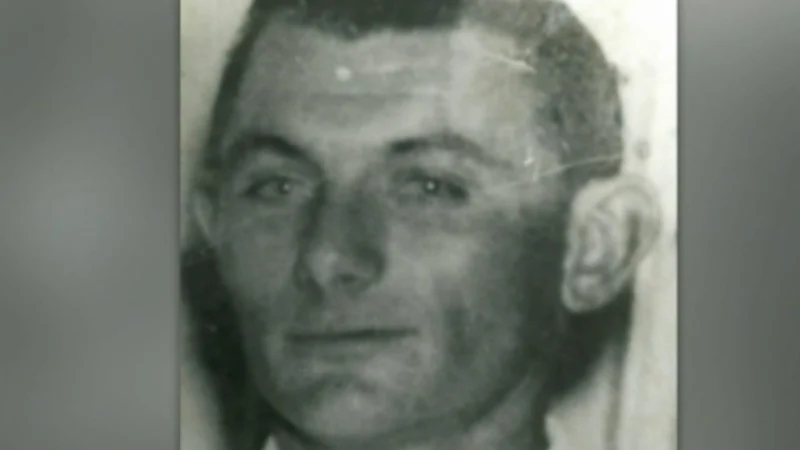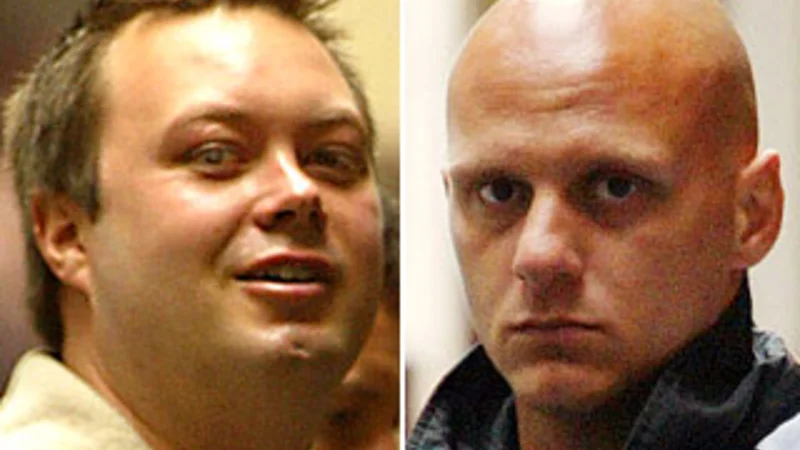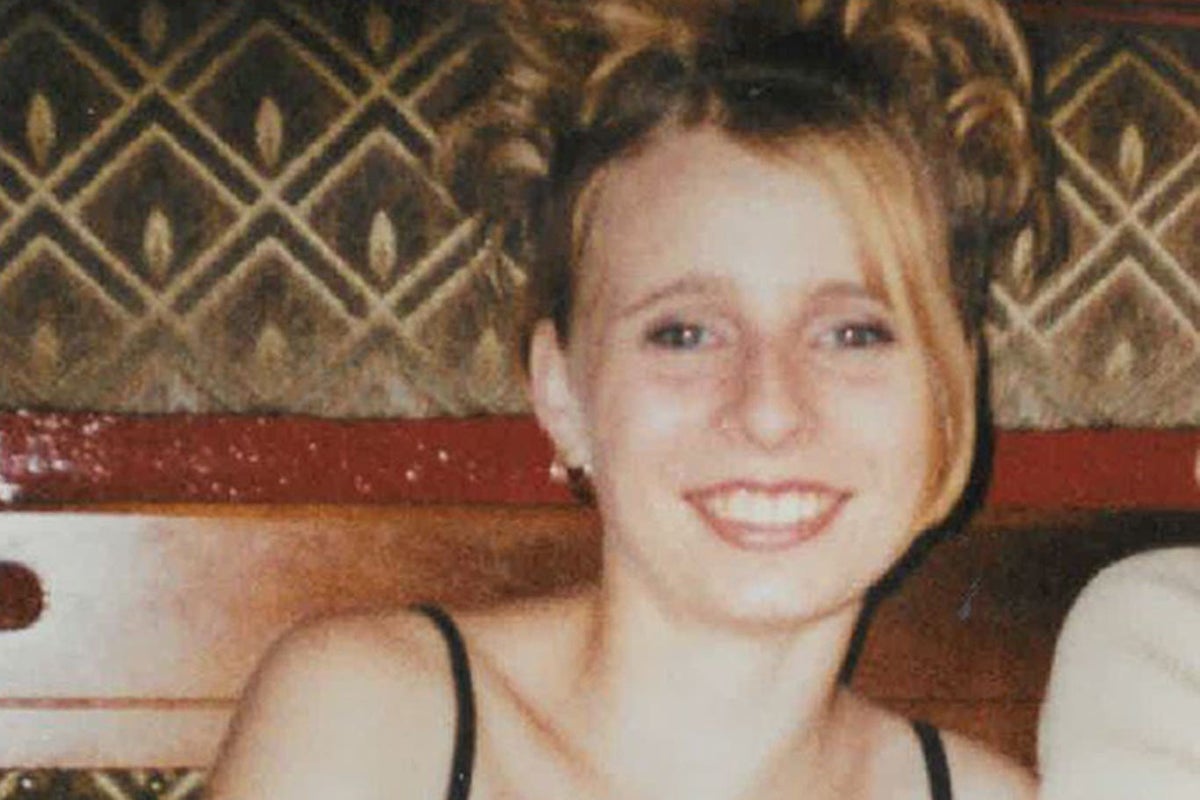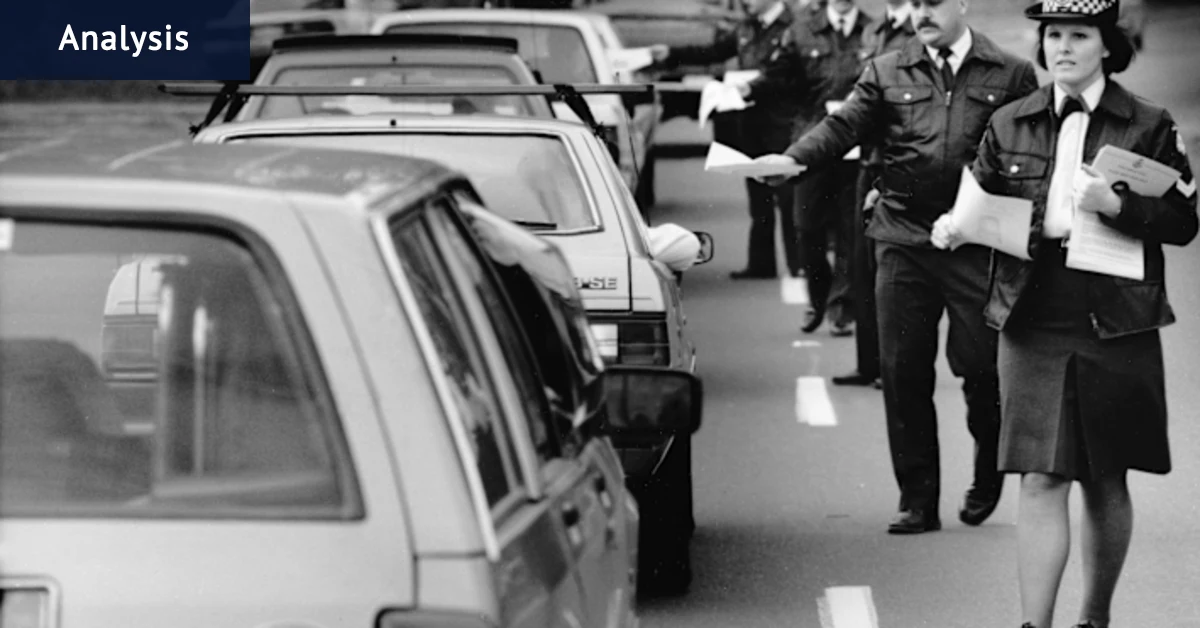
August 7, 2026 — 11:40amI have been reporting on crime in Melbourne since 1978 and there are just some mysteries you can’t shake – crimes where a wrong turn or a dead-end means there will never be justice, and others where the answer is on the tip of the tongue of someone whose mouth remains firmly shut.One of the first murder scenes I attended was at a small second-hand book store in High Street, Thornbury, back in 1980.A police van parked outside the crime scene at Bookshop Exchange on High Street, Thornbury.The AgeA few years earlier I would pass it on the tram when I worked at the Croxton Park Hotel just up the road. It was so stacked with books you couldn’t see through the window – a factor that kept the killer hidden.The victim was Maria Theresa James, 38, who on June 17 was stabbed 68 times in her bedroom. The front and rear doors were locked, and two coffee cups were on the counter suggesting she knew the killer.Homicide detectives set up their headquarters inside the shop, and within days I was invited in for a look. It was a tiny dwelling and the blood on the carpet was still visible.James lived a few hundred metres from the Catholic Church and had a problematic relationship with the local priest, Father Anthony Bongiorno. Not that we knew it at the time, for he arrived at the bookshop hours after the body was discovered to hold a press conference.Police and detectives outside the Bookshop Exchange on High Street, Thornbury, where the body of Maria James was found.The AgeMany years later, a theory emerged that Bongiorno was the killer who stabbed Maria to silence her as she was about to expose him as the paedophile who molested her son.You can pick holes in any theory but many of the stab wounds were flicks and nicks – injuries meant to inflict pain – punishment rather than attempts to swiftly silence.The killer ran from the shop not wearing a disguise, and was nearly bowled over in High Street, which made the Bongiorno press conference bizarre because if he was the killer, he risked being identified from his photograph in the newspapers.Maria James was found dead in her bedroom on June 17, 1980.It doesn’t make sense to me – the wounds were slow and deliberate. The killer took his time and moved her during the attack. This was not an urgent act to silence the victim and her allegations – but to punish her.The offender stayed in the house for an extended period, and was close to being caught when her ex-husband John went to check.The divorced couple remained close, yet she had not told John that she believed their youngest son had been molested.After the break-up of her marriage, Maria had started dating. The strongest police theory was she invited a male to the shop to tell him their relationship was over, and the multiple wounds were designed to punish her.Killer Peter Keogh.Eighteen months after the James murder, when police issued an image of the offender, two women rang Crime Stoppers to say they believed the killer was Peter Keogh who attacked their sister with a knife. The victim was Judy McNulty – the woman Keogh had asked to provide a false alibi at the time of the James murder.The police profile of the killer was someone who knew James, lived locally, had an explosive temper and hated women. It fitted Keogh. He also fitted the physical description.Seven years after the James murder Peter Keogh stalked and stabbed to death Vicki Cleary – the sister of footballer/politician and commentator Phil Cleary.Keogh would walk past the bookshop on his way to his pub and once threatened Vicki saying, “I will do to you what I did to the woman in the bookshop.”Drinkers and staff at the pub believed he was the killer, with one warning a woman to keep away from him. “He did Maria James, she was his missus.”He killed himself on the anniversary of Maria’s funeral. It is a theory but one that will never be tested in court.In 1994 Elisabeth Membrey went missing from her Ringwood unit and her body has never been found.Sometimes crimes are not solved because of a lack of suspects. This one was derailed because there were too many. The prime one was cleared after an undercover sting operation and a second was charged and acquitted – simply because he didn’t do it.Joy and Roger Membrey in 2005, with a picture of their daughter Elisabeth, who was killed in 1994. There is a $1 million reward for information on her murder.John WoudstraA reinvestigation found a third suspect, the brother of Elisabeth’s housemate after his DNA was found inside Membrey’s Mazda, the car used to dispose of her body.He said he was once asked to move the car, a claim his sister, Elisabeth’s housemate, denied.While there were two cars in the drive, he knew his sister had broken her ankle and was staying with her boyfriend and knew Elisabeth was home alone.He was an accomplished burglar, stalker and rapist.Within days, he left Victoria to move to Queensland. On the trip, a woman found a black leather woman’s wallet in the car. The woman told police he said it belonged to “Liz”. Membrey’s black leather wallet has never been found.Six times friends and family have contacted police nominating him as the killer. Now his brain is fried through drugs and he is considered unfit to stand trial.Elisabeth’s parents are the best people you could meet. Roger has passed away, while Joy is still looking for answers.Another case that was derailed because the evidence pointed at the wrong person was Jane Thurgood-Dove – mother of three who in November 1997 was shot in front of her children in Muriel Street, Niddrie.Jane Thurgood-Dove. Parents John and Helen Magill, still looking for answers.Pat Scala / Thurgood-DovesThe initial suspect was a policeman, secretly obsessed with her, fitted the description of the killer, and failed a lie-detector test when asked if he was responsible for Jane’s death.He thought (wrongly) it was Jane’s husband and that made the deluded cop feel responsible.The real target was Carmel Kypri – the wife of career criminal Peter Kypri. Carmel and Jane both had children, lived in Muriel Street, had blonde bob hairstyles.A hit team was contracted to kill the blonde with kids, three from the corner in Muriel Street. They both lived three from the corner. Jane was the victim of a mistaken-identity murder. Could there be a greater tragedy?There remains a $1 million reward for information on her murder.Eloise Worledge.Eloise Worledge, 8, was taken from the bedroom of her family’s Beaumaris home on January 12, 1976, and not seen again.Two streets away from Eloise’s four-bedroom family home was her school, Beaumaris Primary, where she was entering year four.She confided to a friend she was concerned about a teacher that she found creepy.During the 1960s and 1970s, four paedophile teachers molested between 50 and 100 students at the school, a fact unknown to the Worledge investigators.Senior staff were told of allegations against two of the teachers, but they were not passed on to police. If they had, the investigation would have taken a different course.The reputation of a school was considered more important than a little girl’s life.The mystery that still obsesses much of Melbourne is the abduction and murder of Karmein Chan, 13, taken from her family home on April 13, 1991.The first policeman to attend was Sergeant Rod Phillips, who still remains concerned about what happened that night.He searched the house and radioed in to say it was not a false report. A crime unit from the city responded; “We think the offender may be Mr Cruel [a serial child molester].”“I thought, ‘Wow, that’s a big call. How can they have a suspect when they haven’t even got here yet?’”Chan’s abduction sparked the creation of the Spectrum Taskforce to find the offender.It would last 29 months and cost nearly $4 million. The taskforce of 40 would examine 27,000 suspects, examine 10,000 tips and check 30,000 houses.Police hand out pamphlets at a roadblock in Eltham in May 1991 in their search for more clues to the disappearance of Karmein Chan.William WestChan’s body was found a year later. She had been shot three times in the back of the head and her body buried in a shallow grave in Edgars Creek at Thomastown.The second theory was it was a kidnapping where demands were going to be made of Karmein’s parents – a plot that was abandoned once her abduction was front page news.The case remains open.In November 1979, police escorted notorious armed robber and leader of the Great Bookie Robbery Gang Raymond “Chuck” Bennett (also known as Ray Chuck) into the Magistrates’ Court. A gunman was waiting and shot him dead.The killer was believed to be standover man Brian Kane. Chuck was one of the men charged and acquitted of killing his brother Les.Members of Special Operations Group rush into the City Court in Russell Street after the fatal shooting of Ray “Chuck” Bennett on November 12, 1979.The AgeThe strong theory was that a group of detectives gave the Chuck murder the green light, allowing the killer into the court on the previous Sunday to map out his escape route.A detective in the middle told me, “The police department backed the Kanes against Chuck. It backed the established crims against the new lot, so there wouldn’t be a war.”He added that illegal police phone taps picked up a notoriously corrupt senior officer in the crime department talking to Chuck.More:Naked CityAnalysisFor subscribersCrimeCold case From our partners
The wrong suspects, the tip-off and the killers who got away
John Silvester revisits the haunting cold cases that continue to obsess Melbourne.
1,608 words~7 min read