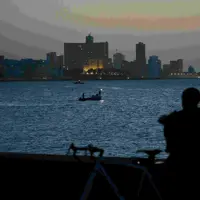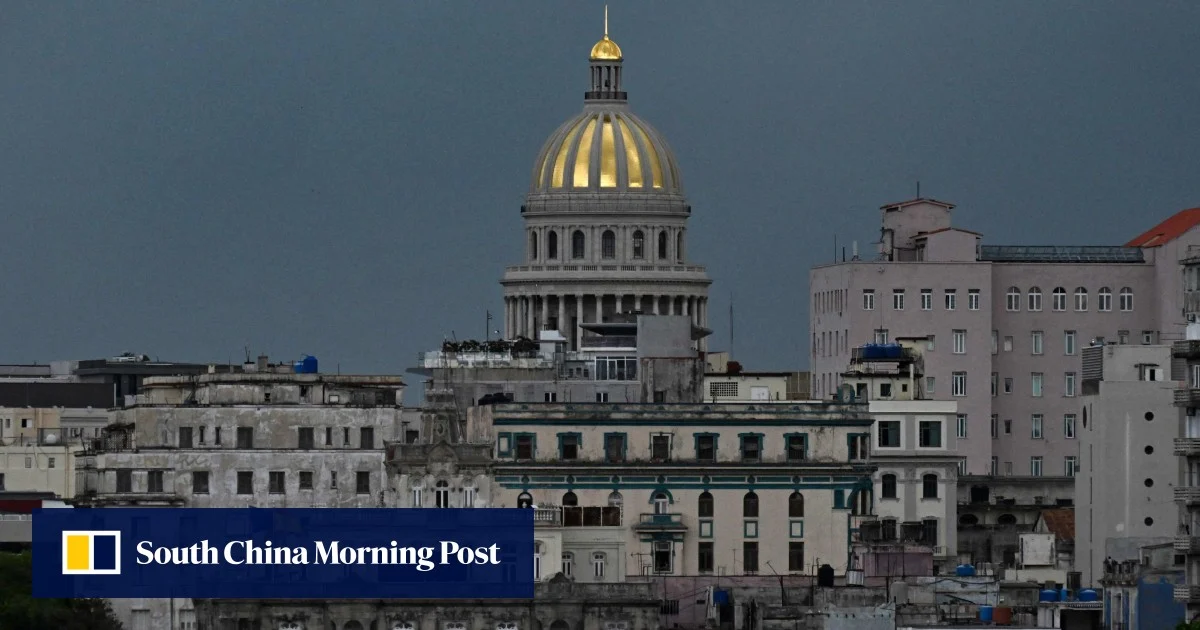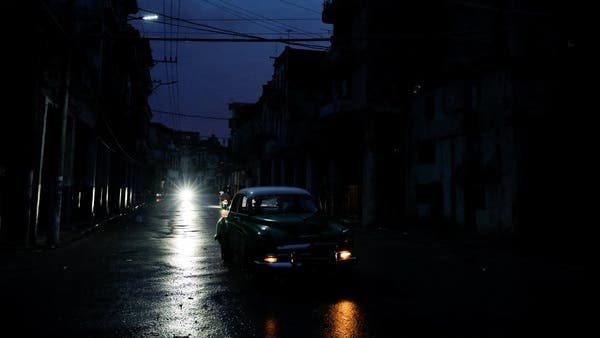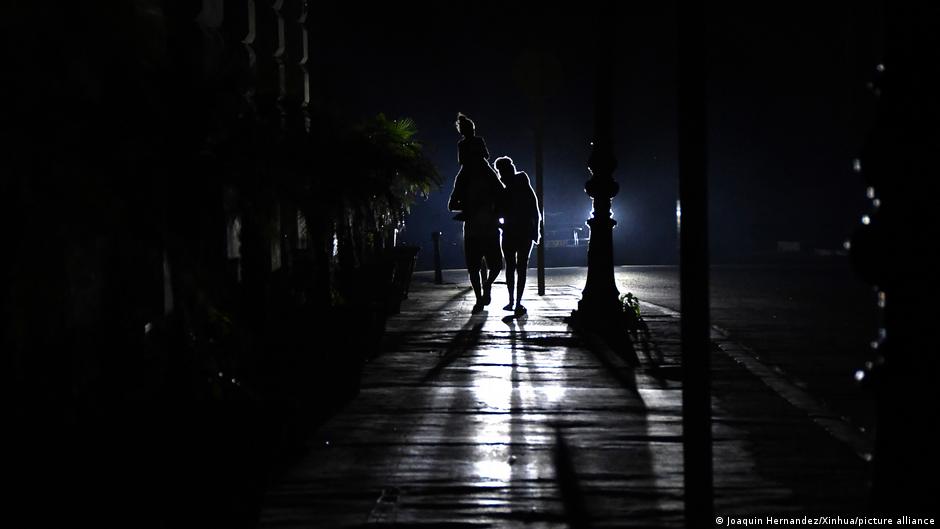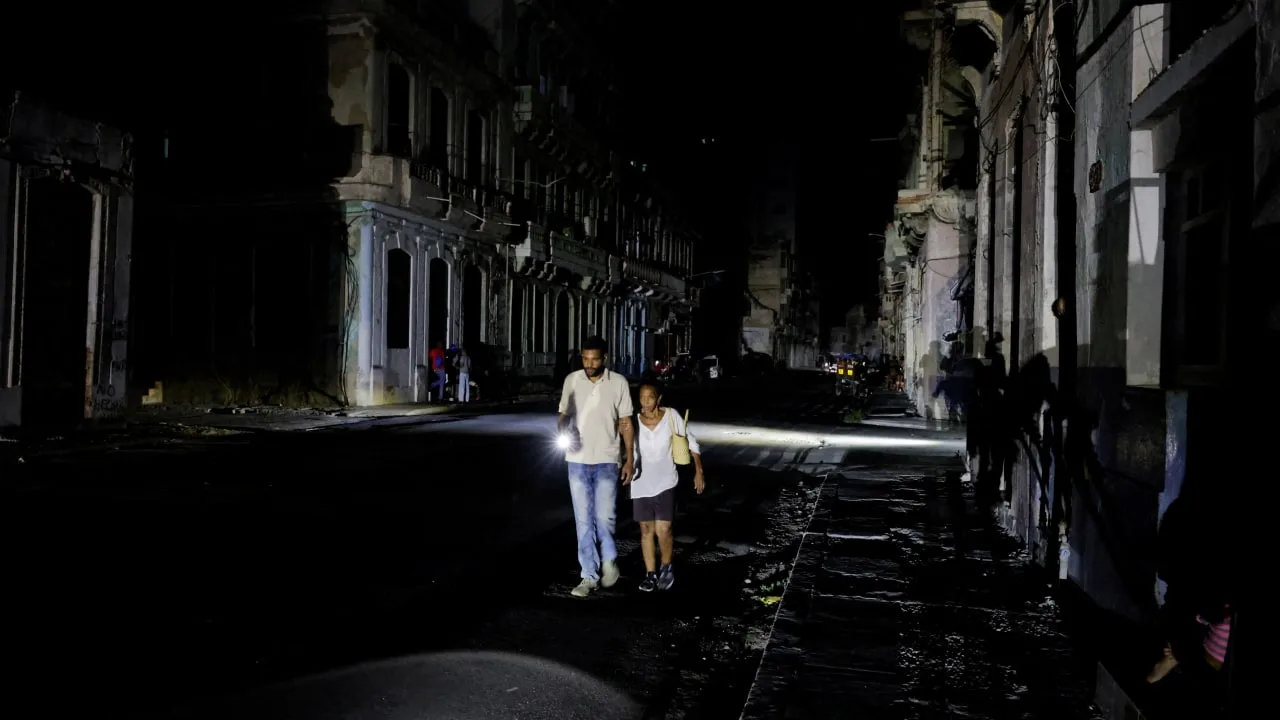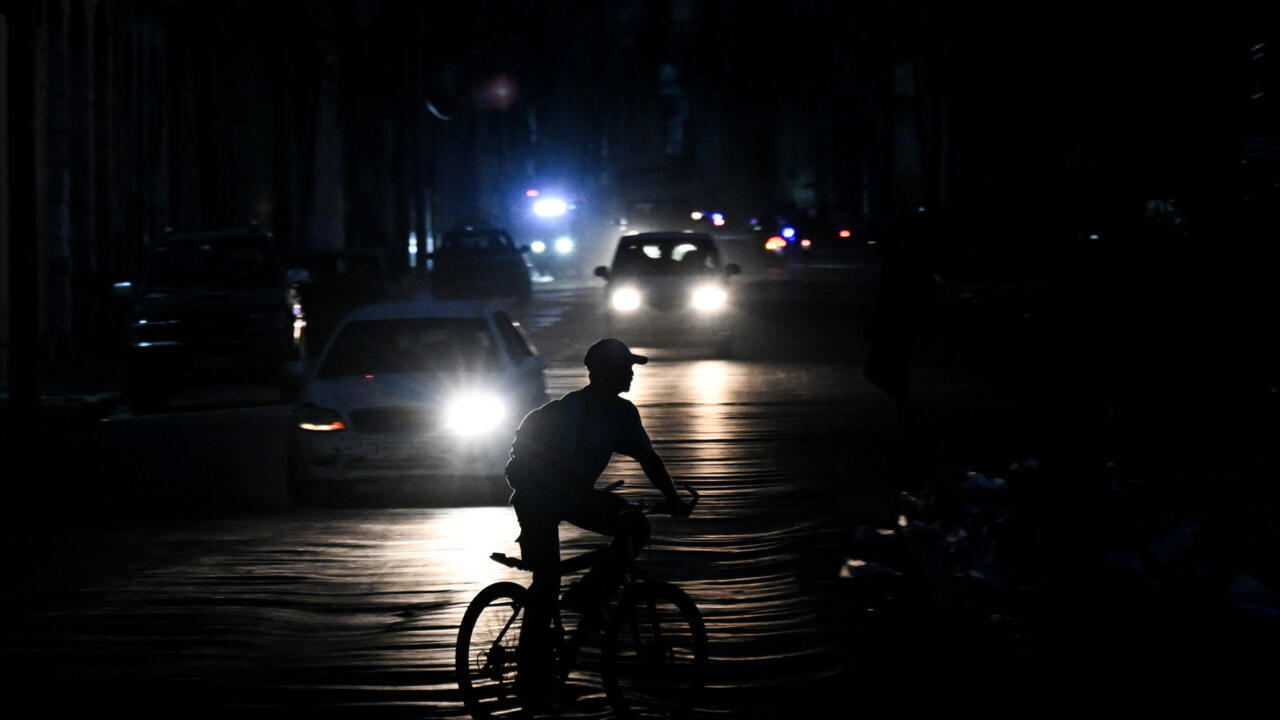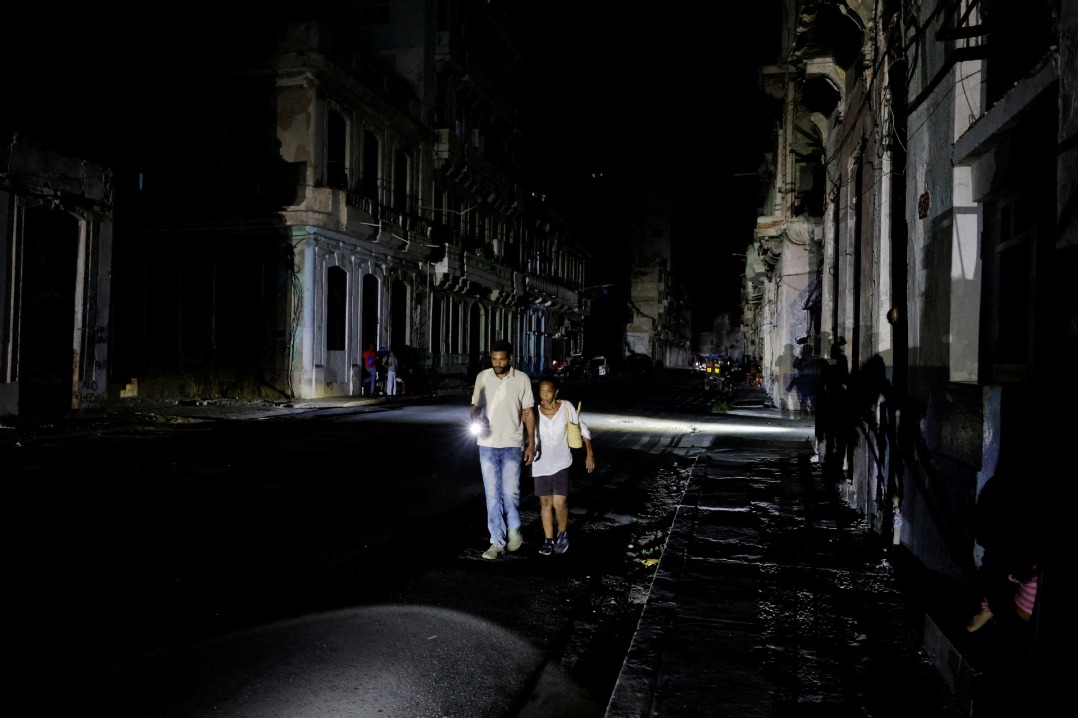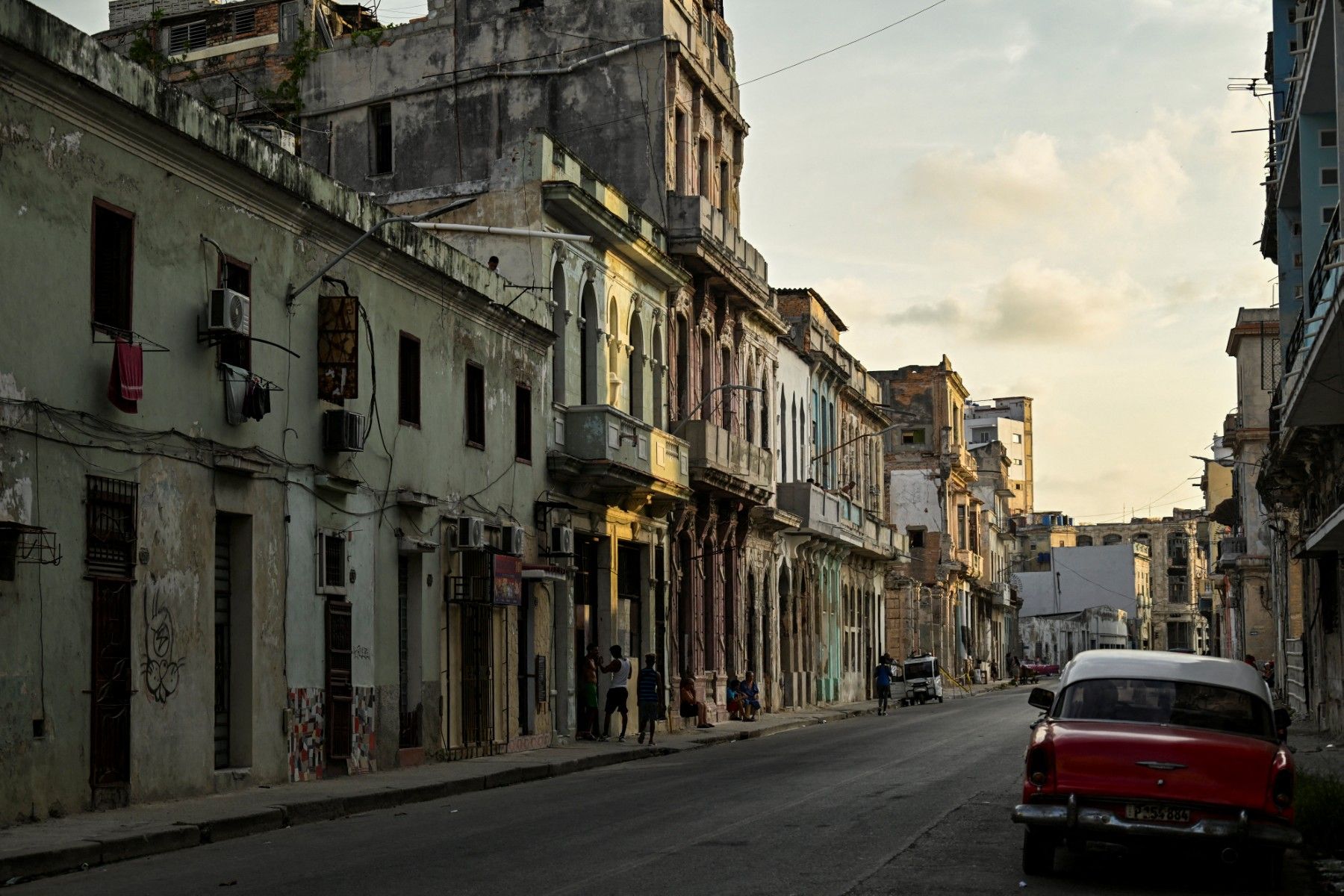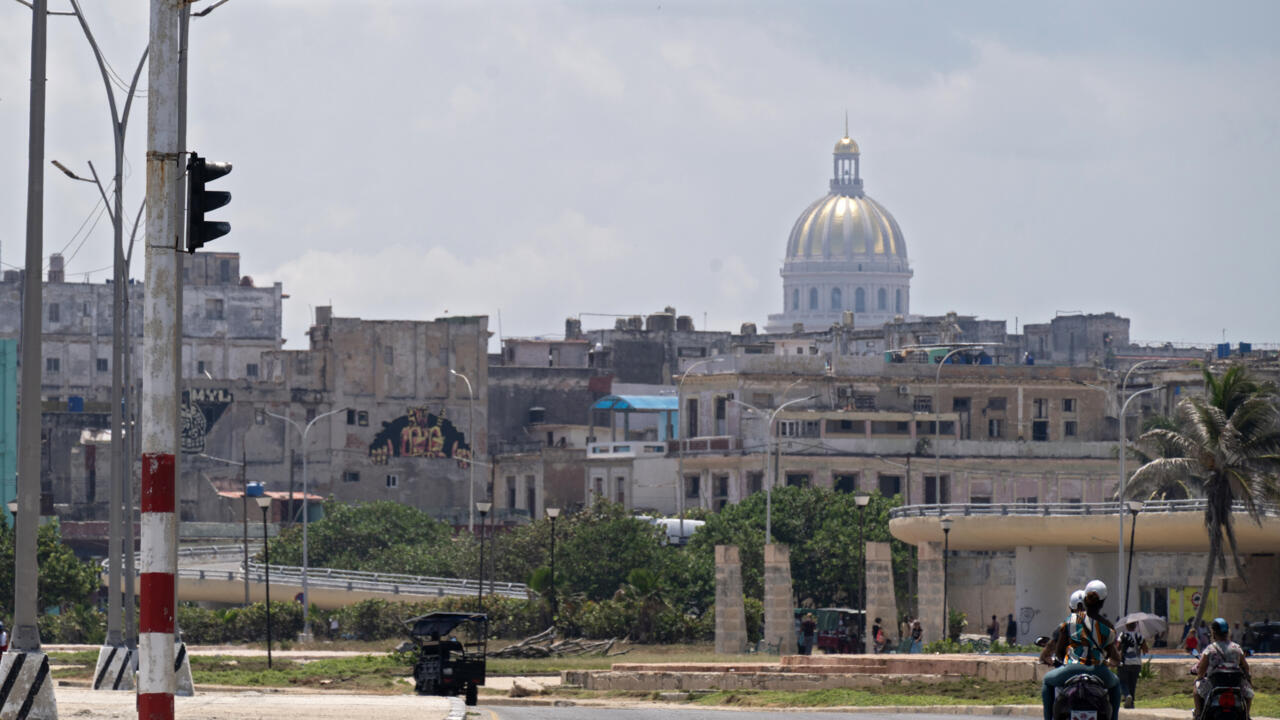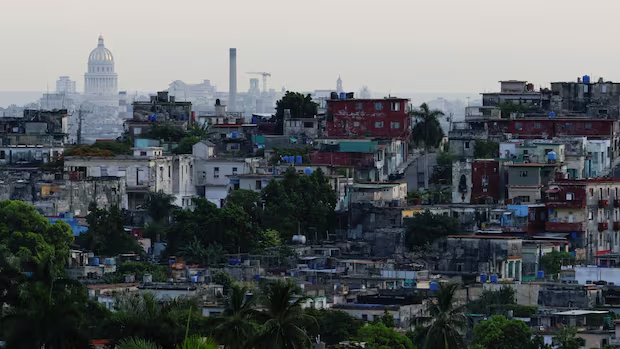
WorldCuba saw two nationwide power outages in a span of hours between Sunday and Monday, leaving the island's population once again having to wait for the lights to come back on.Recurring outages leave some fatalistic about the likelihood of the next oneCBC News · Posted: Aug 06, 2026 4:00 AM EDT | Last Updated: August 6Listen to this articleEstimated 5 minutesThe audio version of this article is generated by AI-based technology. Mispronunciations can occur. We are working with our partners to continually review and improve the results.The cityscape of Havana on Tuesday as Cuba scrambles to reconnect its electrical grid following a nationwide blackout. Cubans have experienced the blackouts on repeated occasions this year. (Norlys Perez/Reuters)The way Alexey Ríos García sees it, "things are only getting worse" in Cuba.The 30-year-old construction worker from Havana slept on a seawall earlier this week, as he tried to stay cool during yet another island-wide power outage, which arrived on a day of 34 C heat and followed prior grid failures in March and in July."Tomorrow it'll collapse again ... and we'll be back to sleeping on the Malecón," Ríos García said, speaking to The Associated Press on Monday after his outdoor sleeping session.The Cuban government is struggling to deliver basic services — electricity being just one example — and that is making life very hard for the people living on the island who have already had to endure so much."Just when we start hoping [the energy grid] wouldn't collapse again, there it goes again," Elaine Delis Ramos, a 30-year-old physical education teacher, told the AP. "We don't have any solution."The challenges faced by the Cuban government are being exacerbated by a maximum pressure campaign from U.S. President Donald Trump's administration to force changes on the island nation.Here's a look at some of the latest events unfolding in Cuba.Ongoing power outagesIssues with Cuba's power grid predate the Trump administration, though the country has seen recurring grid failures this year.And they are happening on top of more localized outages that Cubans are having to deal with on a regular basis — often lasting for many hours each day.A man sells fruit in Havana during a power outage on Monday. (Ramon Espinosa/The Associated Press)"The problem with the National Electrical System has become something normal here in the country because it goes down every day," Havana resident Reinier Pérez told Reuters this week."We are living with an hour and a half, three hours, four hours of electricity, then 24, 36, 40 hours without power here in the capital — which is unheard of anywhere else in the world."Maria Isabel Miranda, a mother of two teenagers, said going without power for long periods of time makes life complicated for herself and her family."We try to prepare meals in advance because we have gas, but ... it’s hard to get through one night, two nights, or even three without electricity," she told Reuters on Tuesday.A man walks along a sidewalk in Havana, Cuba's capital, on Monday after a grid collapse caused a nationwide power outage. (Norlys Perez/Reuters)The electricity crisis has also taken on a diplomatic dimension. Cuba blames decades of U.S. sanctions and trade restrictions for limiting access to fuel, financing and spare parts needed to maintain its power system, while Washington says the outages reflect failures of the country's state-run economic model.On Tuesday, Bruno Rodríguez Parrilla, Cuba's foreign affairs minister, said in a post on X that the ongoing grid disconnections are "direct consequences" of U.S. actions against the country.A lack of fuelThe Trump administration in January threated to put tariffs on any country providing oil to Cuba, which curtailed Havana's ability to import fuel.Ensuing fuel shortages have hampered public transportation and garbage pickup and worsened water shortages in Cuba.A man rides past an empty gas station in Havana on July 29. (Yamil Lage/AFP/Getty Images)The fuel issues have also spurred Cubans to look to workarounds when it comes to transportation, including using solar-powered tricycles or conventional bicycles to get around.On Tuesday, Farhan Haq, the deputy spokesperson for United Nations Secretary General António Guterres, was asked if the UN was involved in trying to get Cuba fuel amid the recent blackouts."We have been talking to various countries that are interested in helping with Cuba in an effort to make sure that for humanitarian purposes, Cuba has the fuel that it would need ... for its humanitarian needs," Haq said.WATCH | A charcoal-powered car amid a fuel crisis in Cuba:#TheMoment a Cuban converted his car to run on charcoalMarch 20|Duration 1:09Cuban mechanic Juan Carlos Pino describes the moment he converted his car to run on charcoal as the U.S. oil embargo drives gasoline prices sky-high.Tourism declineA lack of fuel supplies has also made it more difficult for Cuba to welcome tourists.Canada's major airlines halted service to the island earlier this year, after Cuba let it be known that it did not have enough fuel for planes to fill up there. Ottawa's current travel advice is to avoid all non-essential travel to the island.WATCH | Canadian airlines suspend flights to Cuba:Canadian airlines halting flights to Cuba indefinitelyJune 6|Duration 2:45Air Canada, Air Transat and Sunwing Vacations, a group that includes WestJet, announced they will be suspending Canadian flights to Cuba indefinitely. Air Transat says the "current geopolitical situation in Cuba" is behind the decision. Canada's major airlines initially suspended flights to Cuba in February. Cuban-Canadians in Toronto remain concerned for family facing the uncertainty around electricity and gas shortages in the country. The CBC's Lorenda Reddekopp has the latest.More than one million Canadians visited Cuba, on an annual basis, in the years before the COVID-19 pandemic.But Cuba has suffered a wider drop-off in tourism as major hotel chains with links to companies from outside the island have reduced their footprint amid U.S. sanctions this year. Spain's Meliá hotel chain announced in July that it would fully withdraw from Cuba.Tourists cross a street near a sightseeing bus in Havana on June 8, as U.S. sanctions have led most major tourism and travel companies to leave Cuba or drastically scale back operations. (Norlys Perez/Reuters)U.S. tensions, threatsIn addition to the fuel blockade and the implementation of various sanctions, U.S. officials have been loudly proclaiming that Cuba must make changes. The key messengers on this point have included U.S. Secretary of State Marco Rubio, CIA director John Ratcliffe and Trump himself.There have also been threats of possible U.S. military intervention in Cuba.Cuban officials have stated that their country is not a threat to their neighbour to the north, and they have warned the U.S. not to consider such a course of action. Havana has announced plans to open up parts of the Cuban economy, though Cuban President Miguel Díaz-Canel has said key sectors will not be privatized."We are not going to implement predatory capitalism or carry out a massive privatization of national assets, as some fear," he said in a speech last week.Díaz-Canel stated there would be "no privatization" of services considered "strategic to the nation."Cyclists pass by a display in Havana in March showing images of late Cuban leader Fidel Castro, his brother Raúl Castro and Miguel Díaz-Canel, the current president. (Ramon Espinosa/The Associated Press)With files from The Associated Press and Reuters
More misery for Cubans as power grid fails again amid summertime heat | CBC News
Cuba saw two nationwide power outages in a span of hours between Sunday and Monday, leaving the island's population once again having to wait for the lights to come back on.
1,197 words~5 min read