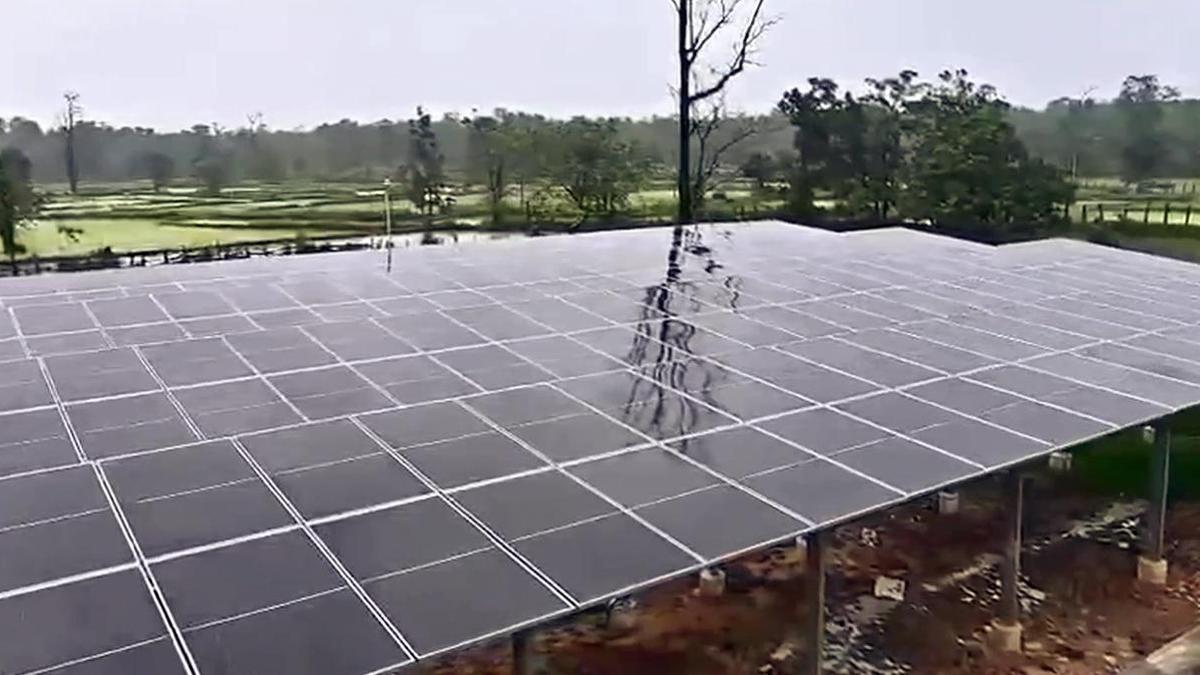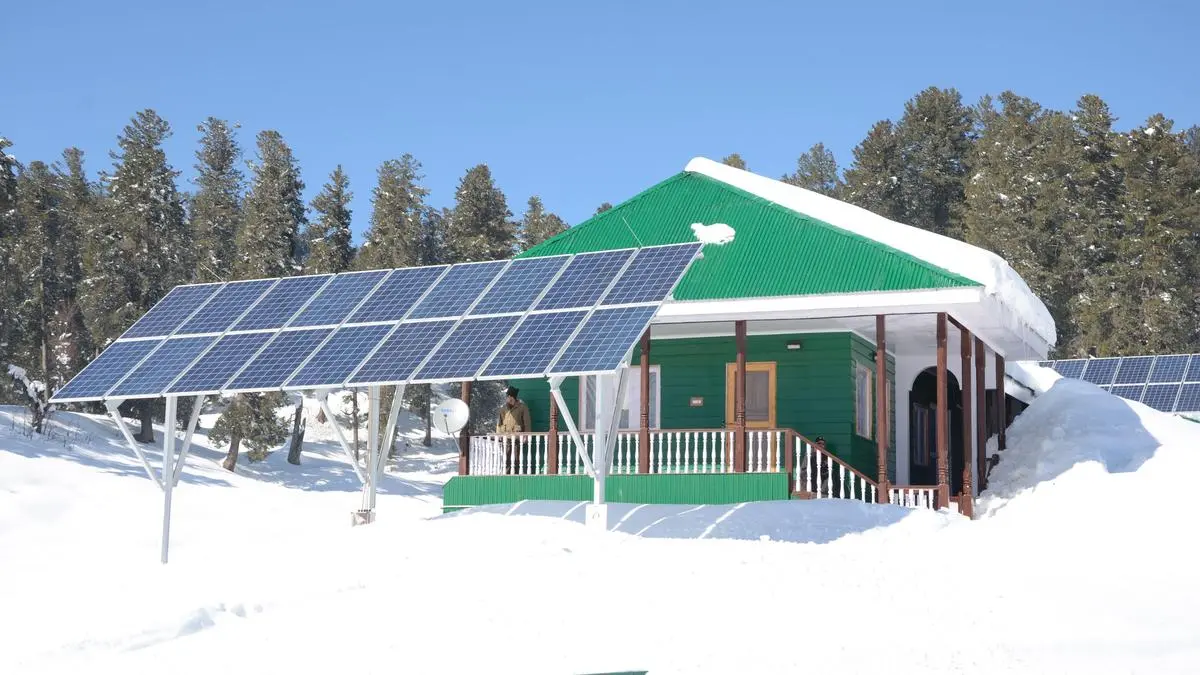
For Jammu and Kashmir, the numbers indicate that demand for rooftop solar has gathered momentum.
| Photo Credit:
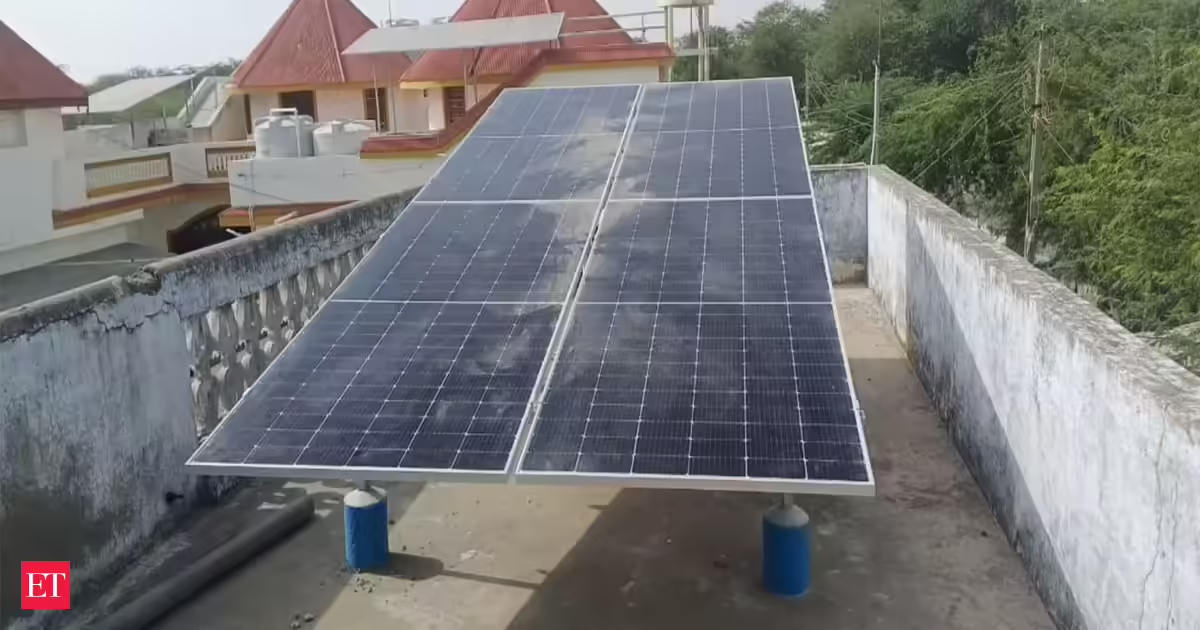
Jammu and Kashmir’s rooftop solar programme under the Centre’s PM Surya Ghar: Muft Bijli Yojana is moving into a crucial implementation phase, with official data showing that public demand for the scheme has significantly outpaced the number of rooftop systems installed so far.According to a written reply tabled in the Rajya Sabha, 85,908 households in the Union Territory have applied under the scheme, while rooftop solar systems have been installed at 39,160 homes. The figures suggest that the next stage of the programme will centre on converting the large pool of applicants into commissioned rooftop solar consumers.The PM Surya Ghar scheme, launched in February 2024, aims to provide free electricity of up to 300 units a month through subsidised rooftop solar installations and has set a national target of one crore households by 2026-27.The Centre has described the scheme as demand-driven, with installations depending on multiple stages, including consumer applications, vendor execution, DISCOM approvals and subsidy processing. It has also said implementation is reviewed regularly to streamline the rollout.For Jammu and Kashmir, the numbers indicate that demand for rooftop solar has gathered momentum. While applications have crossed the 85,000 mark, installations have reached 39,160, signalling that execution is now becoming the defining phase of the programme in the Union Territory.The pace of installations has also picked up since the scheme was rolled out. Official data show that 560 rooftop systems were installed in 2024, followed by 17,939 in 2025. In the current year, another 6,661 installations had been completed up to March 5, indicating that implementation is continuing as more households move through the process.District-level data show that Srinagar has recorded the highest number of completed installations at 6,518, followed by Jammu with 5,520 and Kupwara with 3,863. Baramulla has reported 2,487 installations, while Anantnag, Kathua, Budgam and Pulwama have each crossed the 2,000-installation mark.Focus on executionThe gap between applications and completed installations also points to the scale of the programme that remains to be executed. “If a larger share of applicants progresses to installation, Jammu and Kashmir’s rooftop solar capacity will expand significantly in the coming months, strengthening the region’s contribution to the Centre’s residential solar mission”, said an official. He said the focus is now more on sustaining the pace of implementation.“ How quickly applications translate into commissioned rooftop systems will be a key indicator of the scheme’s progress in Jammu and Kashmir as it enters its next phase”, added the official. Published on August 6, 2026