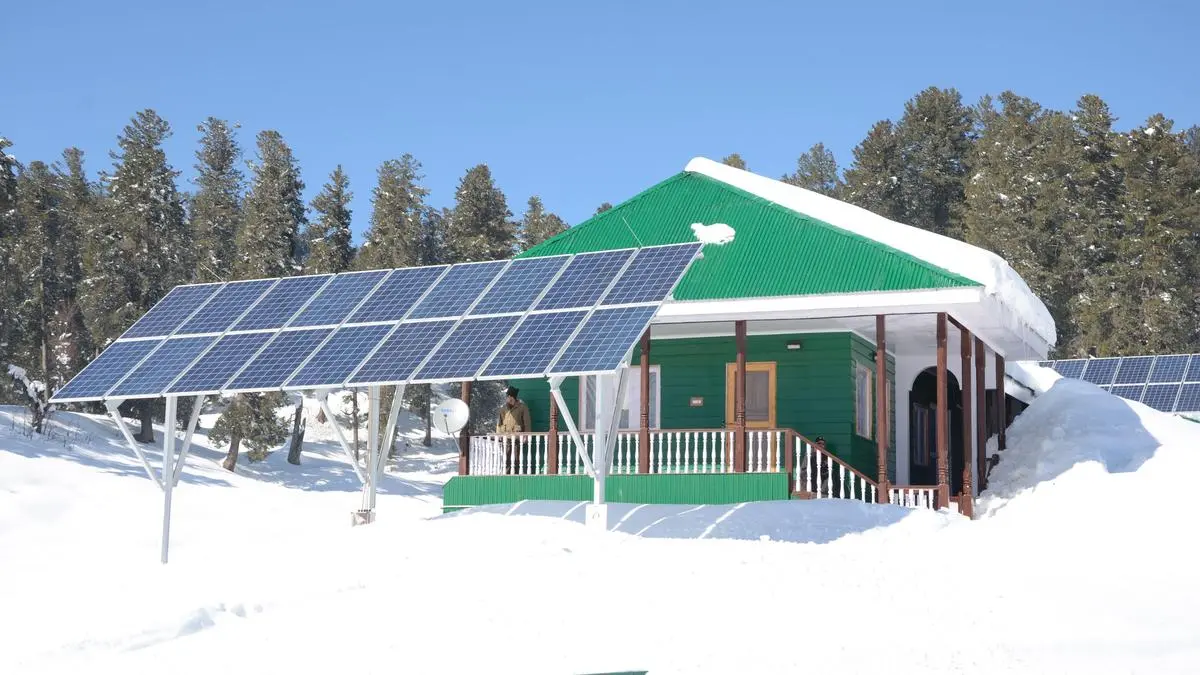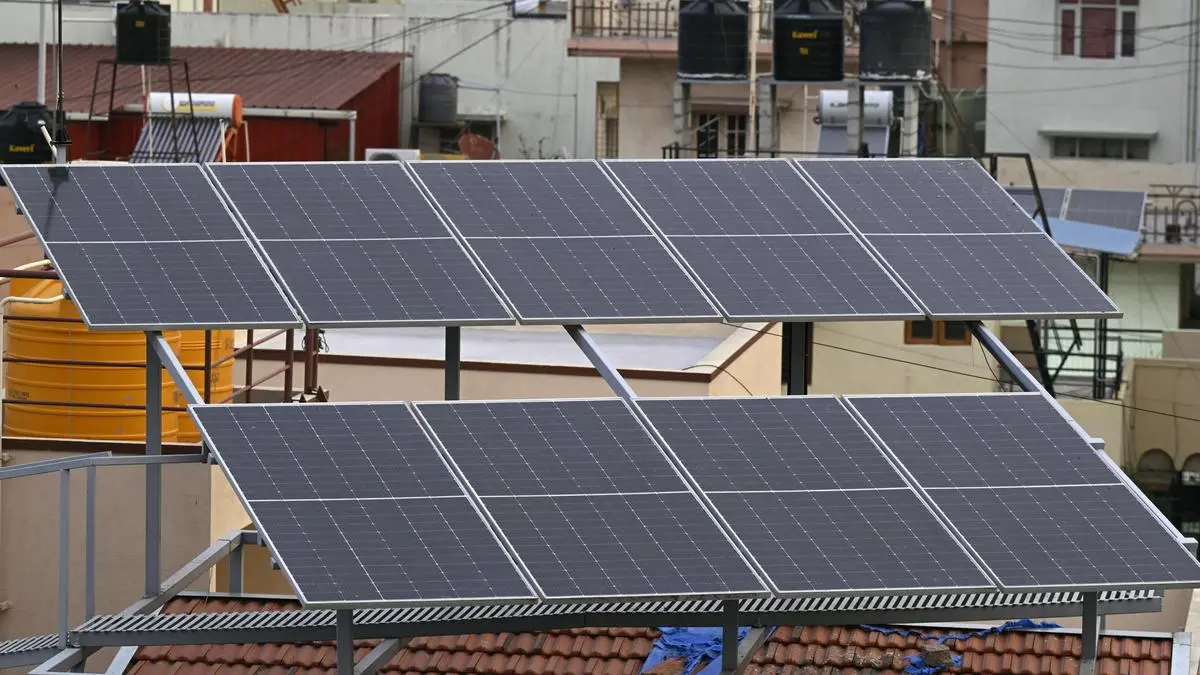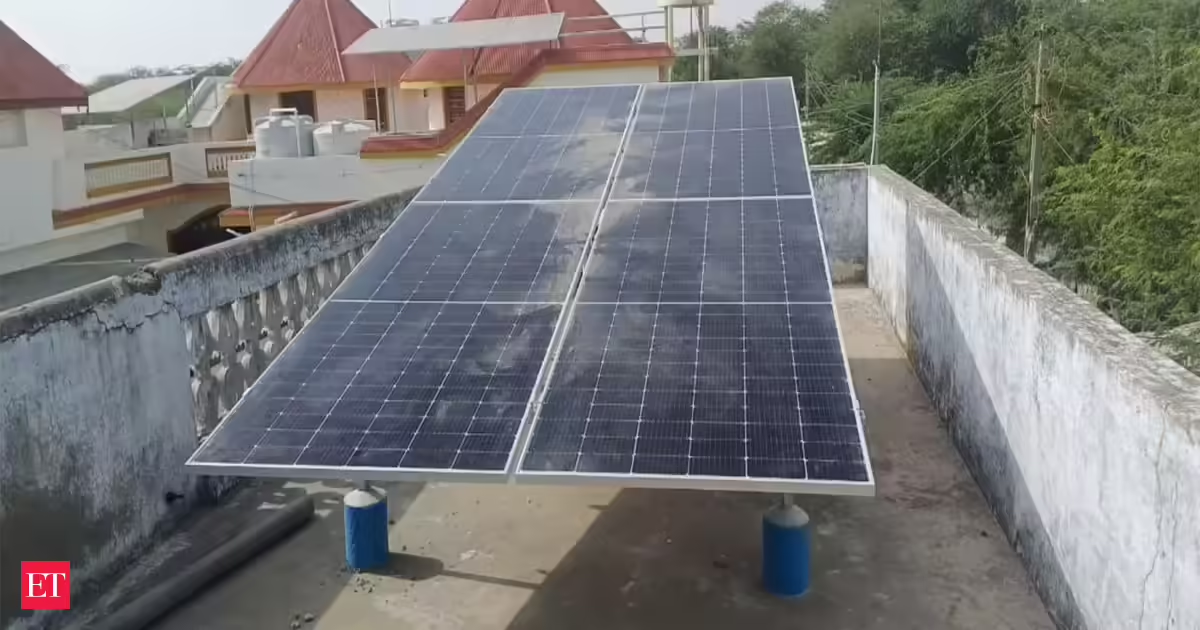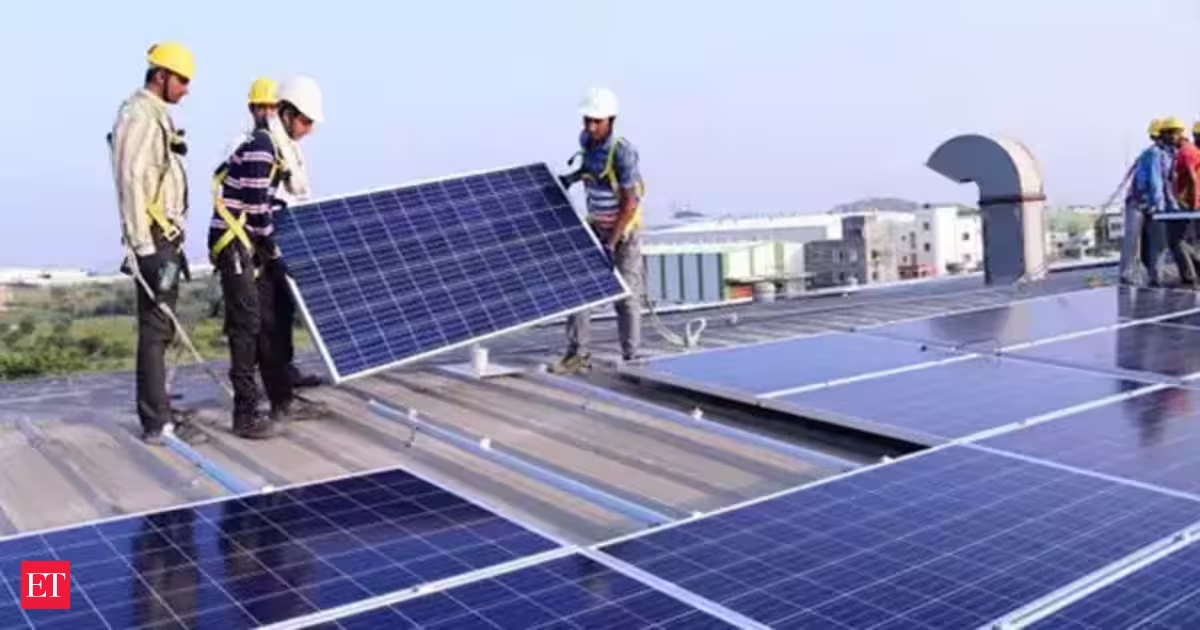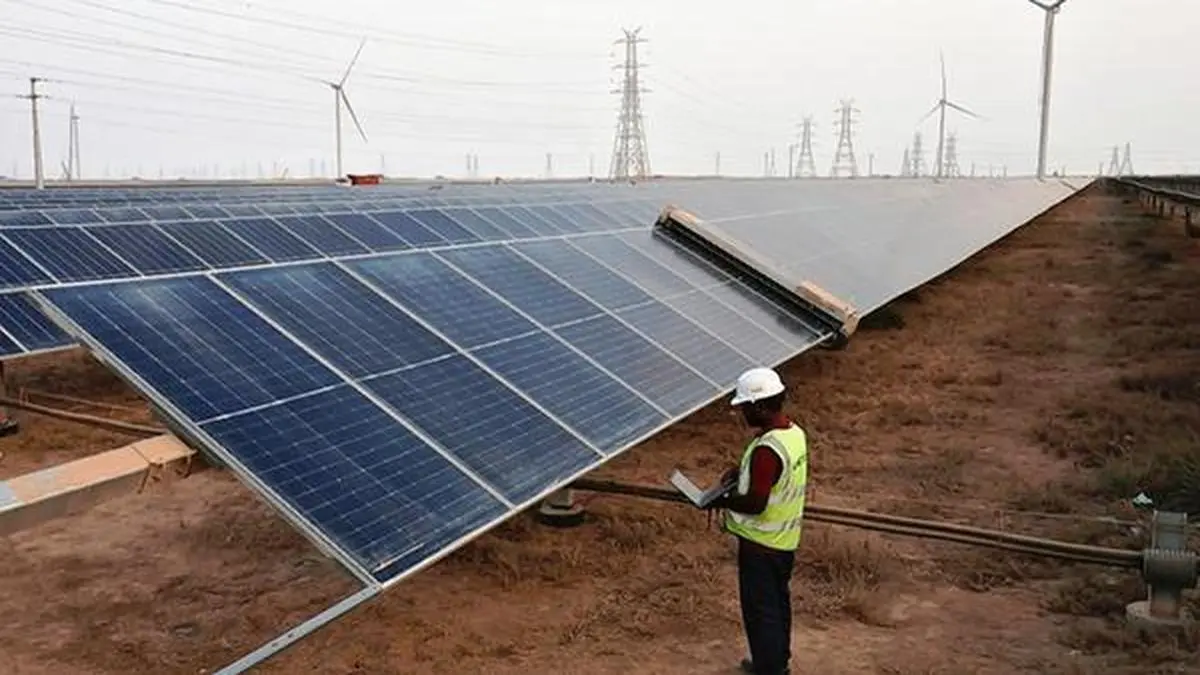
Official data show the Union Territory has installed rooftop solar systems for 37,138 residential consumers against a target of 83,500, achieving about 44 per cent of the target
| Photo Credit:
With just eight months left to meet the Centre’s March 2027 target of one crore residential rooftop solar installations under the PM Surya Ghar: Muft Bijli Yojana across India, Jammu and Kashmir has entered the most critical phase of the programme, where the pace of installations—rather than consumer enrolment—will determine whether the Union Territory achieves its rooftop solar goals.Official data show the Union Territory has installed rooftop solar systems for 37,138 residential consumers against a target of 83,500, achieving about 44 per cent of the target. While the progress indicates steady uptake of the scheme, more than half of the planned installations remain pending, prompting the administration to direct implementing agencies to speed up execution.Immediate challengeThe immediate challenge now appears to be translating enrolments into completed installations. Nearly 57,000 beneficiaries have already finalised vendor agreements, suggesting consumer demand is no longer the principal bottleneck. Instead, the focus has shifted to execution as the March 2027 deadline approaches.Officials said the residential programme has so far added 133.40 MW of rooftop solar capacity, while beneficiaries have received Central Financial Assistance of ₹291.38 crore. The Jammu and Kashmir government has supplemented this with an additional subsidy of ₹10.50 crore to encourage wider adoption.Government buildingsA similar pattern is visible in the government building solarisation programme. Of the 22,494 government buildings identified for rooftop solar systems, installations have been completed on 8,131 buildings, covering just over one-third of the total.Under the CAPEX model, projects have been completed on 3,338 government buildings, creating an installed capacity of 46.30 MW against a target of 65 MW.Officials said material has already been supplied for another 1,462 buildings, while supplies for 800 more are in transit, indicating that execution is likely to accelerate in the coming months.Meanwhile, implementation under the Renewable Energy Service Company (RESCO) model is gathering momentum. Work orders have been issued for 1,360 government buildings as part of a plan to develop 175 MW of rooftop solar capacity across nearly 8,000 public buildings.The simultaneous rollout of the CAPEX and RESCO models indicate that the administration is attempting to scale up installations rapidly as it races to meet the March 2027 deadline.Published on July 13, 2026