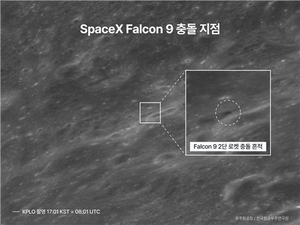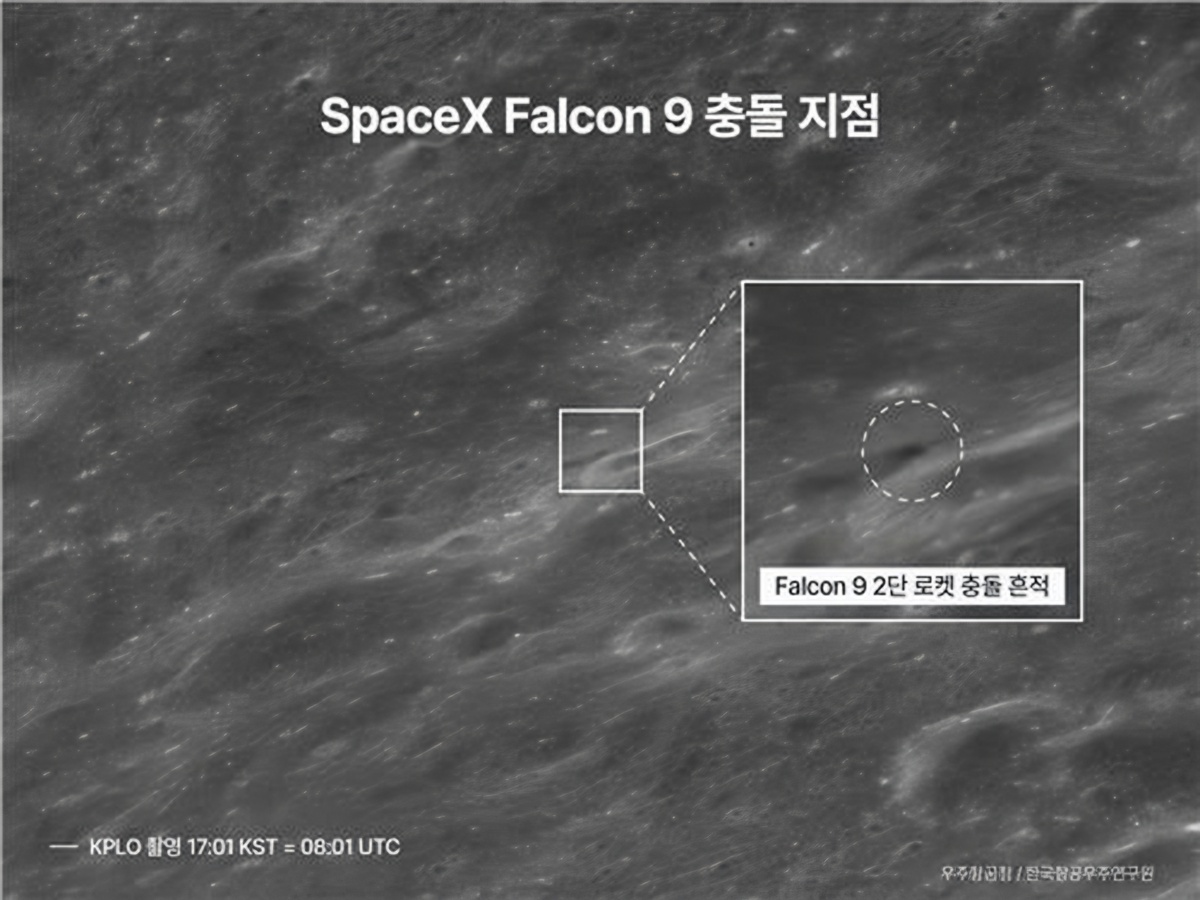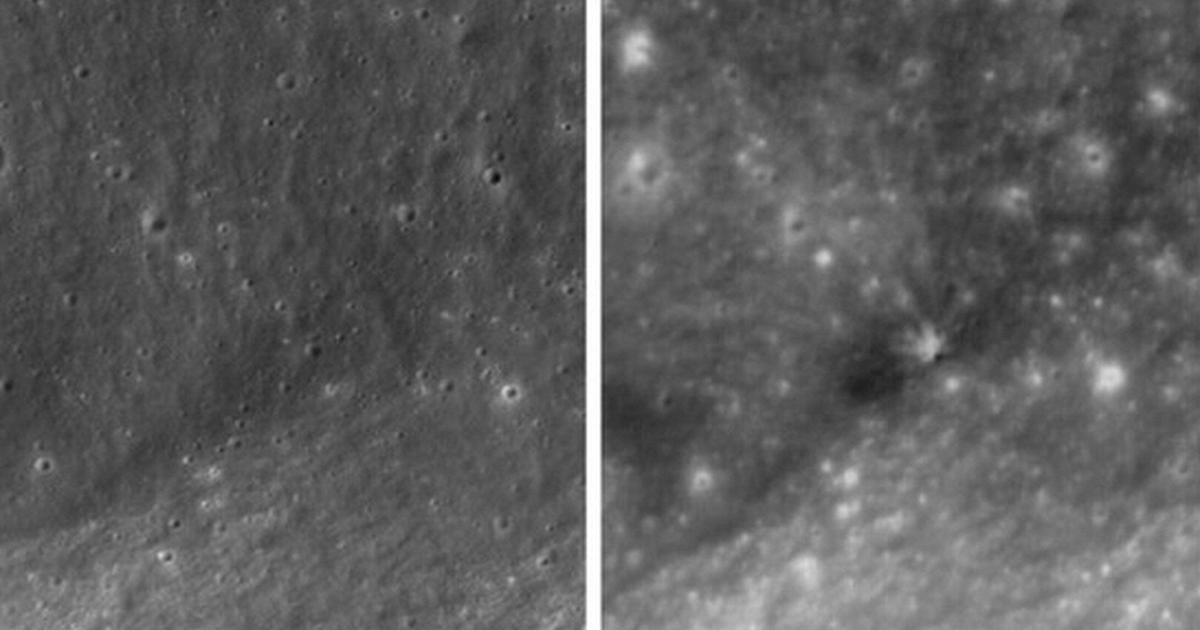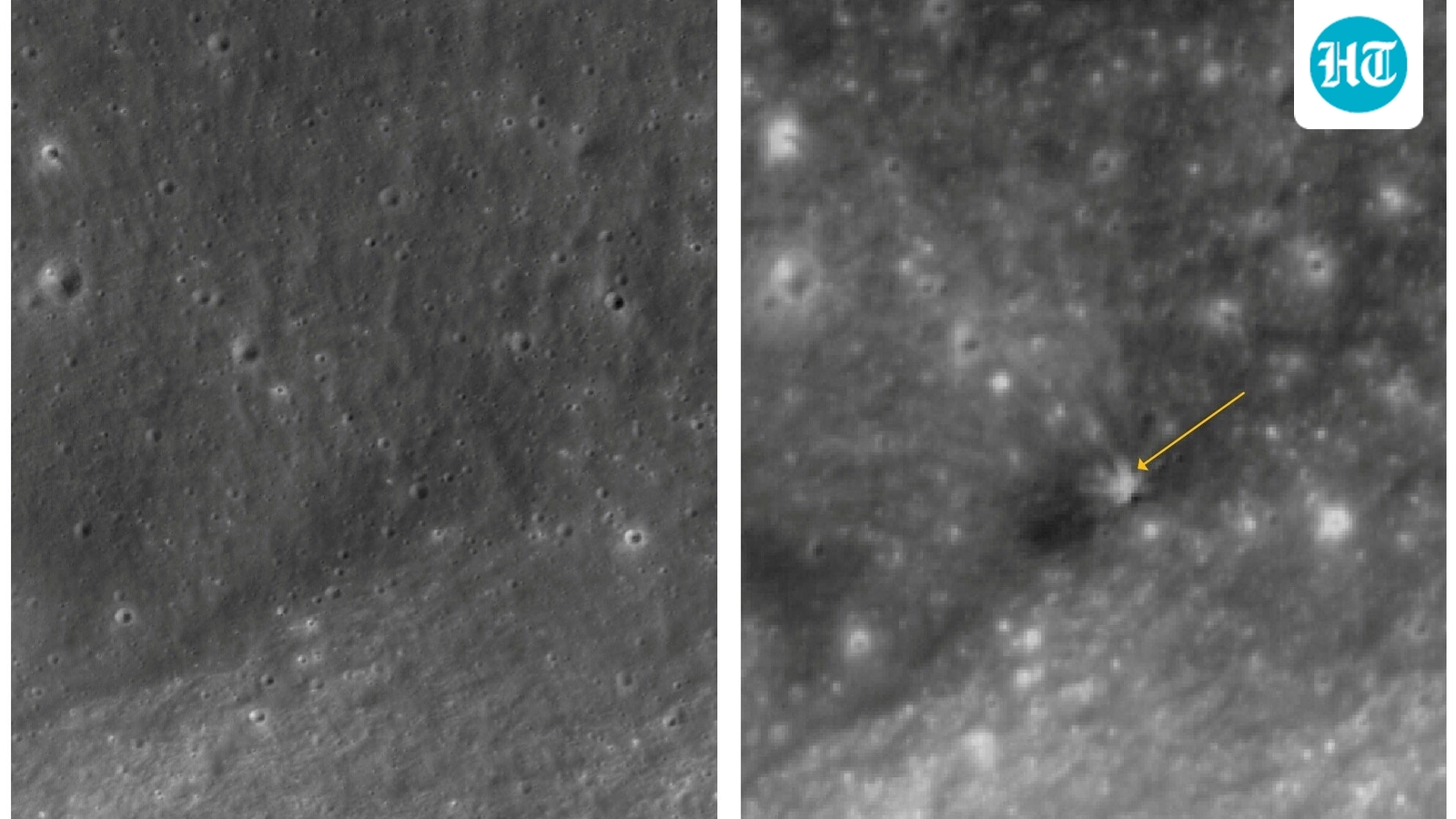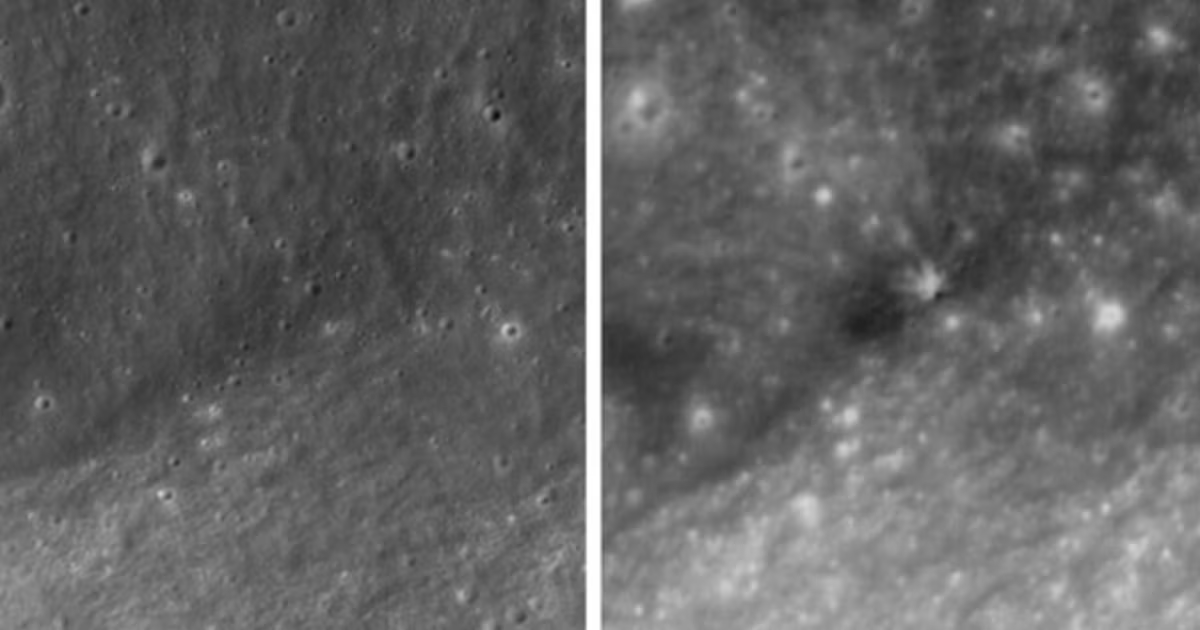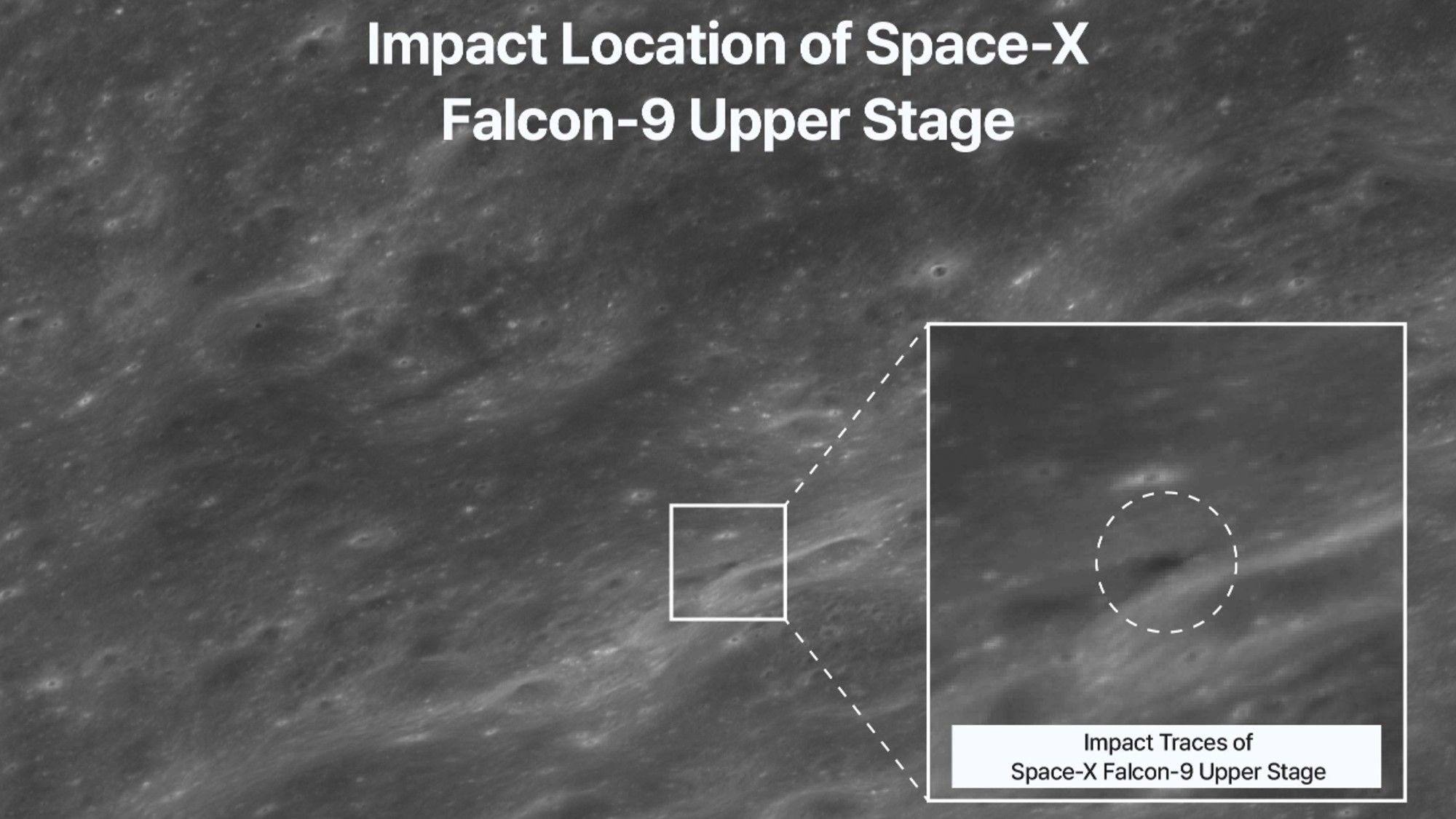
South Korea's Danuri lunar orbiter captured this image of the crater blasted out by a SpaceX Falcon 9 upper stage when it hit the moon on Aug. 5, 2026.
(Image credit: KARI)
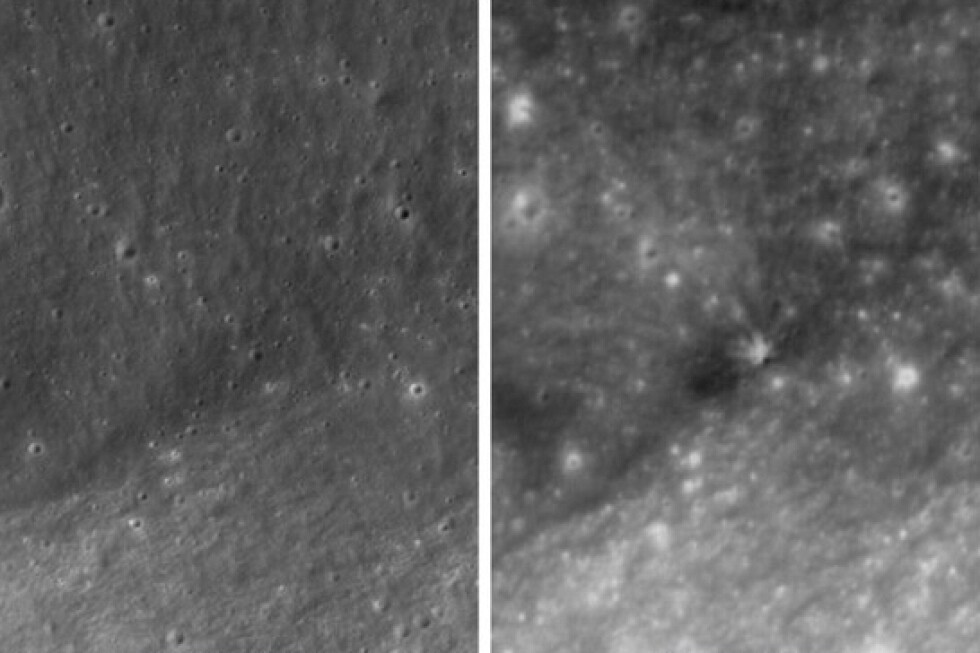
The final resting place of SpaceX's moon-smashing rocket has been found.The Korea Pathfinder Lunar Orbiter, known as Danuri, has captured imagery of the crater blasted out by the Falcon 9 upper stage that slammed into the moon early on Wednesday morning (Aug. 5)."Danuri began observations about 30 minutes before the collision and, through orbit control, passed over the impact site multiple times, conducting a total of 8 imaging sessions," officials with the Korea Aerospace Research Institute (KARI) said via X this morning (Aug. 6). "Through this observation, changes in the terrain around the impact site and traces of ejecta spread were confirmed."
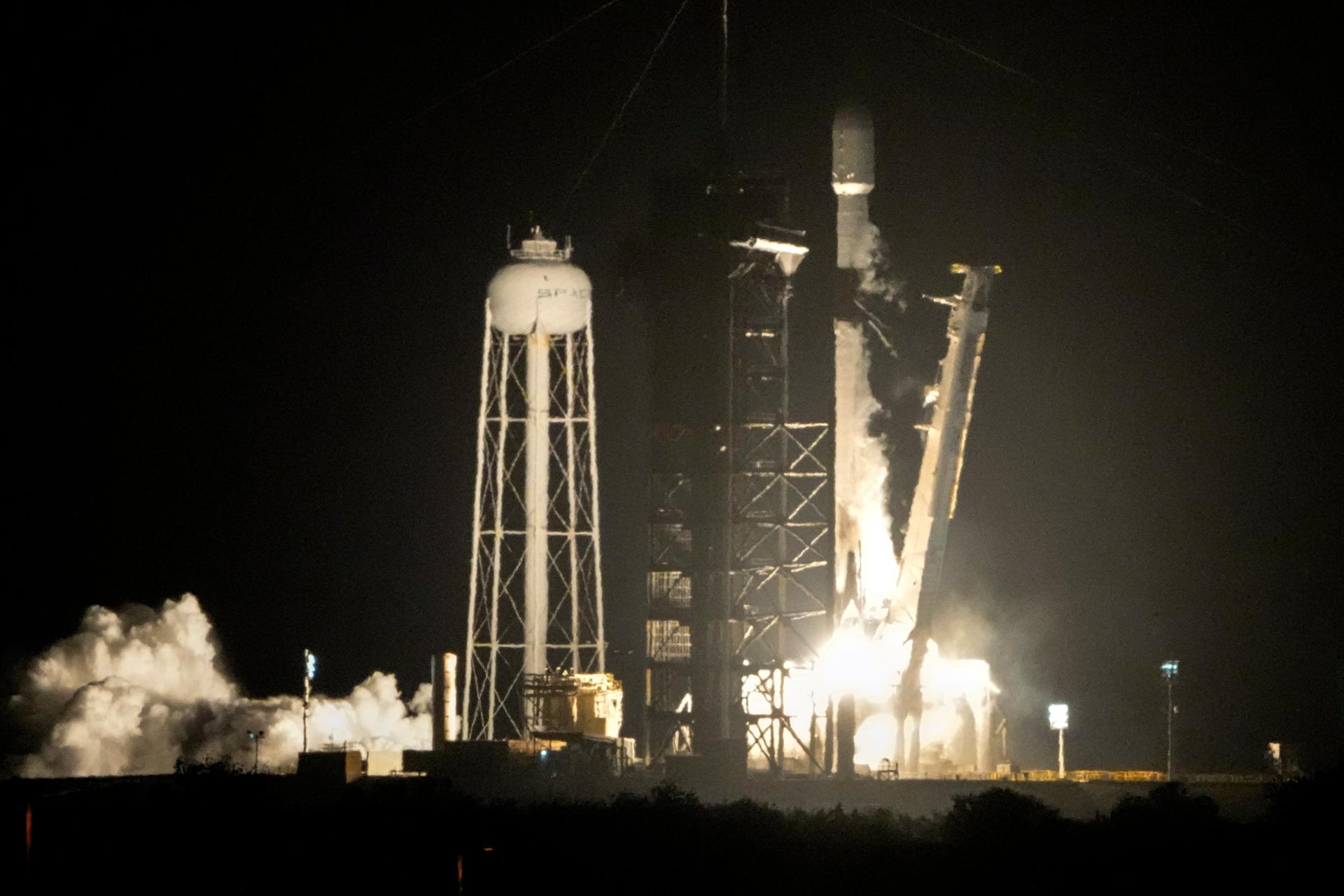
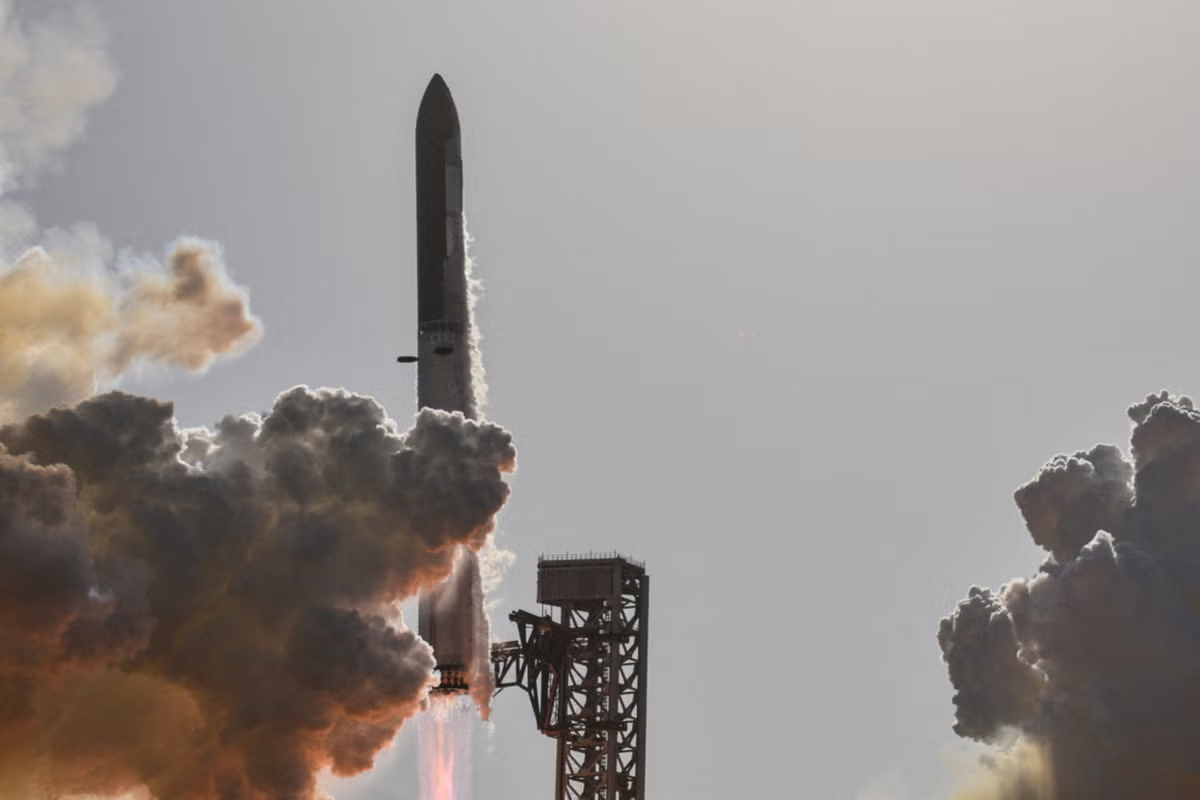
Before-and-after imagery of the impact site. (Image credit: KARI)"Danuri secured both pre-collision and immediate post-collision footage, enabling analysis of changes caused solely by the collision and providing important research data," they added in the X post, which shared several before-and-after images of the impact site.The Falcon 9 in question launched on Jan. 15, 2025, sending two private robotic moon landers — Firefly Aerospace's Blue Ghost and ispace's Resilience — to a high, moon-crossing Earth orbit. The duo then made their own way to the moon; Blue Ghost landed successfully on March 2 of that year, but Resilience crashed during its touchdown attempt.The Falcon 9's first stage came back to Earth shortly after liftoff for recovery and reuse, as such boosters commonly do. Falcon 9 upper stages, by contrast, are expendable. SpaceX usually disposes of them in Earth's atmosphere, but the upper stage on the Blue Ghost-Resilience mission used almost all of its fuel getting its payloads to their distant destination. So the 8,800-pound (4,000 kilograms) rocket body remained up there, orbiting Earth — until solar activity and gravitational forces pushed it on a collision course for the moon.