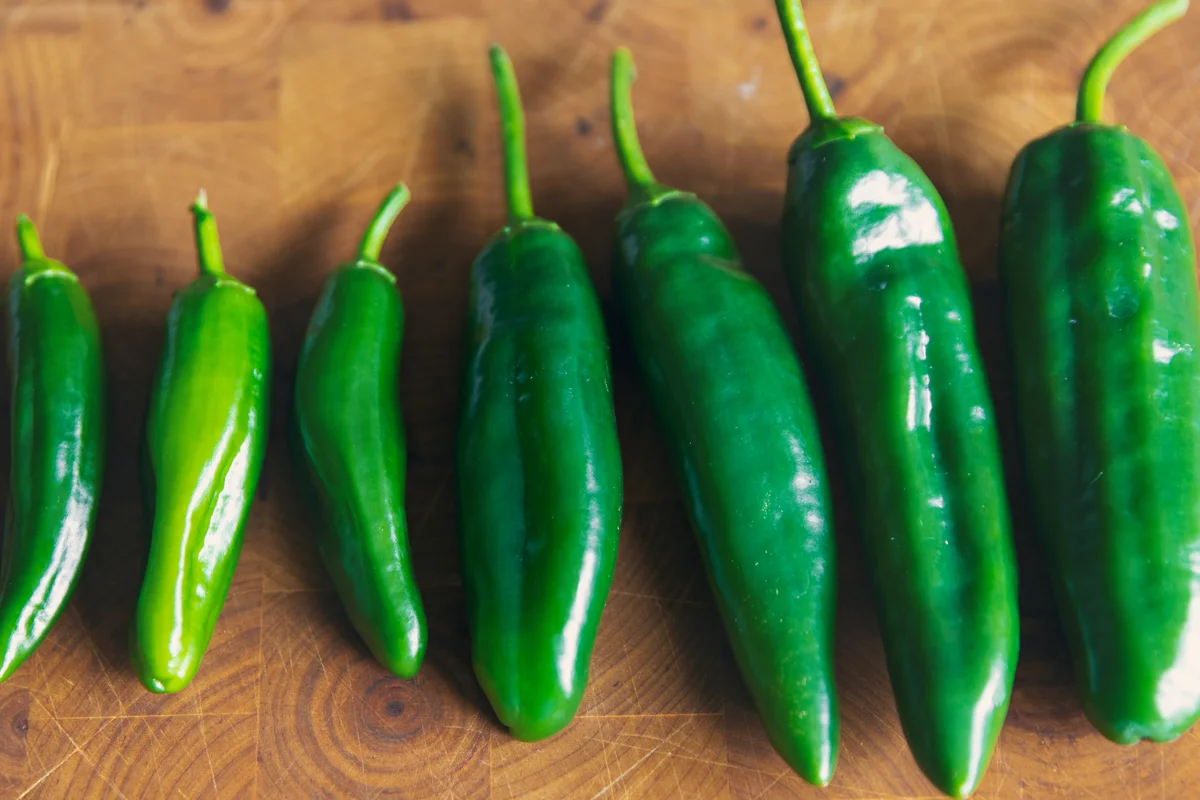
August 6, 20263 min read Add Us On GoogleAdd SciAmAs cases of a parasite-caused disease tied to shredded iceberg lettuce continue to climb, the nation's top public health body is warning of a new food-borne illnessBy Adam Kovac edited by Claire CameronHome grown jalapeño peppers on a wooden chopping board Getty Images/Justin PagetThe U.S. is in the throes of a cyclosporia outbreak, but there's apparently room for at least one more food-borne illness on the scene. According to the Centers of Disease Control and Prevention (CDC), hundreds of people across the country have been sickened with Salmonella after eating jalapeños.As of August 5, 345 cases have been identified across 27 states, with 36 of those requiring hospitalizations, the CDC reported.Public health officials tracked the source of the outbreak to jalapeño peppers from Sinaloa, Mexico that were distributed on a wholesale basis to restaurants by Coast Citrus Distributors. The affected peppers were mostly sent to two restaurant chains—Chipotle Mexican Grill and QDOBA.On supporting science journalismIf you're enjoying this article, consider supporting our award-winning journalism by subscribing. By purchasing a subscription you are helping to ensure the future of impactful stories about the discoveries and ideas shaping our world today.In a statement, QDOBA said it had removed all jalapenos from its restaurants "out of an abundance of caution.""We take any report involving guest health seriously and are committed to responding appropriately based on the facts and guidance from public health authorities," they said.Chipotle said in a statement it had removed Coast Citrus jalapenos from restaurants where they had been distributed and replaced them with peppers from different growers."The recalled jalapeño peppers are no longer in Chipotle restaurants and given these actions, the CDC and FDA have said they do not consider there to be a current ongoing risk from Chipotle restaurants in this outbreak," they said.Given those actions, the CDC said in its own statement that the agency, along with the Food and Drug Administration, "do not consider there to be a current ongoing risk from these establishments to consumers in this outbreak."The Food and Drug Administration is still investigating whether any of the jalapeños were sent to grocery stores, but so far there’s no evidence this occurred.Unlike cyclosporias, which is caused by a parasite, Salmonella is a family of more than 2,500 types of bacteria. Fewer than 100 of these cause illness in humans, according to the CDC. The bacteria live in the intestines of both humans and animals and infection can occur by consuming contaminated food or water, or by touching infected animals or animal feces.Symptoms can include watery diarrhea that may have blood or mucus in it, stomach cramps, headache, nausea, vomiting, and loss of appetite. These can start anywhere from six hours to six days after infection, and usually persist for four days to a week.Infections are fairly common: Salmonella is one of the leading causes of food-borne illness in the U.S., with the CDC estimating roughly 1.35 million cases occur each year. But because symptoms can sometimes be mild, only around one in 30 cases is diagnosed.On rare occasions, the infection can be deadly, with an average of 420 deaths in the U.S. per year. Children younger than five, particularly infants, as well as adults 50 and older with underlying medical conditions or those 65 or older are at higher risk of becoming seriously ill, as are people weakened immune systems.Treatment options are somewhat limited for mild cases: the CDC recommends drinking lots of fluids, as Salmonella symptoms can cause dehydration. Antibiotics are sometimes used for severe cases, but the CDC recommends avoiding those for mild cases, as some strains of resistant Salmonella have begun to pop up.Chipotle and QDOBA did not immediately respond to a request for comment.It’s Time to Stand Up for ScienceIf you enjoyed this article, I’d like to ask for your support. Scientific American has served as an advocate for science and industry for 180 years, and right now may be the most critical moment in that two-century history.I’ve been a Scientific American subscriber since I was 12 years old, and it helped shape the way I look at the world. SciAm always educates and delights me, and inspires a sense of awe for our vast, beautiful universe. I hope it does that for you, too.If you subscribe to Scientific American, you help ensure that our coverage is centered on meaningful research and discovery; that we have the resources to report on the decisions that threaten labs across the U.S.; and that we support both budding and working scientists at a time when the value of science itself too often goes unrecognized.In return, you get essential news, captivating podcasts, brilliant infographics, can't-miss newsletters, must-watch videos, challenging games, and the science world's best writing and reporting. You can even gift someone a subscription.There has never been a more important time for us to stand up and show why science matters. I hope you’ll support us in that mission.
CDC warns of Salmonella outbreak tied to jalapeño peppers sold to Chipotle and QDOBA
As cases of a parasite-caused disease tied to shredded iceberg lettuce continue to climb, the nation's top public health body is warning of a new food-borne illness
824 words~4 min read