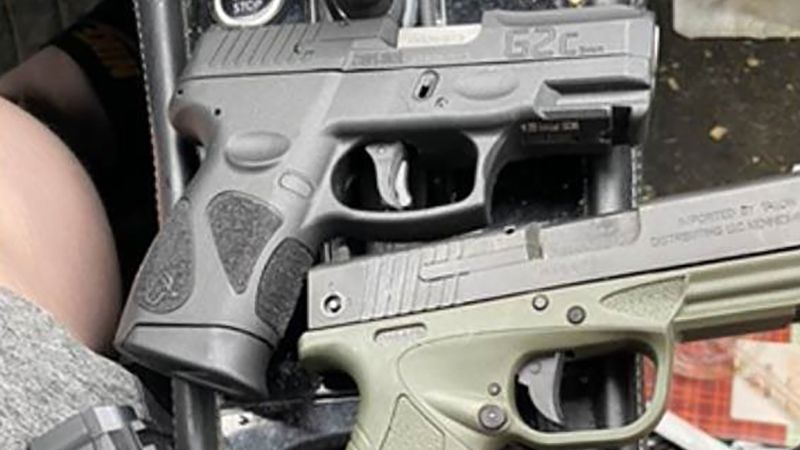
Curtis Squire kept a handgun in his New Orleans home. Police found it while executing a search warrant tied to a shooting he wasn’t charged with. He had prior convictions for heroin trafficking and burglary, which made the gun itself a federal crime under 18 U.S.C. § 922(g)(1), the felon-in-possession statute. A 5th Circuit panel upheld his conviction in June, rejecting his Second Amendment claim on the theory that history supports disarming drug traffickers because they’re dangerous. That should have been the end of it.It wasn’t. On July 20, the full 5th Circuit voted to rehear the case en banc, and Squire’s lawyers switched arguments entirely. They dropped the Second Amendment and went after something more foundational: the commerce clause. Their claim is that Congress never had the constitutional authority to make simple gun possession a federal crime in the first place, because a handgun sitting in a Louisiana living room isn’t interstate commerce. It’s just a gun in a house.
That question matters more than the defendant does. Under current doctrine, the government satisfies section 922(g)’s commerce element by showing that a firearm or a round of ammunition crossed a state line at some point in its existence, ever, by anyone, for any reason. The felon doesn’t have to move it. No sales have occurred. A gun manufactured in Connecticut and sold in Louisiana 30 years before the defendant touched it counts. Since virtually every firearm in the United States crosses a state line at some point in its supply chain, this reading turns a statute about commerce into a statute about possession, full stop. The 5th Circuit’s own precedent, following the Supreme Court’s 1977 decision in Scarborough v. United States, locked that interpretation in before the court ever developed a serious outer limit on the commerce clause.