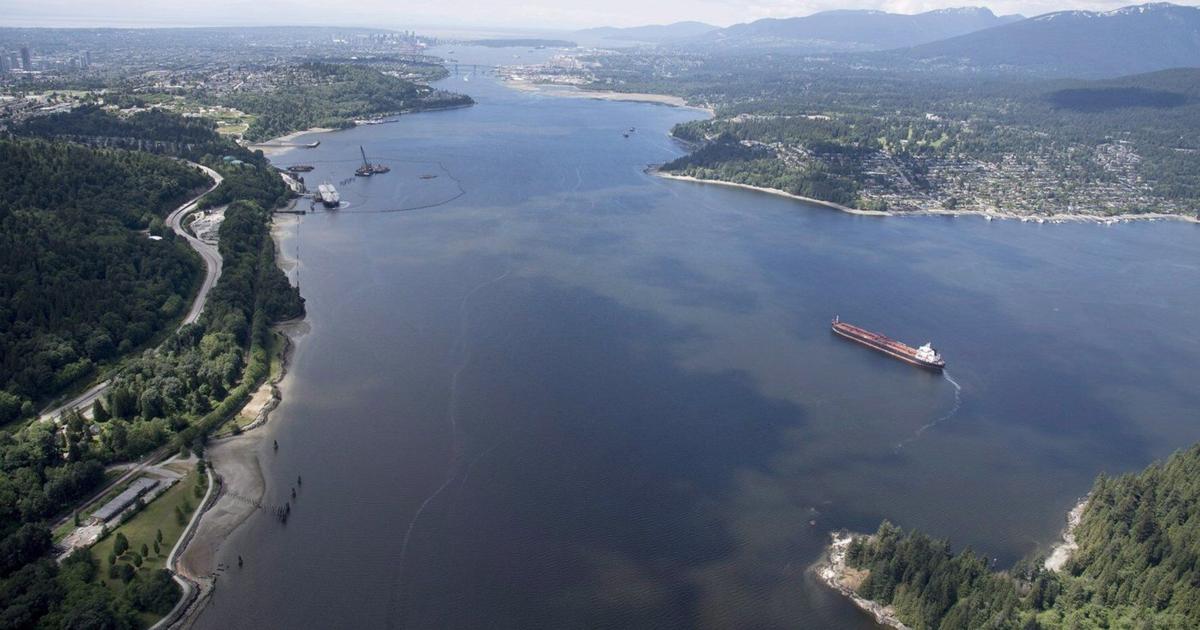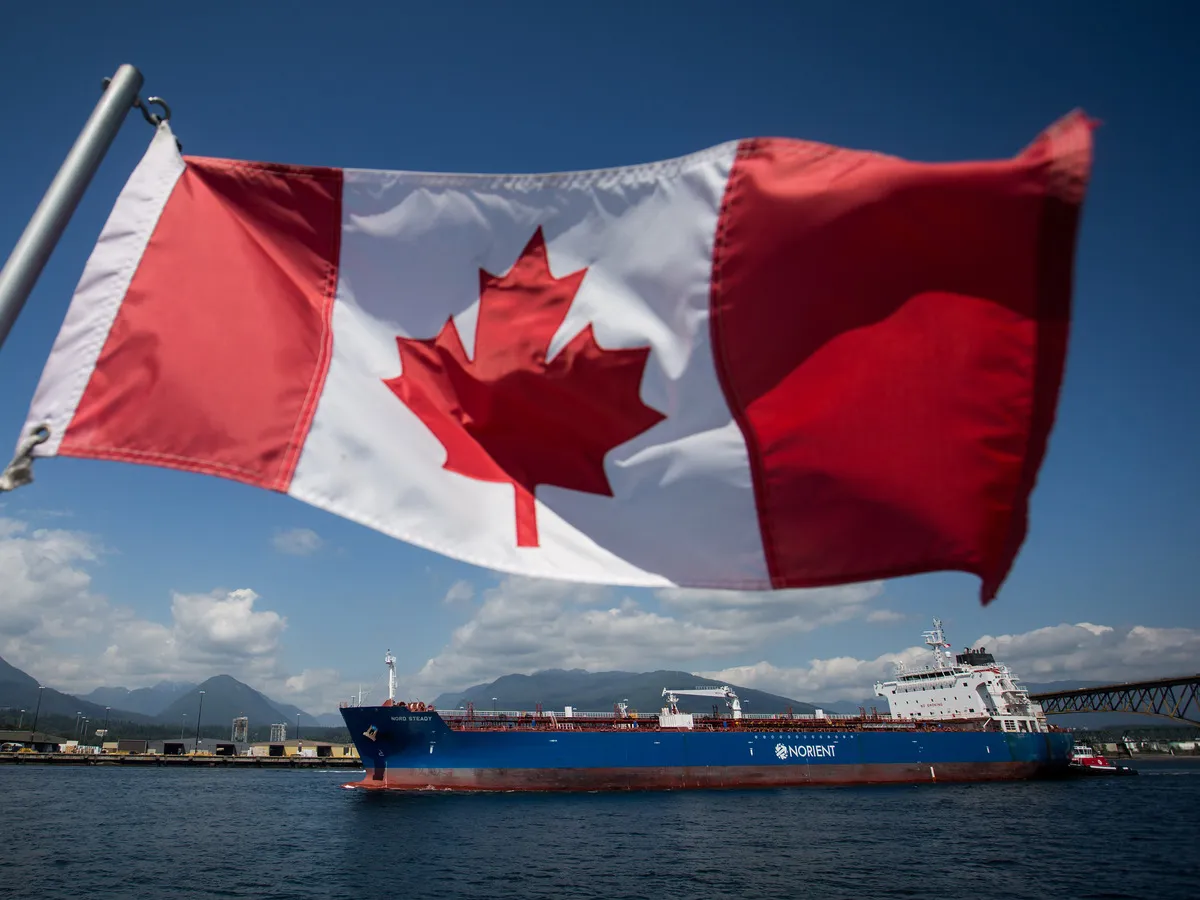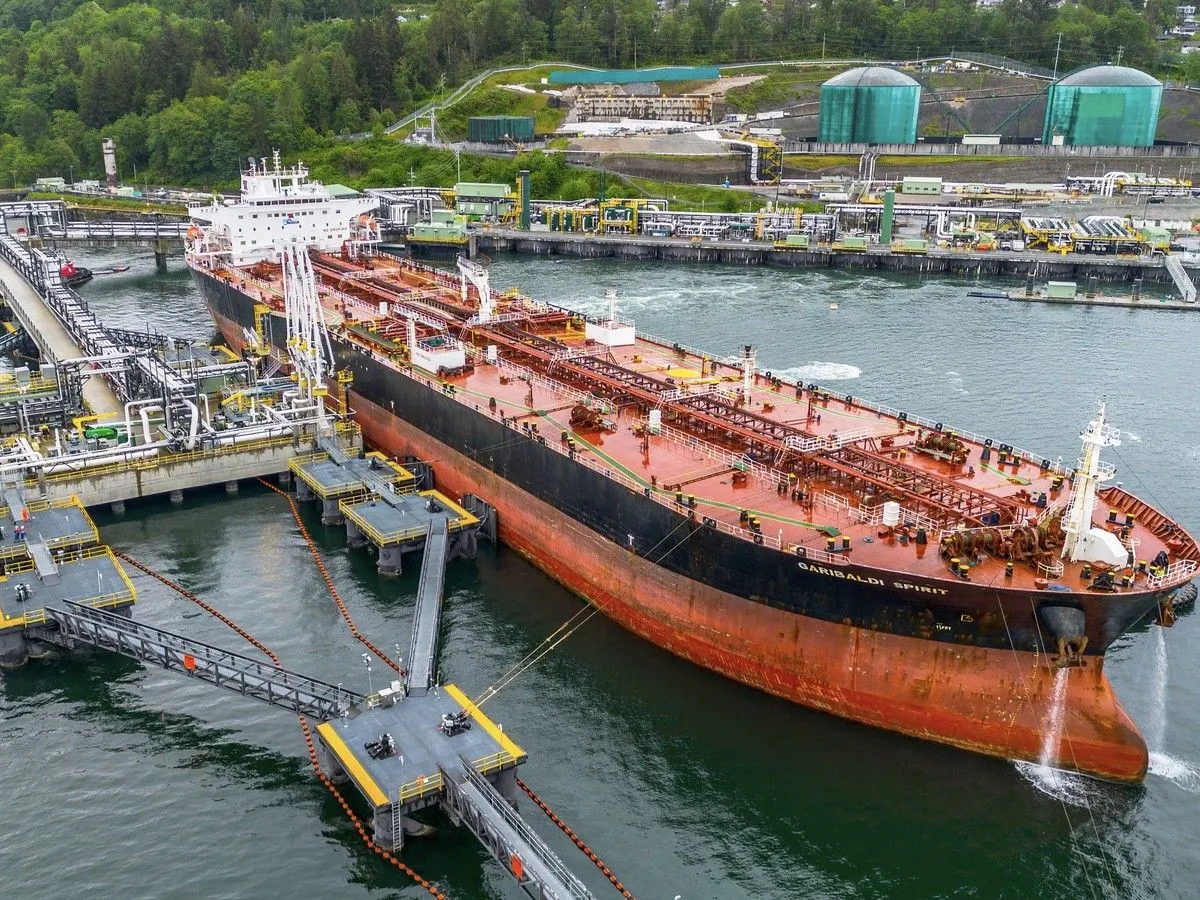
Skip to Content News Archives Economy Energy Oil & Gas Renewables Electric Vehicles Mining Commodities Agriculture Real Estate Mortgages Mortgage Rates Finance Banking Insurance Fintech Cryptocurrency Work Wealth Smart Money Wealth Management Investor Personal Finance Family Finance Retirement Taxes High Net Worth FP Comment Executive Women Puzzmo Newsletters Financial Times Business Essentials More Innovation Information Technology FP500 Podcasts Small Business Lives Told Tails Told Shopping Financial Post Store Obituaries Place a Notice Advertising Advertising With Us Advertising Solutions Postmedia Ad Manager Sponsorship Requests Classifieds Place a Classifieds ad Working Profile Settings My Subscriptions Saved Articles My Offers Newsletters Customer Service FAQ News Economy Energy Mining Real Estate Finance Work Wealth Investor FP Comment Executive Women Puzzmo Newsletters Financial Times Business Essentials HomeEnergyOil & GasNewsOil tankers arriving in Vancouver in record numbersJuly was the first month since the TMX opened in mid-2024 that there has been more than 30 arrivals in Burrard InletLast updated 18 minutes ago You can save this article by registering for free here. Or sign-in if you have an account.A tanker loads at the Westridge Marine Terminal, the ocean terminus of the Trans Mountain pipeline. Photo by Trans Mountain CorporationThe twinning of the Trans Mountain oil pipeline from Edmonton to Burnaby has resulted in a record number of tanker arrivals in the waters of Burrard Inlet.Subscribe now to read the latest news in your city and across Canada.Exclusive articles from Barbara Shecter, Joe O'Connor, Gabriel Friedman, and others.Daily content from Financial Times, the world's leading global business publication.Unlimited online access to read articles from Financial Post, National Post and 15 news sites across Canada with one account.National Post ePaper, an electronic replica of the print edition to view on any device, share and comment on.Daily puzzles, including the New York Times Crossword.Subscribe now to read the latest news in your city and across Canada.Exclusive articles from Barbara Shecter, Joe O'Connor, Gabriel Friedman and others.Daily content from Financial Times, the world's leading global business publication.Unlimited online access to read articles from Financial Post, National Post and 15 news sites across Canada with one account.National Post ePaper, an electronic replica of the print edition to view on any device, share and comment on.Daily puzzles, including the New York Times Crossword.Create an account or sign in to continue with your reading experience.Access articles from across Canada with one account.Share your thoughts and join the conversation in the comments.Enjoy additional articles per month.Get email updates from your favourite authors.Create an account or sign in to continue with your reading experience.Access articles from across Canada with one accountShare your thoughts and join the conversation in the commentsEnjoy additional articles per monthGet email updates from your favourite authorsSign In or Create an AccountorDavid Huntley, an SFU professor emeritus and longtime monitor of oil tanker traffic, says his latest monthly figures show there were 31 tanker arrivals in July.This was the first month since the pipeline expansion opened in mid-2024 that there have been more than 30 arrivals in Burrard Inlet.Huntley uses marine traffic data to analyze where the ships go after loading at the Westridge Marine Terminal in Burnaby.Breaking business news, incisive views, must-reads and market signals. Weekdays by 9 a.m.By signing up you consent to receive the above newsletter from Postmedia Network Inc.A welcome email is on its way. If you don't see it, please check your junk folder.The next issue of Posthaste will soon be in your inbox.We encountered an issue signing you up. Please try againHe said that most of the heavy crude oil was going to China and South Korea, followed by the U.S.According to data from the Alberta government’s West Coast Oil Pipeline Project proposal, between May 2024 and April 2026 there were 556 oil tankers that loaded at Westridge, each able to carry 800,000 barrels of oil. Of those, 65 per cent went to Asia (mostly China) and 35 per cent went to the U.S.The Trans Mountain twin pipelines can carry up to 890,000 barrels of oil a day. The federal government-owned company has access to 26 storage tanks that can hold 5.5 million barrels of oil.“The rapid expansion of next-generation refinery complexes in Asia means that heavy crude from Canada will increasingly be in demand as a refinery input,” the proposal states.Alberta’s pipeline proposal would see a third pipeline built roughly alongside the existing two Trans Mountain pipelines, with a marine terminal at Roberts Bank in Tsawwassen, rather than Burnaby’s terminal. This would allow much larger tankers to haul the oil away than can be achieved at Westridge, where tankers have to pass beneath the Lions Gate and Second Narrows bridges.A notice published this week in a supplement to the Canada Gazette states that Prime Minister Mark Carney’s cabinet may add the proposed pipeline to a list of projects considered to be of national interest.This would streamline federal approvals for the million-barrels-a-day proposal.Ottawa has said it will give notice by Oct. 1 if it intends to list the project for fast-tracking.Alberta claims to have total oil reserves of 177 billion barrels, and has established an objective to double oil production by 2035 — when it hopes the new pipeline and terminal will be operating.Haley Hodgson, spokesperson for the Vancouver Fraser Port Authority, said it is important to keep in mind the Alberta government’s pipeline proposal and the Roberts Bank terminal expansion are separate projects.Hodgson said the port authority has not had discussions with the Alberta government about locating an oil terminal at the expansion site.According to the West Coast Oil Pipeline Project, “the proposed pipeline’s destination will be a delivery terminal and marine facility at Roberts Bank, in the municipality of Delta, located in the Fraser River Estuary. The Roberts Bank location is an existing industrialized area within the Port of Vancouver and near the Tsawwassen B.C. Ferry terminal.”With Postmedia News files Join the Conversation This website uses cookies to personalize your content (including ads), and allows us to analyze our traffic. Read more about cookies here. By continuing to use our site, you agree to our Terms of Use and Privacy Policy.
Oil tankers arriving in Vancouver in record numbers
July was the first month since the pipeline expansion opened in mid-2024 that there has been more than 30 arrivals in Burrard Inlet.
1,007 words~5 min read