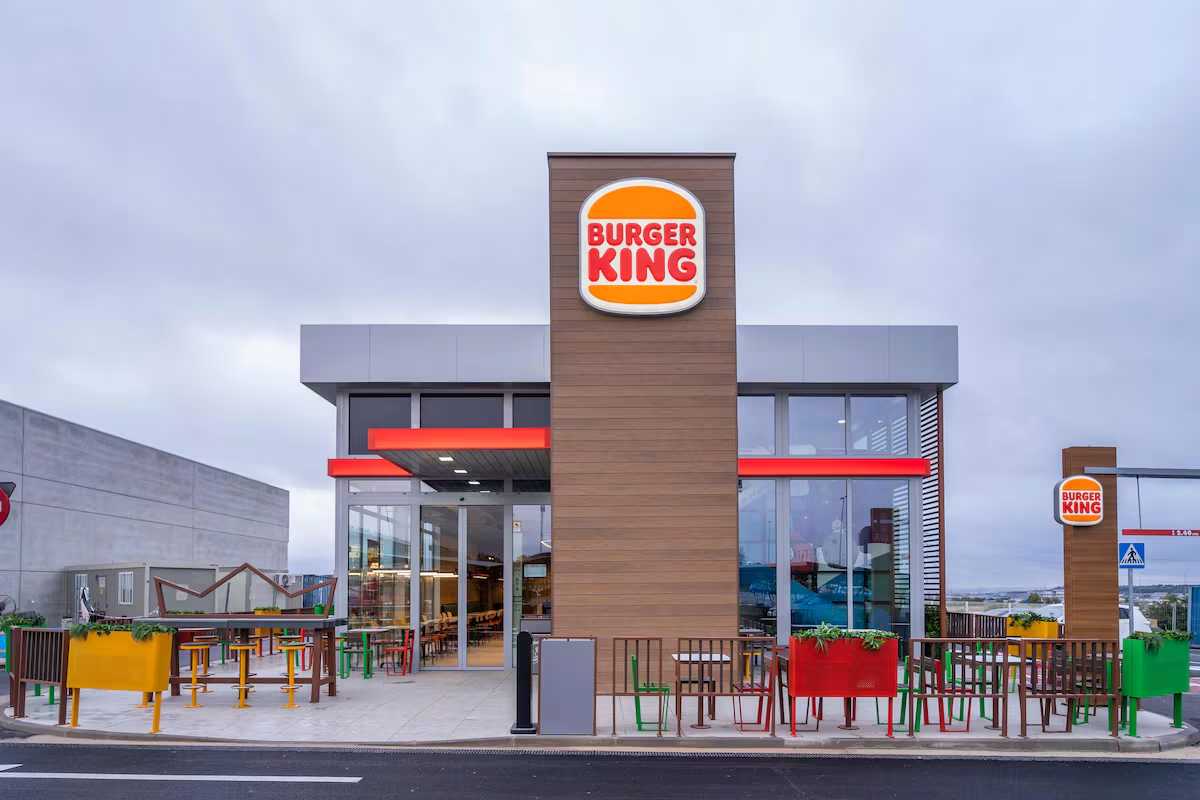
A general view of logo and signage for a Burger King, Home of the Whopper on January 29, 2026 in London, United Kingdom. John Keeble | Getty ImagesRestaurant Brands International on Thursday reported quarterly earnings that topped analysts' expectations, fueled by strong growth for the once struggling Burger King, both domestically and abroad."Burger King's performance is a great example of what's possible when you invest in the fundamentals and execute well – an approach we're applying across all of our brands," Restaurant Brands CEO Josh Kobza said in a statement.Here's what the company reported compared with what Wall Street was expecting, based on a survey of analysts by LSEG:Earnings per share: $1.07 adjusted vs. $1.03 expectedRevenue: $2.52 billion, in line with expectationsRestaurant Brands reported second-quarter net income attributable to shareholders of $507 million, or $1.45 per share, up from $189 million, or 57 cents per share, a year earlier.Excluding transaction costs, advisory fees and other items, the company earned $1.07 per share.Net revenue rose 4.5% to $2.52 billion.Burger King's U.S. same-store sales climbed 8.5%. In recent quarters, the burger chain's turnaround has taken hold in its home market. Restaurant renovations, sharper marketing and a focus on core menu items like the Whopper have helped Burger King steal market share. Rival McDonald's reported U.S. same-store sales growth of just 0.8% in its second quarter, for comparison. Executives said that they were disappointed by the performance, and McDonald's tapped a new U.S. president to help accelerate its sales. Burger King is also seeing strong results outside of the U.S. Restaurant Brands said international Burger King restaurants saw same-store sales growth of 5.4% during the quarter.But the rest of Restaurant Brands' did not fare as well.Tim Hortons' same-store sales in Canada and overall were essentially flat for the quarter, while Popeyes Louisiana Kitchen reported U.S. same-store sales declines of 5.2%. The fried chicken chain has struggled in recent quarters as more chains compete for a smaller pool of diners, who have grown increasingly value conscious.
Restaurant Brands International earnings beat as Burger King's U.S. business soars
Burger King's U.S. business reported same-store sales growth of 8.5%.
332 words~2 min read