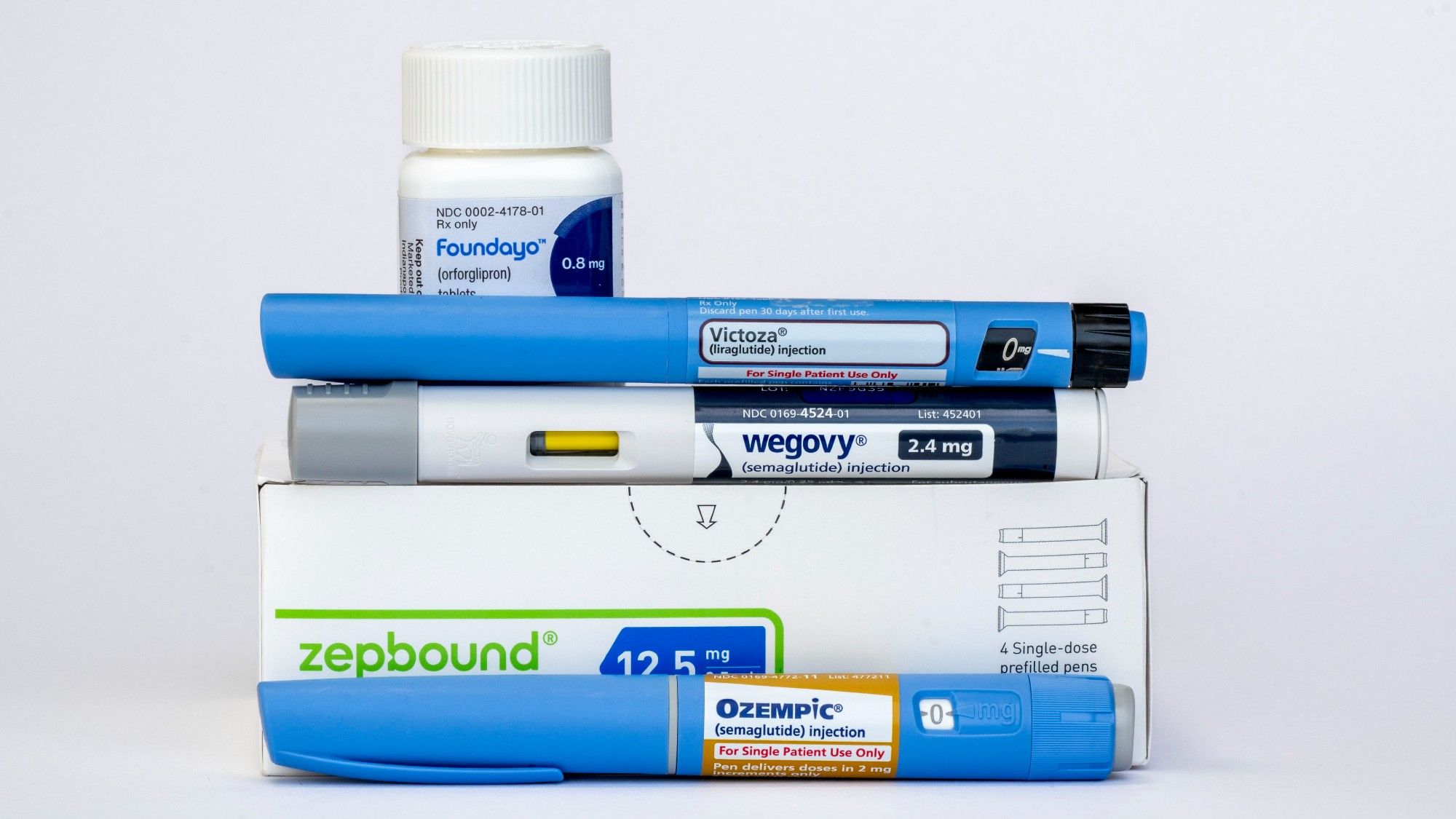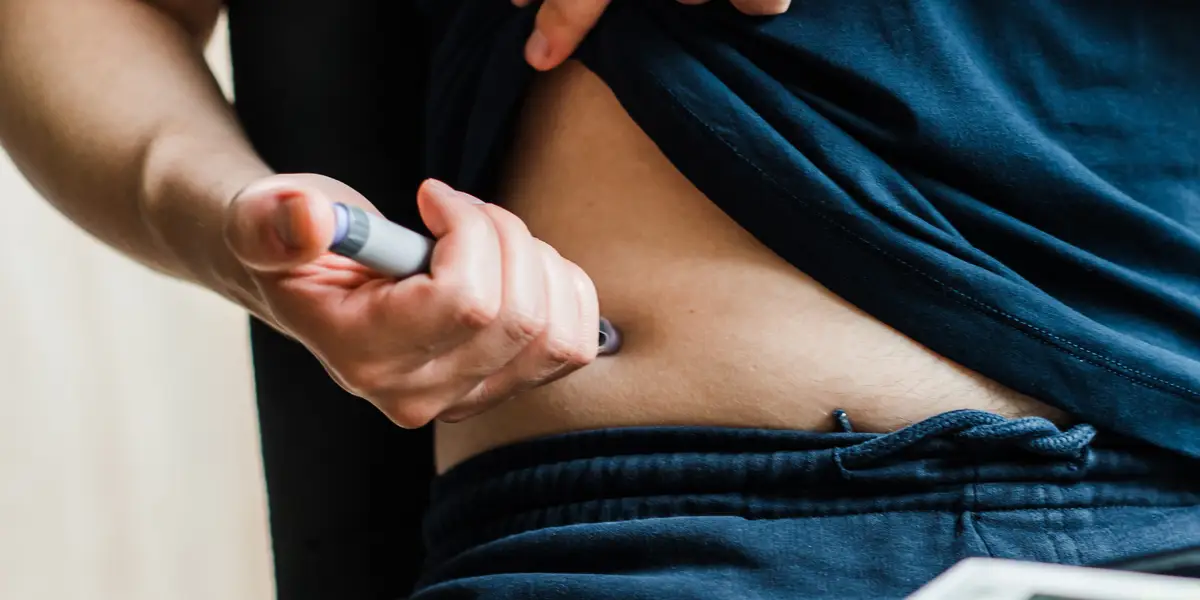
It’s hard to go anywhere without hearing talk of peptides, currently paramount in people’s minds in large part because of GLP-1s, which is a type of peptide that stands for glucagon-like peptide-1.In the world of peptides, there is an important distinction: GLP-1s, along with about 100 other medications (such as insulin), are FDA-approved and have been fully safety tested. But much of the current chatter about peptides is not referring to these safe, FDA-approved medications. According to Dr. Kelly Killeen of The Practice Healthcare, “What people typically are talking about when you hear peptides discussed on social media, they’re talking about peptides ... that are not tested thoroughly and approved by the FDA for use as a medication.” These non-FDA-approved peptides make big claims such as increased muscle growth and longevity promises, making them very popular in fitness and wellness communities. They’re sold under the label for “research use only,” which allows gray market peptides sellers and manufacturers to evade any side-effect consequences.One of the more common peptides on social media is known as the “Wolverine” or “X-Men” protocol, said Killeen. With this, folks combine two non-FDA-approved peptides to “heal faster,” she said. There’s also a peptide combo that’s popular in MedSpas known as “glow peptides,” which is said to promote anti-aging, scar improvement and collagen stimulation. These are not safety tested and the claims are not proven.But, the FDA is currently considering making some regulation changes for these not-safety-tested peptides.“The FDA convened a committee to vote on whether seven different peptides should be allowed to be compounded or mixed by a compounding pharmacy,” said Caitlin Dow, a nutrition scientist at Center for Science in the Public Interest.Compounding pharmacies make customizable medications that are not available at regular pharmacies like CVS or Walgreens, such as medications in specific flavors, drugs in a dose that isn’t commercially available, allergen-free prescriptions and more.“And this committee that was convened was totally stacked in favor of compounding peptides,” Dow said, before adding that many of the members on the committee have a financial stake in peptides. Certain committee members produce or promote peptides in their daily life.Six of the seven peptides were given a “green light,” noted Dow.This does not mean these peptides are FDA-approved, said Dr. Jacinta O. Anyaoku, a family medicine and obesity medicine physician.“There’s definitely a misunderstanding of this whole meeting that happened. People think it’s happening in order to allow these peptides to be FDA-approved, but it’s not that,” said Anyaoku. “That important distinction is that the meeting was to recommend whether or not these peptides can be allowed to be compounded.”This meeting also doesn’t mean the peptides can be legally compounded today. “There’s going to be a long public rule-making process ... and then the FDA can decide to go against what that committee recommended, but that seems unlikely at this point given this FDA,” said Dow.“What the issue is now is that there are a list of medications that the FDA doesn’t approve. It doesn’t say, ‘look, these are safe,’ but it says, under the care of a physician, they can be made in compounding pharmacies, and we will allow it,” said Dr. Abigail Waldman, a dermatologist at Mass General Brigham.Again, that does not mean these peptides are FDA-approved, but the goal is a compounding pharmacy would help create some checks and balances that don’t exist for peptides, which you can currently buy from certain online pharmacies and online discount stores.“They’re basically, right now, just approved for research use, and so you really don’t know .... no one’s really checking to see what’s in it. So, in some ways, this could provide more safety,” said Waldman.“That being said, the FDA is not saying, ‘we think these drugs are safe and effective,’ but they’re saying, ‘we’d prefer for people to get them under the supervision of a pharmacist and doctor rather than getting them on the internet on the gray market without any regulation whatsoever,’” said Waldman.“There’s some positives because you could now have a bigger source of peptides that are safer through the compounding pharmacies in the United States. But I’m not sure that a lot of people are going to pursue that route anyway because they enjoy getting things on their own and not having to go through a physician,” added Killeen. While some people buy peptide-containing creams and pills, the more concerning problem is the many, many people who go online or to social media to buy injectable peptides that make the muscle and anti-aging promises mentioned above.Dow said the FDA is not in charge of overseeing compounding pharmacies, though, so they are not held to the same standard as a CVS or Walmart pharmacy. Anyaoku added that while some compounding pharmacies are completely legitimate and follow all of the rules, that isn’t the case for all compounding pharmacies. Even if your compounding pharmacy is a safe choice, “the actual molecule that they’re compounding, we still don’t know for sure if this molecule is safe to be used for the general population,” said Anyaoku.“And that is why we do these studies and we do these trials because, as people know, there have been medications that have been approved, have been used, and then down the line ... they’ve been removed from the market,” said Anyaoku. “It takes time to really know if something is safe, and prematurely pushing something out there without the data could be dangerous.”“The way I think about this is that the FDA is trying to regulate a runaway marketplace, but the decision they may ultimately end up making could just unintentionally expand this marketplace,” Dow said. “So, it’ll increase access without increasing evidence, and it just widens the gap between consumer enthusiasm and scientific certainty. It’s a total mess.”If these peptides become unrestricted and are allowed to be made by compounded pharmacies, peptides may end up flooding the market, Dow noted.“And I think the most important thing for people to understand is that this new decision does not mean that the peptides that were voted upon are proven safe or effective. It’s a regulatory classification, not a scientific endorsement,” said Dow.In a statement to HuffPost, the FDA said the agency “will consider the PCAC’s recommendations, consult USP [Unified Submission Portal], and work to issue a proposed rule based on these considerations and all the information the agency has gathered. The public will have an opportunity to submit comments on the proposed rule and the agency will publish a final rule after considering those comments.”Alllex via Getty ImagesPeptides are all the rage on social media and online, but doctors say peptides that are not FDA-approved can be dangerous.What exactly are peptides?“Peptides are natural substances in our bodies. They’re natural molecules,” said Dr. Jonathan Long, an associate professor of pathology at Stanford University in California. They’re short trains of amino acids, added Anyaoku.“Many peptides are hormones and chemical messengers, so they communicate between all the cells in our body, and they’re really important for regulating all sorts of physiologic processes, including growth and metabolism and behavior,” said Long. “Basically, anything related to our physiology in our bodies, there is some peptide that’s likely underlying that process.”“They tell other parts of your body what to do, and they’re used for pretty much anything you can think of,” said Waldman.“GLP-1 is an example of one of these peptides. It’s produced by our gut, and GLP-1 levels rise after a meal, and it’s, for example, our body’s natural way of responding to meals,” Long added.Generally, peptides need to be injected.Peptides, largely, need to be injected. “If you eat them, if you consume them, for the most part, they get broken down by your stomach acid, and so that’s why, for the longest time, the only way to to get them was injections,” said Waldman.Yet, there are peptide pills coming on the market that “may be able to bypass” the consumption issue, but they’re new, she said.“Generally, the easiest way to get them to function in your body is to inject it directly into the blood system,” noted Waldman.The six peptides that are potentially going to be unrestricted by the FDA all do different things.The committee voted to allow compounding of six peptides that are said to do a range of things, including faster injury recovery, migraine treatment, wound recovery, insomnia and more.“Each of these six is a different entity in of itself with a potentially different safety and efficacy profile,” said Long. “So, even talking about those six together may not make sense.” Peptide medications are a valuable part of medicine, and do hold promise, but it’s too soon to know if the peptides that are not FDA-approved are actually safe.With what’s known (and not known) about peptides right now, none of the doctors who spoke to HuffPost said they’d recommend non-FDA-approved injectable peptides to patients.Anyaoku said she is regularly contacted by peptide companies to see if she wants to sell these non-FDA-approved peptides to her patients — but she does not.“I personally am not against the idea of peptides, I think that they are the building blocks of many great medications and potentially future medications, but I just feel that we should proceed with caution and keep patient safety at heart,” said Anyaoku.“If I recommend a medication to patients, I know the dose, I know the potential side effects, I know the mode of administration, how to inject it. I don’t know that [about the new peptides], nor does anyone, and no one can tell you that they know that because these things just haven’t objectively been studied,” said Killeen, “so, I just don’t think, in good conscience, I can recommend to a patient injecting themselves with something that comes from dubious sources with insufficient evidence.”Long said his biggest concern is safety. These peptides have not gone through in-depth safety testing so we have no idea if they are safe to use. Beyond that, it’s unknown if they even do what they say they do.Waldman has recommended a few peptide-containing topical cosmetics because they can be a “nice boost” for the skin, but aren’t “game-changing.” And, since they’re applied topically to they skin, they are very different from an injectable.Even beyond what’s happening at the FDA, people who are currently selling peptides on the internet are likely not actual medical professionals, Waldman said. It’s best to talk to your doctor about the best options for your health issues instead of turning to an unregulated product online.These unregulated injectables can lead to serious problems, Waldman said.Some experts say the moves at the FDA are ‘disappointing.’As the FDA potentially moves to allow these peptides to be compounded, Long said it may be looked at as an endorsement from the FDA — which it is not.The FDA’s mission is to defend public health and support public good, and Dow said it’s “disappointing to see the FDA ... throwing aside programs and support for programs that would actually benefit people writ large, and instead support these individualistic kinds of solutions.”If the FDA moves forward and allows these peptides to be unrestricted, they won’t be held to the same standards as FDA-approved peptides, like GLP-1s.“What history tells us about this is that typically you start to get regulation when people start to die or when there starts to become serious things like birth defects,” Long saod. “So I think what’s going to happen is that we’re going to continue in this gray space where it’s not clear these peptides ... are they safe? Are they effective? And you’ll get all sorts of anecdotes ... and nobody’s going to really know.”“Or, if something happens and people start dying, and when that happens, then there’s going to be regulatory oversight that has historically been how this goes ... that would be my prediction of what the next 10 years are going to look like here,” Long added.“This is truly the wild west where we are with peptides right now, and I think a lot remains to be seen about what this FDA decision will mean, and I think it’s the public that stands to be harmed and companies that stand to benefit, and that’s generally not what we want to see when it comes to an FDA decision,” said Dow.
Unregulated Peptides Are ‘Truly The Wild West’ Right Now — And The FDA’s Next Decision Could Have Severe Consequences
The panel’s recommendations could shape the future of popular peptides, but some doctors say the review process itself deserves closer scrutiny.
2,037 words~9 min read