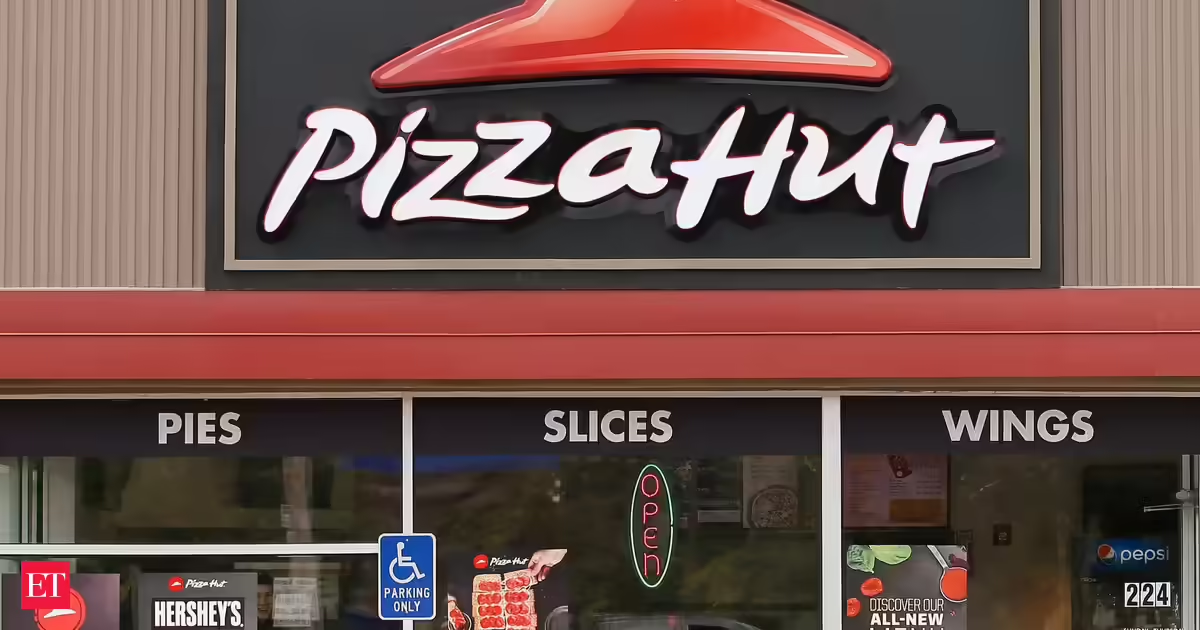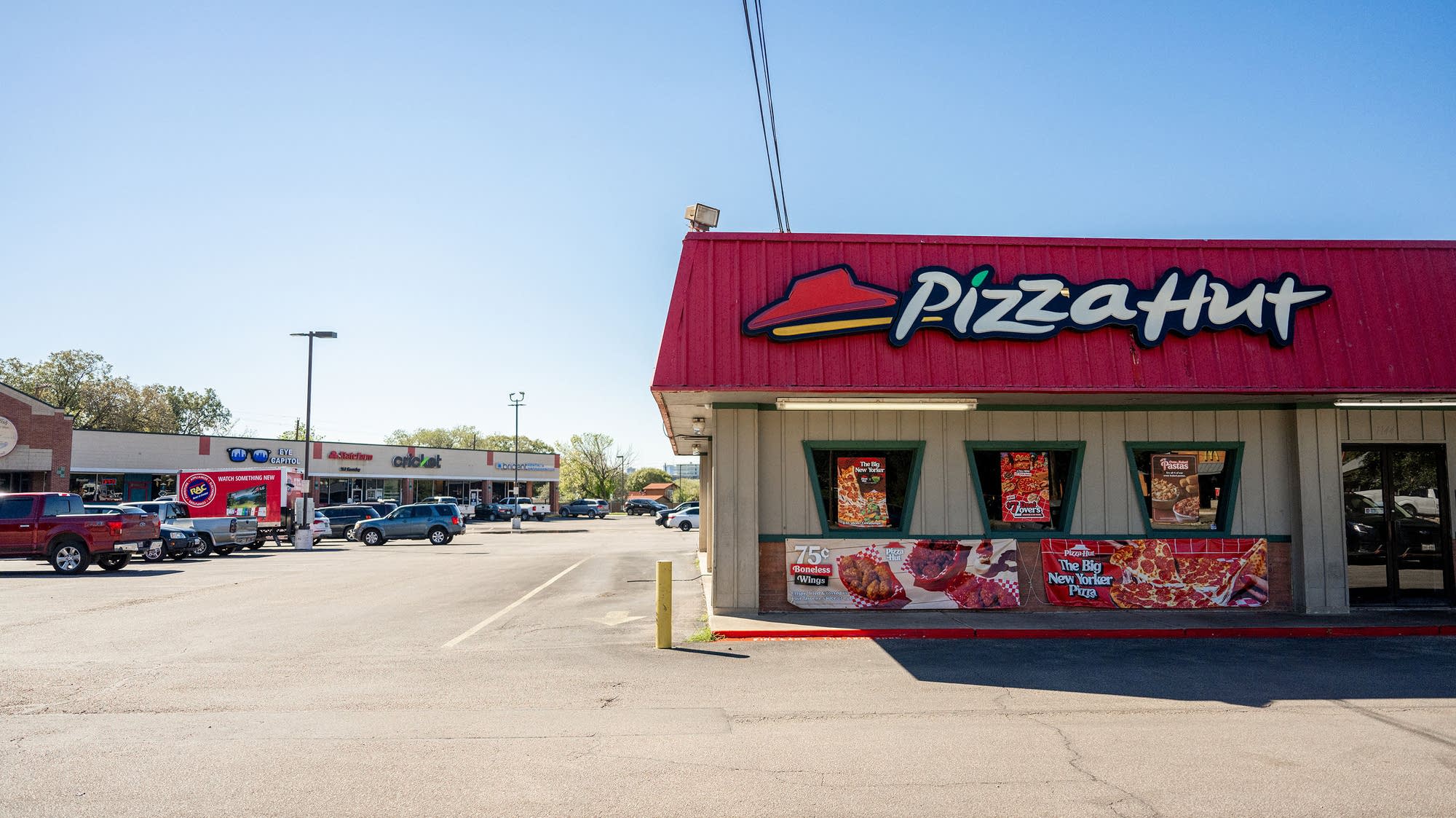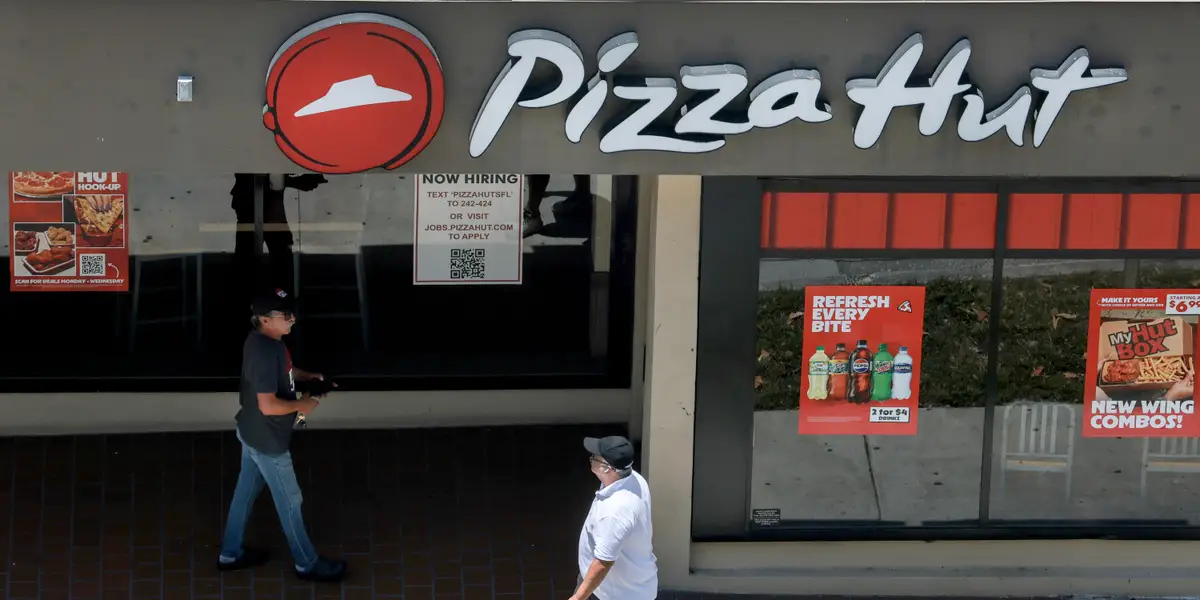
A Pizza Hut restaurant in Miami
Joe Raedle/Getty Images
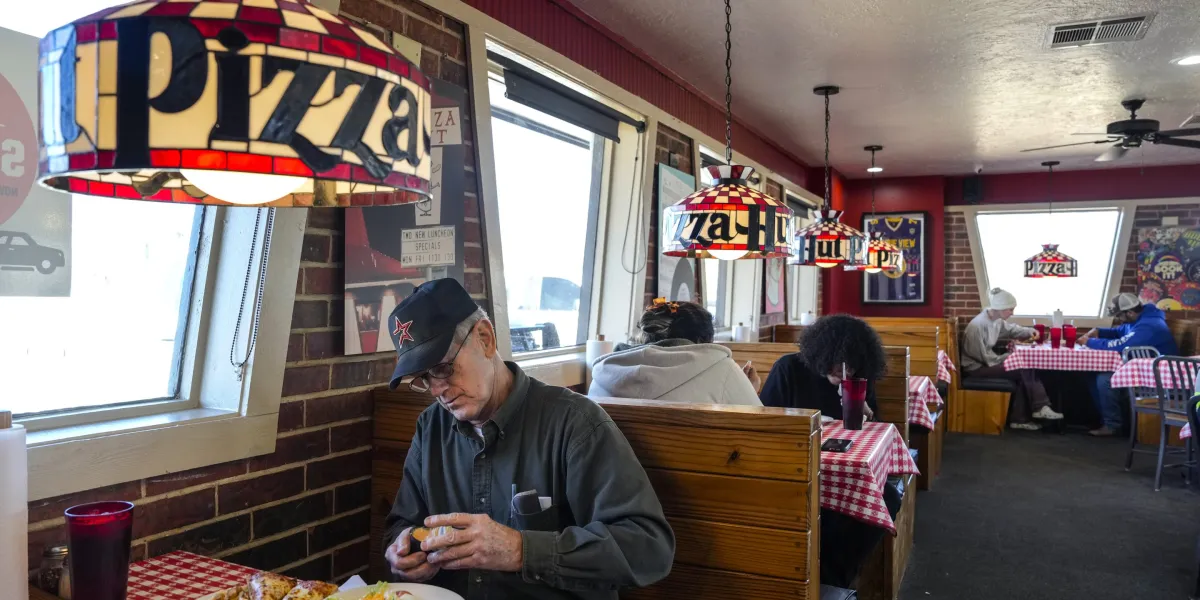
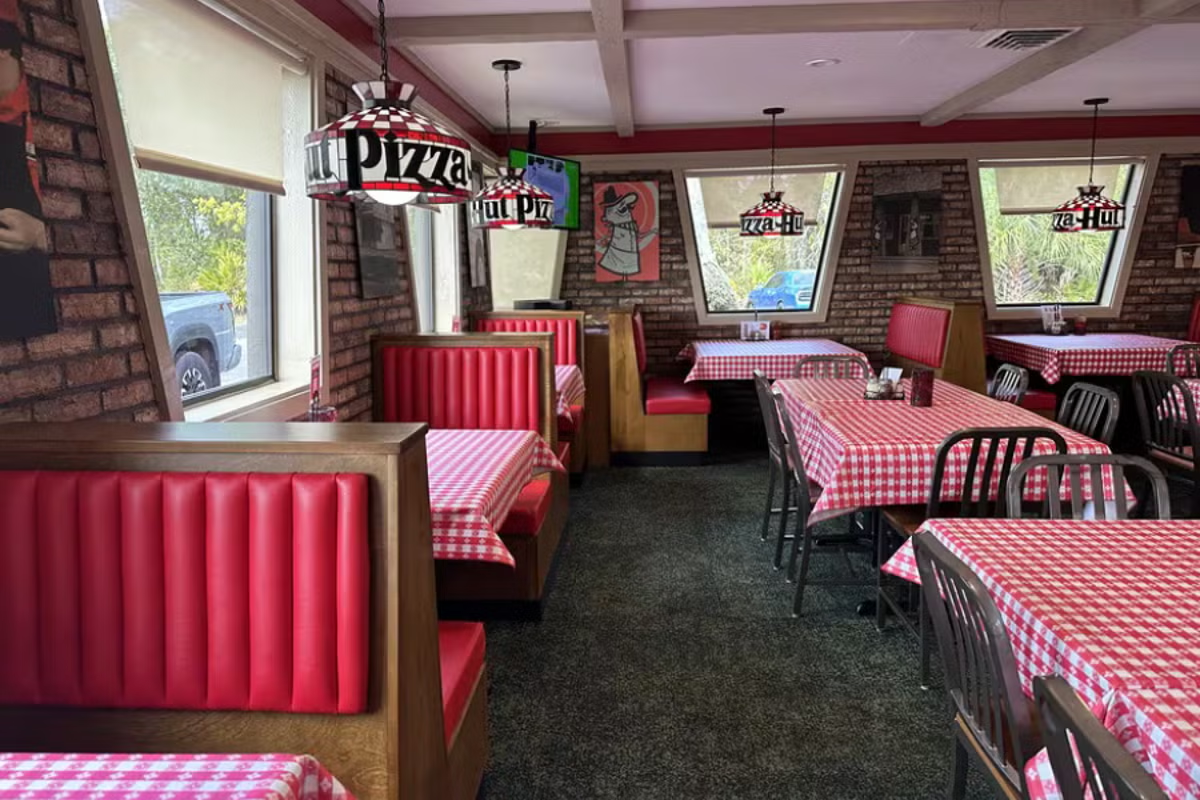
Highway 321 runs like a lifeline through Pigeon Forge, a tourist town in the US state of Tennessee. On either side of the road, at the foot of Great Smoky Mountains National Park, amusement parks sit alongside two-story motels and toothless fast-food joints with drive-through windows — it doesn't get much more American than this.Inside a Pizza Hut branch here, televisions flicker against beige tiled walls, the windows have taken on a yellowish film, and garlands reading "We love USA" dangle from the ceiling, swaying wearily in the breeze of the air conditioning. After nearly half an hour's wait, a young employee in an apron, who looks as though he's simply killing time on his summer job, calls out a number: one large pepperoni pizza, $22, the crust thick and glistening with oil.The whole scene feels bleak, almost like a swan song — as if the branch's days were already numbered. And that is no coincidence. Across the country, one Pizza Hut location after another is shutting its doors.For decades, the brand was so deeply embedded in the American collective memory that its decline once seemed unthinkable. When brothers Dan and Frank Carney founded their first restaurant in Kansas in 1958, they had to borrow the startup capital from their mother.Just a few years later, the company's then-revolutionary franchise business turned the pizza market upside down. The red roof became a cult symbol of fast food "Made in America" — not just in the US, but in dozens of other countries around the world, much like the McDonald's golden arches.