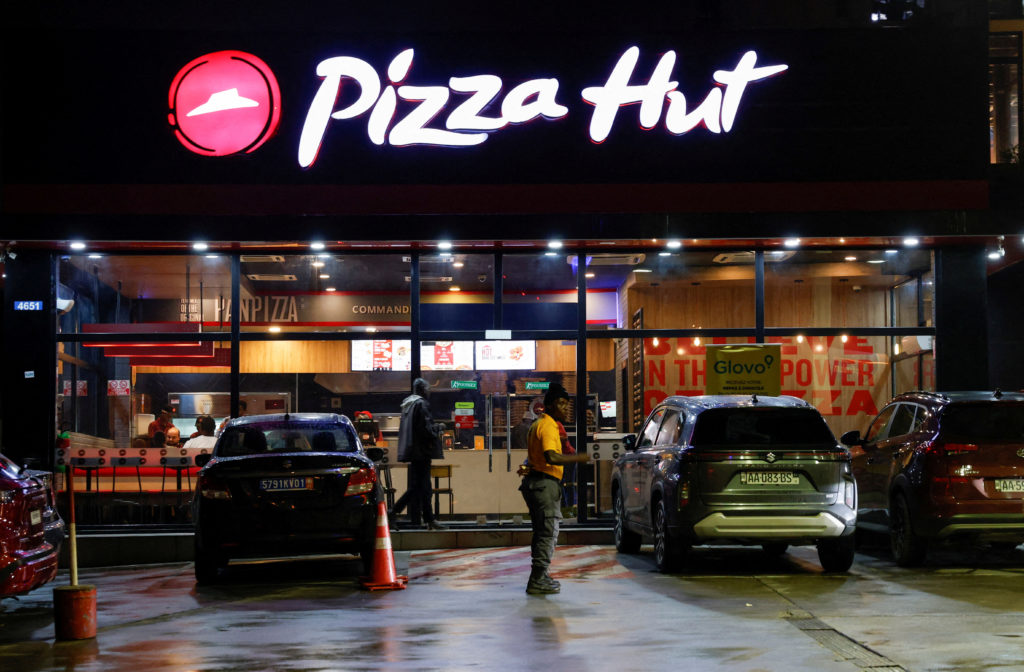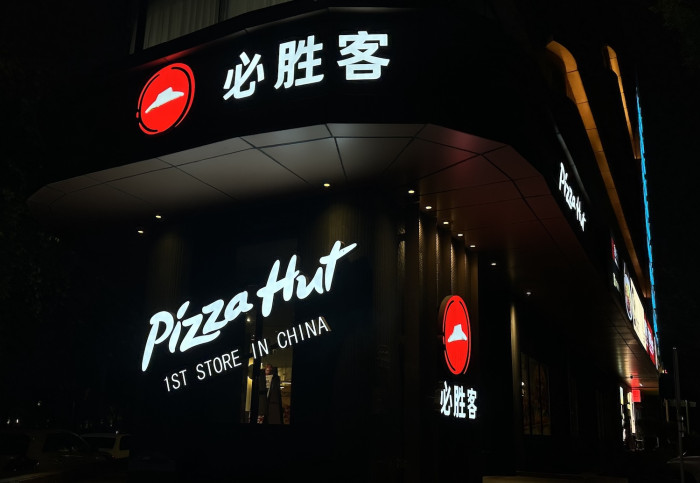
For nearly seven decades, Pizza Hut was one of America's most recognisable restaurant brands. It introduced millions of consumers to pizza, built thousands of restaurants across the world and became a symbol of family dining. Yet in June 2026, the chain founded by two brothers, Frank and Dan Carney, with a $600 loan from their mother was split in a $2.7 billion deal.Yum Brands, the owner of Pizza Hut, KFC and Taco Bell, announced that it would sell Pizza Hut's international business outside mainland China to private equity firm LongRange Capital for $1.5 billion. The China business, meanwhile, will be acquired by Yum China Holdings for $1.2 billion.The transaction does not just mark the end of Pizza Hut's nearly 50-year journey under PepsiCo and later Yum Brands, it goes beyond that. The larger picture shows the starkly different fortunes of the chain in China and the rest of the world.Carney bros' $600 gamblePizza Hut's story began in 1958 when brothers Dan and Frank Carney borrowed $600 from their mother to open a small pizza restaurant near Wichita State University in Kansas.Also Read: Struggling Pizza Hut restaurant chain will be sold for $2.7 billionThe name was born out of necessity rather than branding genius. The sign outside the building could accommodate only eight letters, leaving room for just "Pizza Hut".The brothers had little experience in the restaurant business. They relied on word-of-mouth marketing, handed out free pizza slices and focused on attracting students. The formula worked.Within a year, they had opened additional locations and launched the company's first franchise. As pizza became increasingly popular across America, Pizza Hut expanded rapidly.By 1971, it had become the world's largest pizza chain by sales. Its distinctive red-roof restaurants, introduced in 1969, became one of the most recognisable symbols in the fast-food industry.PepsiCo's big betPizza Hut's success attracted PepsiCo, which acquired the company in 1977 for more than $300 million.The acquisition placed Pizza Hut alongside brands that would eventually become KFC and Taco Bell. In 1997, PepsiCo spun off its restaurant division into a separate company, which later became Yum Brands.For years, Pizza Hut was one of the crown jewels of the portfolio. The chain expanded globally and became synonymous with family dining, buffet lunches and large dine-in restaurants.By the end of the 1970s, Pizza Hut had roughly 4,000 restaurants globally. Decades later, that footprint would grow to nearly 20,000 outlets across more than 100 countries.But the industry was already changing.The Domino's problemOne of Pizza Hut's biggest challenges came from a rival that understood changing consumer behaviour faster.During the 1980s, Domino's emerged as the fastest-growing pizza company in the United States by building its business around delivery. Its promise of quick service resonated with customers who increasingly preferred eating at home rather than visiting restaurants.Pizza Hut, by contrast, remained heavily invested in large dine-in outlets.Also Read: Goldman Sachs shatters dealmaking records with $1 trillion in first-half M&A volumeWhat had once been a competitive advantage gradually became a burden. As delivery and takeaway gained popularity, Pizza Hut found itself carrying higher operating costs while rivals built leaner and more flexible business models.The disruption accelerated in the smartphone era. Food-delivery platforms such as DoorDash and Uber Eats transformed how consumers ordered meals, increasing competition not only from pizza chains but from virtually every restaurant category.Pizza was no longer competing against pizza. It was competing against everything.The ‘weak link’ in Yum's portfolioThe pressure eventually showed up in Pizza Hut's financial performance.While Yum Brands' overall sales continued to grow, Pizza Hut increasingly lagged behind Taco Bell and KFC. Last year, Pizza Hut's sales declined 2% even as Yum's overall sales rose 5%.In the United States, comparable-store sales declined for 10 consecutive quarters. The company announced plans earlier this year to close 250 underperforming US locations.Inflation, rising commodity costs and changing consumer preferences further squeezed the business. Industry analysts have also pointed to the impact of GLP-1 weight-loss drugs, which are encouraging some consumers to reduce calorie consumption and eat differently.By the end of 2025, Pizza Hut operated 19,974 restaurants worldwide, but scale was no longer translating into growth.“Pizza Hut has long been the weak link in Yum’s portfolio,” AP quoted Neil Saunders, managing director at GlobalData, as saying after the transaction was announced.Despite multiple turnaround efforts, Yum appeared increasingly reluctant to devote the time and investment required to revive the chain.In November last year, the company began exploring strategic alternatives for Pizza Hut before entering exclusive discussions with LongRange Capital in May.“Under LongRange and Yum China, Pizza Hut will be well positioned for future growth with ownership that brings deep expertise in the restaurant industry,” Yum Brands CEO Chris Turner said.The China exceptionWhile Pizza Hut struggled in many key markets, China told a completely different story.Pizza Hut entered China as a Western-style casual dining brand rather than a traditional quick-service pizza chain. Over time, Yum China adapted menus, restaurant formats and pricing to local tastes, something very similar to what McDonald's did in India.The company introduced China-specific products, including pizzas featuring local ingredients, expanded beverage offerings and more affordable menu options aimed at cost-conscious consumers.This worked. Numbers are proof:Pizza Hut has become China's largest casual dining restaurant chain. Last year, sales in China increased 4%, operating profit jumped 19%, and operating margins reached 7.9%, the highest level since 2016.The chain added 207 net new stores in the first quarter alone and plans to expand to more than 6,000 locations by 2028.China also accounts for 19% of Pizza Hut's global sales, making it the company's second-largest market after the United States.The acquisition by Yum China reflects confidence that the brand's growth story in China is far from over.“From store expansion to growth in revenue and profit per store, as well as an increase in its customer fan base, it is evident that after localisation, Yum China has strengthened its core competitiveness for sustainable development,” said China-based food industry analyst Zhu Danpeng.The transaction also mirrors a broader trend of multinational companies handing greater control to local operators in China. General Mills recently agreed to sell its Haagen-Dazs store business in mainland China to a local consortium, while Starbucks sold a majority stake in its China operations last year.Pizza Hut's India story: Losing ground to old rivalIndia reflects many of the challenges Pizza Hut faced globally. Pizza Hut entered India in 1996, introducing dine-in pizza restaurants to urban consumers at a time when organised food chains were still a novelty. For years, it was among the most recognisable international restaurant brands in the country.But the market evolved in favour of delivery and convenience.While Pizza Hut continued to rely heavily on dine-in outlets, Domino's aggressively expanded its delivery network through franchise partner Jubilant FoodWorks. Domino's built a reputation around fast delivery, smaller neighbourhood stores and value pricing, allowing it to capture a larger share of India's organised pizza market.The gap widened further during the app-based food delivery boom. While Pizza Hut strengthened its digital capabilities over time, Domino's remained the category leader.As of FY26, Devyani International operates more than 600 Pizza Hut restaurants across India, Nigeria and Nepal, while Sapphire Foods runs over 300 Pizza Hut outlets across India and Sri Lanka. Together, the two franchise partners account for the bulk of Pizza Hut's presence in the country.Shares of Devyani International were trading at about Rs 112.28, down 1.6% on June 17, as of 02.05 PM, while Sapphire Foods traded largely flat at Rs 181.54.A brand now dividedThe Pizza Hut transaction also reflects a wider shift in the global restaurant industry.LongRange Capital is betting that a globally recognised brand can be revitalised with sharper operational focus. Yum China is betting that localisation and expansion can continue delivering growth in one of the world's largest restaurant markets.For Yum Brands, the sale allows management to focus on its stronger-performing brands, KFC and Taco Bell, while returning capital to shareholders through a new $4 billion share buyback programme.The split of Pizza Hut is more than a corporate transaction. It is a reminder of how quickly consumer businesses can rise, dominate and also lose relevance.The company that once taught much of the world to eat pizza is now being handed to two different owners pursuing two different futures, one betting on a turnaround, the other on continued growth.
Pizza Hut: From $600 loan to 20,000 stores and the new $2.7 billion twist for the global empire
Pizza Hut, a nearly 70-year-old American icon, has been split in a $2.7 billion deal. Yum Brands is selling its international business outside China to LongRange Capital, while Yum China acquires the China operations. This division highlights Pizza Hut's contrasting fortunes globally and in China.
1,371 words~6 min read