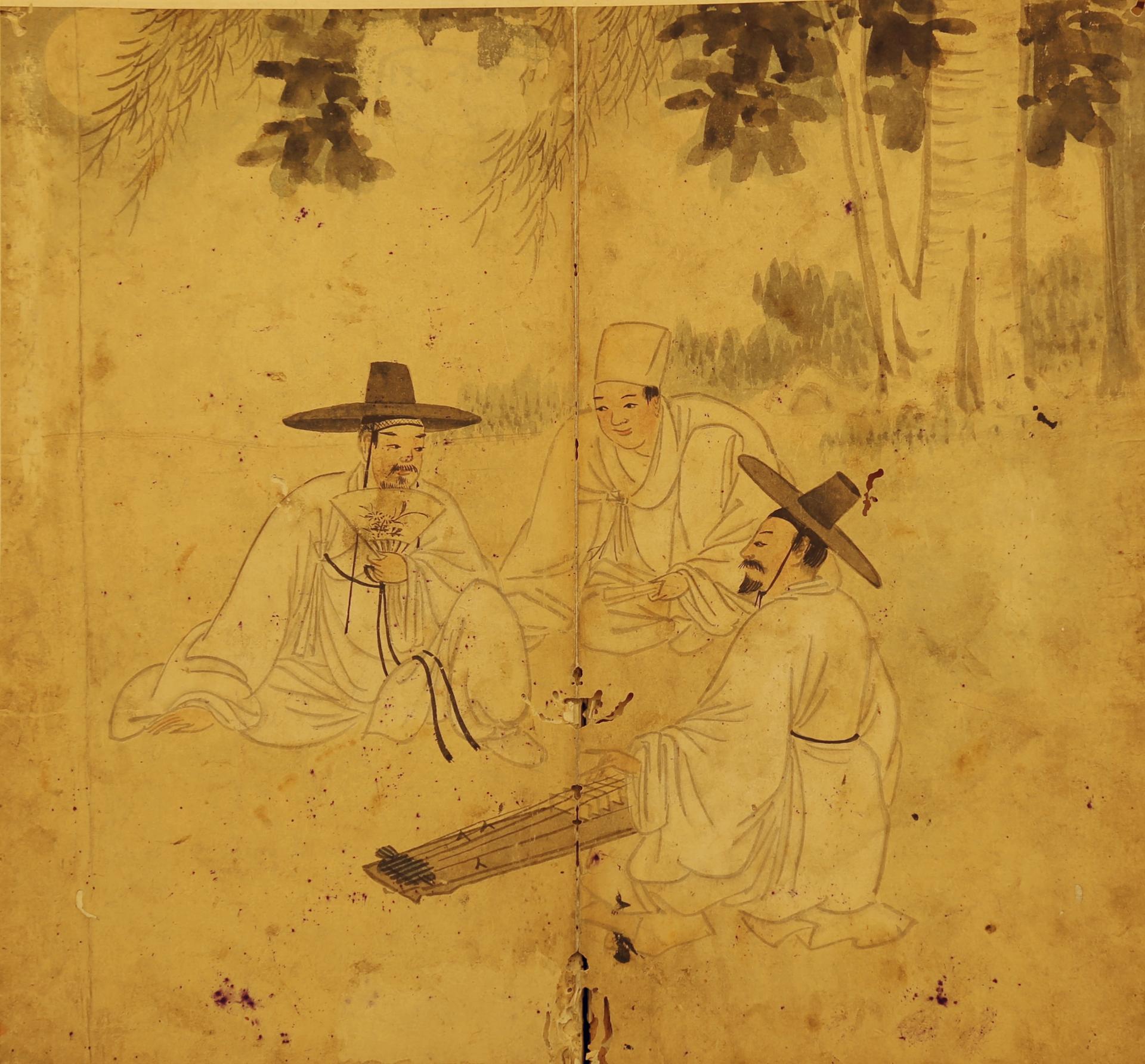
This Joseon era folk painting by Kim Hong-do shows scholars playing geomungo, a Korean musical instrument with six strings, as one of the many entertainments Koreans of the period used endure the summer heat. Korea Times file
Long before air‑conditioned staycations, Koreans in the premodern era escaped the summer heat with scheduled days off, marathon reading sessions and village festivals where farmers washed their hoes and put work on hold, records show.
The Korean Studies Institute released records Thursday to illustrate how people in the Silla (57 B.C.–935), Goryeo (918–1392) and Joseon (1392–1910) eras took steps to rest their bodies and minds during the hottest months of the year.
While there was no concept of annual paid vacation, officials enjoyed institutional holidays, scholars turned to books and fellowship and farmers celebrated communal breaks.
“Swaemirok,” a seven‑volume diary written by Joseon scholar Oh Hee‑mun (1539–1613) / Courtesy of Korean Studies Institute