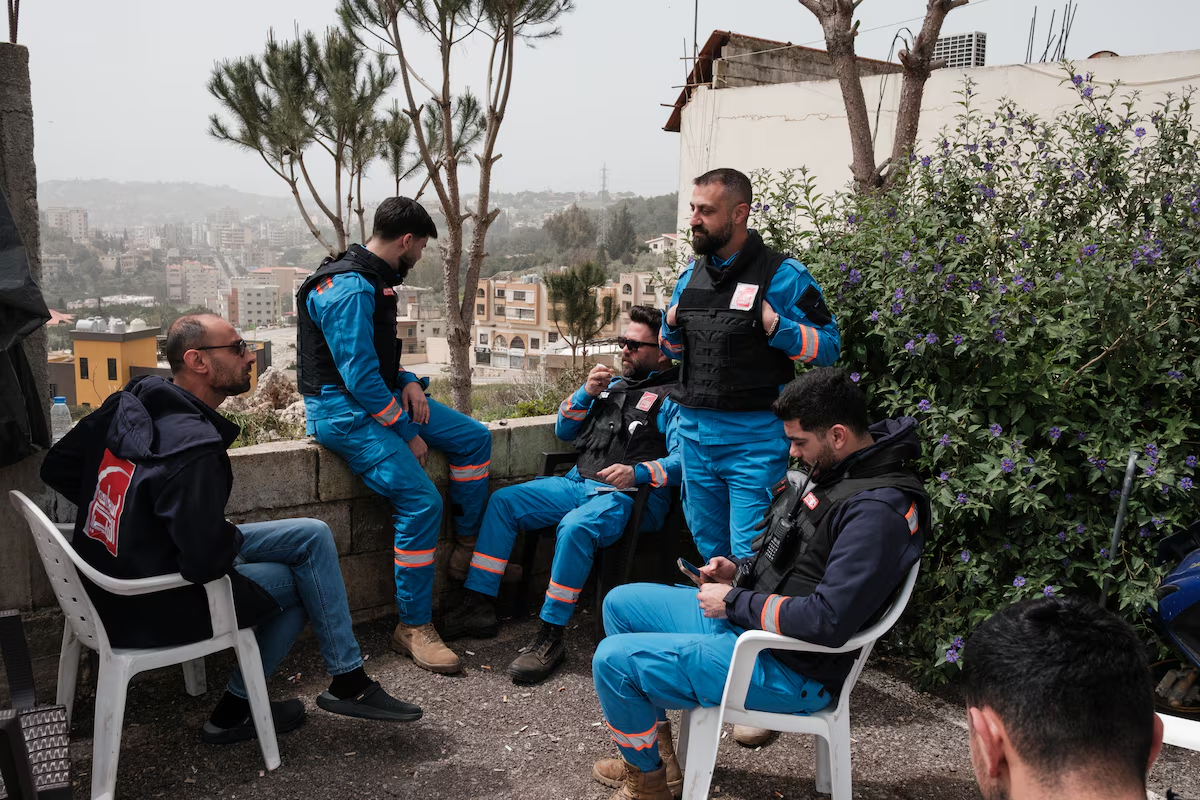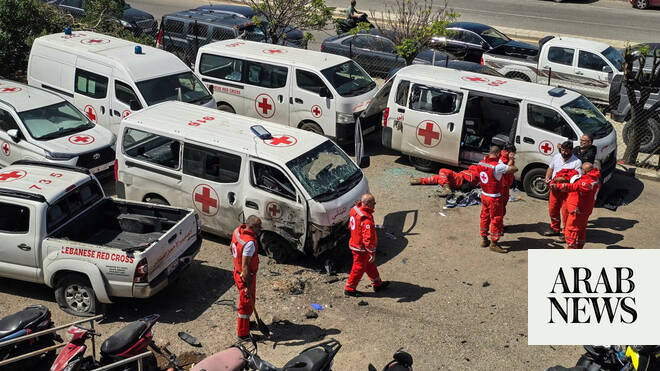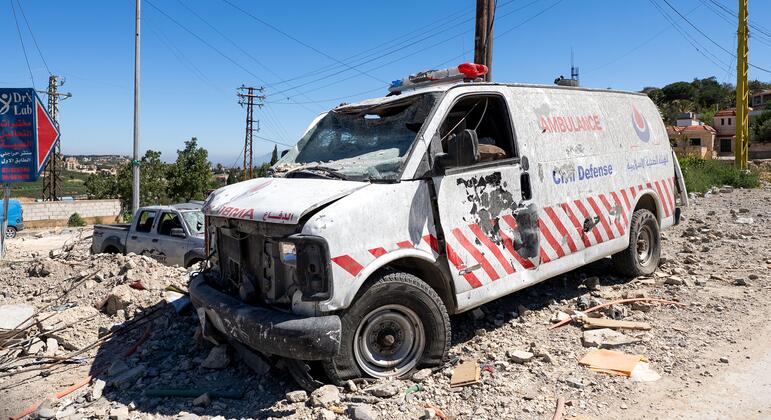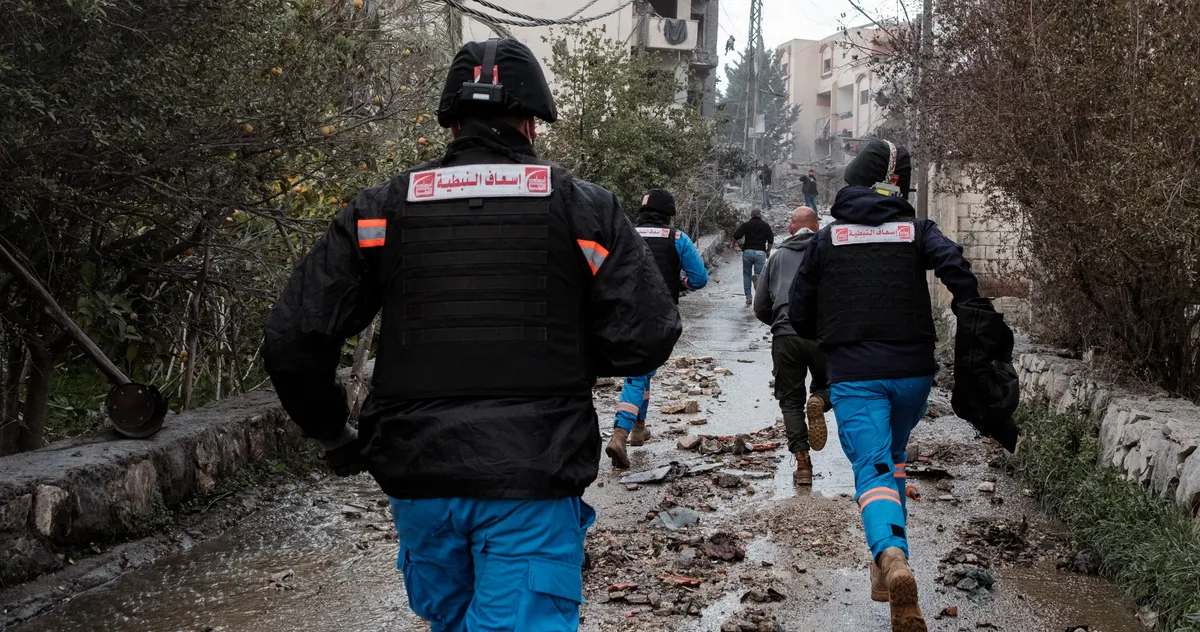
The Nabatieh Medics in Lebanon in April, rushing to help the injured.
In April, 18 hours through a trauma shift, I received a text from my father in our family group chat. My cousin had been injured, he said. “Pray for him.”
I was almost two years into my surgery-residency training, and I had received a message like this, about my family in Lebanon, once before. It was a year and a half prior and just one line: “Nana and her son are martyrs.” That day, September 23, 2024, marked one of the deadliest days in southern Lebanon’s history — 500 people killed in a matter of hours.
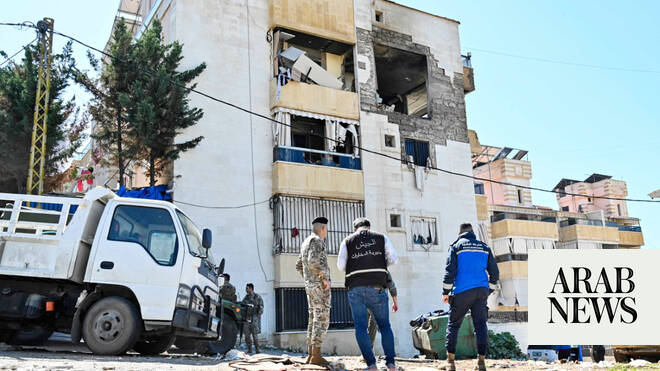
After the text from my father, while chart-checking a patient in the emergency department, I called my mother for more information. I didn’t want to burden my father with questions. I imagined he, as an older sibling in a family of 14 children and a surgeon himself, was fielding the stresses of so many people already. She told me my cousin was alive but in critical condition. Israel had bombed his home, and the blast had torn off part of his face. Later, I would learn that his skull was exposed; his mother had not been able to recognize him except for his pajamas. He was in the hospital now, intubated, deeply sedated such that his brain function could not be assessed, and nursing multiple long-bone fractures. My cousin was a medical student, almost ready to be a doctor. Now we weren’t sure if he would survive.