Guest Post by Michael Osei, M.Sc. in Physics.
Press release – Quantum technology can sound like science fiction: computers that solve problems beyond the reach of today’s machines, sensors that detect the almost undetectable, and discoveries that could reshape medicine, materials, energy, communications, and security.But behind the headlines are researchers asking practical questions: What can quantum technology really do? When will it matter in everyday life? Which problems is it best suited to solve? And how do we ensure that promising discoveries become useful tools rather than remaining laboratory experiments?Michael Osei is one of the researchers exploring those questions.With an M.Sc. in Physics and research interests spanning neuroengineering, theoretical cosmology, and quantum computing, Osei brings a broad perspective to a field that is often misunderstood. Working through the Department of Physics and Astronomy at the University of Lethbridge, he is interested not only in the science behind quantum technology, but also in how quantum ideas can move from theory into meaningful real-world applications.
What is Quantum Technology?
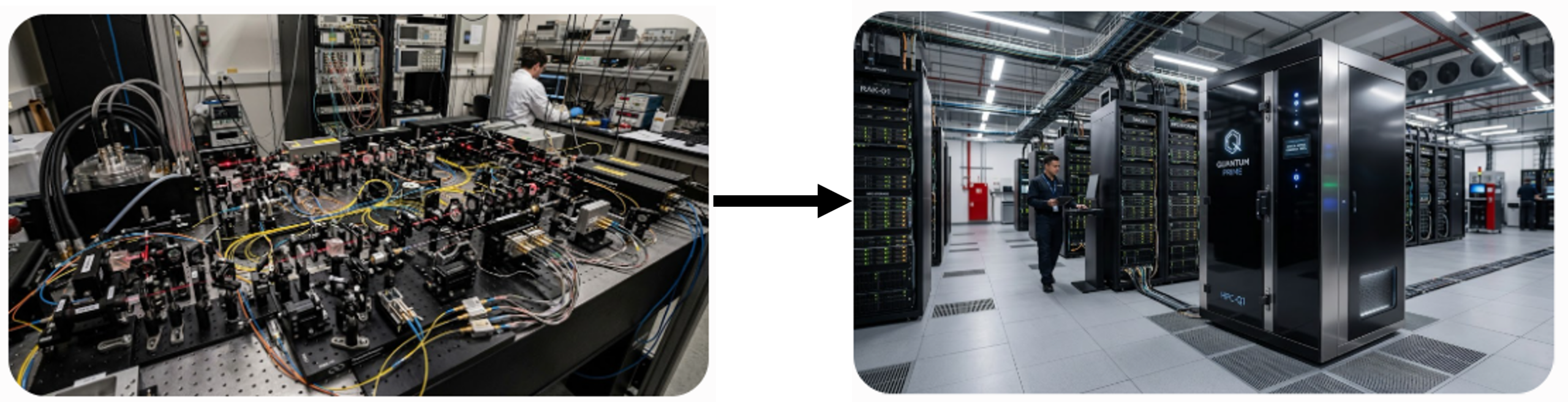
Most of us use classical computers every day. Our phones, laptops, cars, banking systems, and household appliances all process information using bits, represented as either a zero or a one.Quantum computers work differently. Their basic units of information are called qubits. Qubits can take advantage of the unusual rules of quantum mechanics, including superposition and entanglement. In simple terms, these properties may allow quantum systems to explore certain complicated calculations in ways that classical computers cannot efficiently match.That does not mean quantum computers will replace ordinary laptops overnight. Many useful systems are expected to be hybrids: classical computers working alongside quantum processors. Classical systems can prepare data, control the process, and interpret results, while a quantum processor tackles a specialised part of a difficult calculation.For Osei, that practical connection matters. He is interested in asking not only whether a quantum computer is fast, but whether it produces reliable, high-quality, useful, and cost-effective results. A technology is not valuable simply because it is new; it must solve a problem that matters.