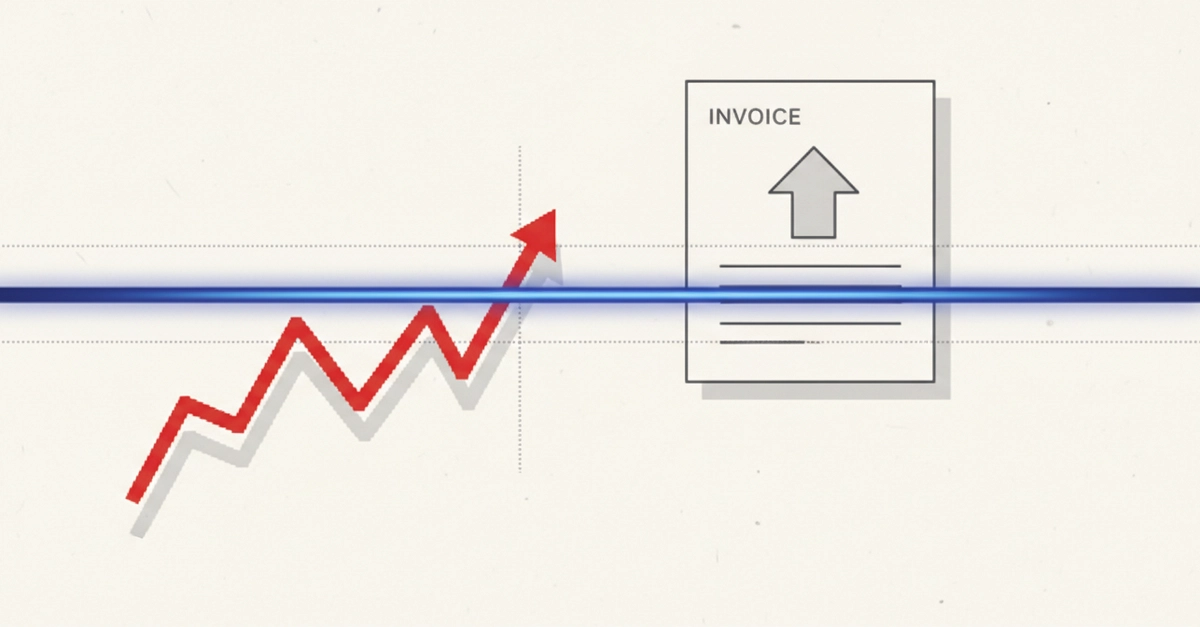
If your Sentry bill is climbing faster than your signups, the usual cause isn't more users — it's more events per user. Error trackers meter on event and transaction volume, and a single bad deploy, a noisy third-party SDK, or one uncaught exception in a hot loop can burn a monthly quota in an afternoon. Before you migrate, the honest first move is to fix what you're sending. If you've already done that and the economics still don't work, GlitchTip, self-hosted Sentry, Bugsnag, Rollbar, and an OpenTelemetry-based stack are the realistic exits — each with a different trade.
Why does the bill scale with events instead of users?
Error tracking is priced on the thing that's expensive to store and index: individual events. Sentry, Rollbar, Bugsnag, and most SaaS competitors bill primarily on captured errors (and, increasingly, performance/tracing spans and session replays as separate meters). A product with 500 daily active users can generate millions of events if one component throws in a render loop or a retry storm hammers a failing endpoint.
That decoupling is the whole problem. Your revenue tracks users; your observability bill tracks failures and instrumentation depth. When you add performance monitoring and session replay — both of which emit far more events than plain error capture — the meters multiply independently of how many humans are actually using the app.