Hard debugging is rarely defeated by a lack of tools. It is defeated by three quiet habits: assuming the fault is where the symptom appears, clinging to the first explanation, and hoping a tool will do the thinking. A difficult fault is usually lost to those habits before you read a line of code. The engineers who resolve hard faults are the ones who notice these defaults and replace them with a patient, evidence-first mindset.
Most hard bugs are lost before we touch them, in the attitude we bring to the session.
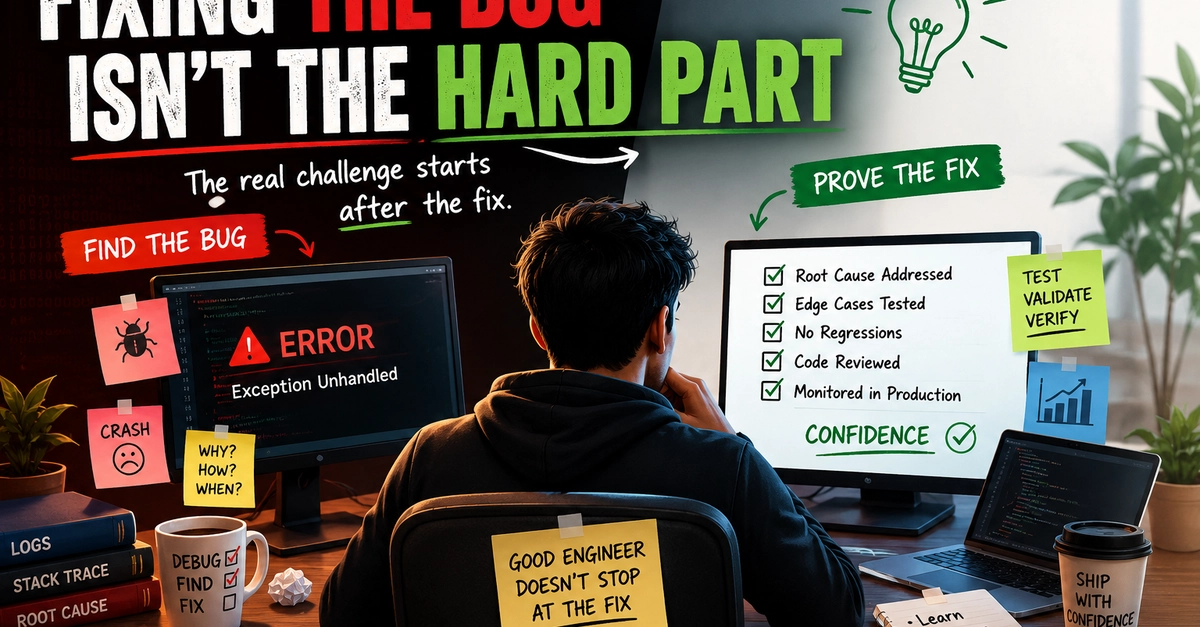
When something breaks, the average person rushes in with three quiet habits: they assume the fault lives exactly where it shows up, they cling to the first explanation their mind offers, and they hope a tool or a smarter person will tell them what to do next. Those habits feel natural, but on hard faults they are exactly what keep us stuck.
Put two engineers on the same failing board. One finds a way through in an afternoon; the other is still going three days later. The difference is rarely raw intelligence or how many commands they know. It is the mental posture each brings to the work before the first step. Handling a hard debug session is less about knowing every tool and more about managing your own assumptions, reactions, and impatience.