The Balkans Are Once Again Becoming a Risk Point for Europe—But the Crisis Can Still Be Prevented
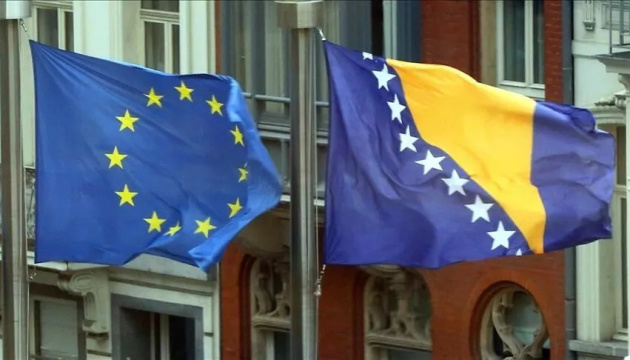
While the West's attention remains fixed on Russia's war against Ukraine, another potential flashpoint is emerging in the Balkans. Developments in Bosnia and Herzegovina are increasingly transcending the bounds of a domestic political crisis and acquiring broader significance for European security.
What civilian observers may dismiss as "yet another bout of political tension in the Balkans" would, in the language of intelligence services, be described as a classic influence operation designed to open a "second front" in the destabilization of NATO and Europe as a whole.
I have worked in this region on numerous occasions. The Balkans are known as the "powder keg of Europe" for good reason: local political disputes have repeatedly escalated into crises with far-reaching international consequences. That is precisely why the developments unfolding today deserve far greater attention than they are currently receiving.
To understand the logic behind the current crisis, it is necessary to return to 1995, when the Dayton Peace Agreement was signed under U.S. mediation. The accord ended the Bosnian War and established a complex constitutional framework built around two constituent entities: the Federation of Bosnia and Herzegovina, inhabited predominantly by Bosniak Muslims and Croat Catholics, and the autonomous Republika Srpska, with its administrative center in Banja Luka, populated primarily by Orthodox Serbs.