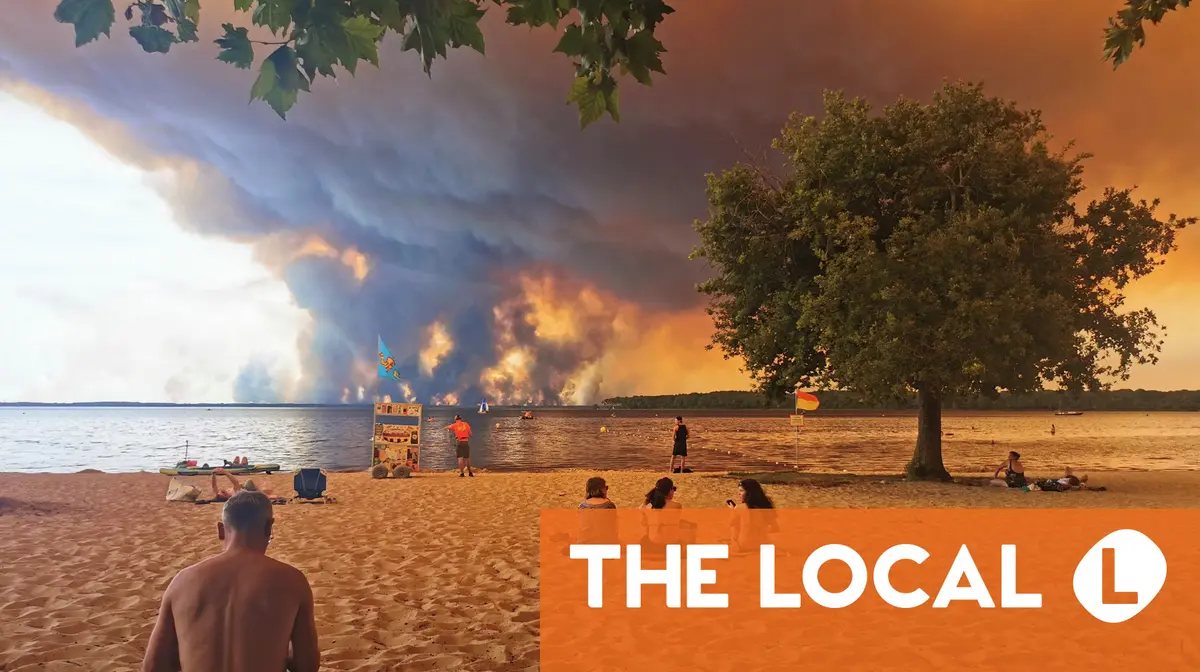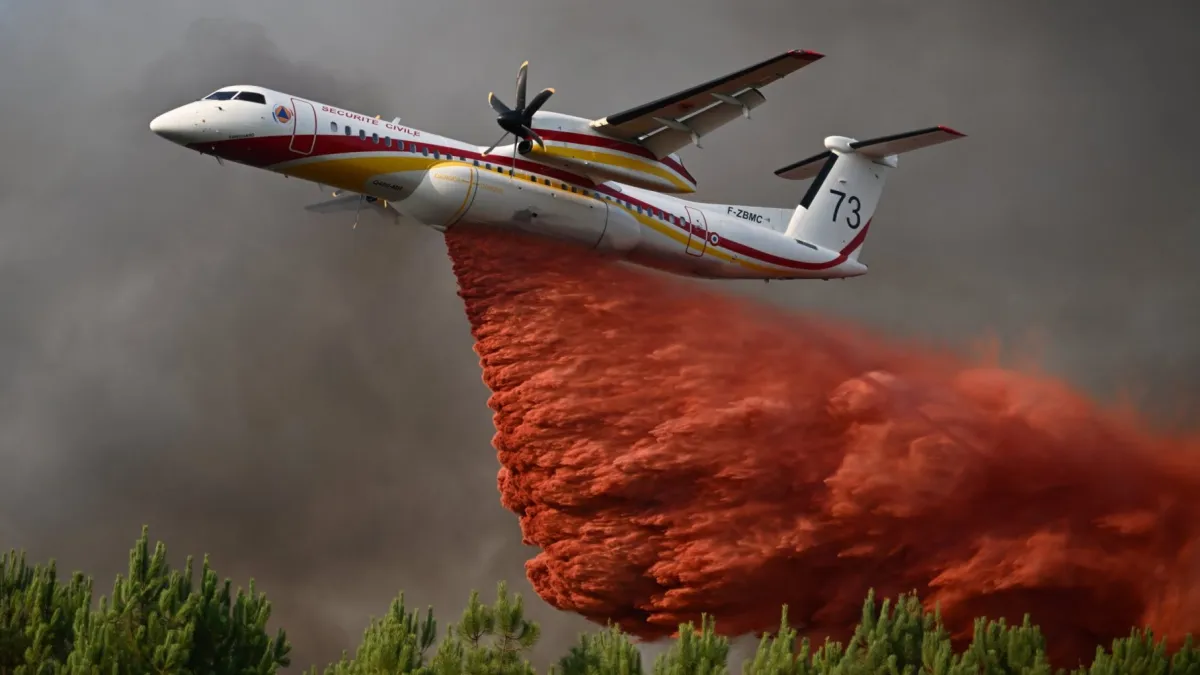
The Barbizon School of painters – that loose collection of sentimental French landscape artists – never had to learn how to paint wildfire. Théodore Rousseau’s depictions of the forest at Fontainebleau were typified by the watery light and hyper-decidious flora. In Jean-Baptiste-Camille Corot’s Forest at Fontainebleau a slow stream curves around creaking oak trees; there is not just grass but flowers and vines too. Some 30 years later, Claude Monet showed the Barbizon lot how it was really done, and had his own stab at the central French woodland. It’s much better – the underbrush is less verdant, and sun dapples through the branches of an ancient tree. But notable in its absence from all three artists’ efforts is a raging fire wreaking permanent destruction on the landscape. Now, if we were to take any of the men seriously they would need to have spent a long time figuring out how to render hot flame and white ash on the canvas. Around 5,000 acres of the forest at Fontainebleau, about an hour in the car south of Paris, have burnt down. Hundreds of people have been evacuated. And then in the west of the country a fire in Gironde – near Bordeaux – claimed around 42,000 hectares and over 220,000 had to evacuate. And here it is not just the landscapes of Rousseau and Corot’s imagination to worry about, but the centuries-old vines on the left bank of the river. That’s your Pessac-Léognan, Graves and Sauternes under threat – safe, for now, from actual fire but not from smoke. We can go on and on: about how that second home in Provence does not seem like such a good bet anymore; about how maybe a holiday in Donegal would work just fine next year; about whatever effect this will have on the already-erratic Bordeaux market; and all those 19th century paintings rendered unintelligible to anyone looking from 2026. Fire in Europe is not new – fire has been around for a while, actually – but there has been an observable increase in wildfire, caused by the observable increase in average temperature. It threatens not just lives and homes but also artefacts of European civilisation like wine and art. Expect the weather to feature far more prominently in the culture wars than ever before, then. “Climate change is a hoax/will kill us all” has always been a fringe view, a fight happening somewhere between uptight scientists and swivel-eyed optimists over in the margins. But now it has escaped the confines of lab reports and abstracted ideas about ozone layers and sea levels. Weather, not “climate change”, is forcing itself into the lives of normal people never used to worrying about it. People use umbrellas to shelter from the sun in Trafalgar Square in central London this week. Photograph: EPA - European Pressphoto Agency London for much of the summer has been practically unliveable, as heatwave after heatwave takes the un-air conditioned city to 35 degrees. The British Library is packed every day with heat refugees – seeking shelter in the airconned lobby. One friend moved to Tromsø, 350 kilometres into the Arctic Circle, to finish writing a book. And, well – all of a sudden those 45 days of consecutive rain in Dublin at the beginning of this year starts to look like a blessing from a benevolent Jupiter. One of the best reasons for living in northern Europe is that weather – beyond a bit of damp – is a totally unobtrusive part of quotidien life. But we can’t count on that anymore. Which brings me to the Economist’s annual liveable city index – the best places to live calculated along some formula of stability, healthcare, culture, environment, education and infrastructure. The paper suggests that Kyiv, Damascus and Tehran might not be such great places for an expat to seek a new life – which I could have told you without needing to reach for my calculator. Copenhagen comes top, what with the city’s bike-friendly streets and high-income residents. I would add the 21 Michelin starred restaurants in the capital as a draw factor too. The list is imperfect because Vienna comes second and that city is full of po-faced Mitteleuropeans. But what it does is give some preponderance to the moderate, rainy, temperate places. And so I am thinking about Dublin – 39th, thanks to the high cost of living and bad public transport. It ought to be much higher. With typical temperature “highs” of 20 degrees Celsius in July, will the English start glancing westwards at a coastal city with a goldilocks climate of warm but not-usually roasting summers and damp but not-usually diluvial springs? Weather is starting to matter more. And yes, whatever, maybe it always should have done, did I not listen to Al Gore? I can hear the worthy letters being written already. But the point is that northern Europeans were used to the idea of climate refugees escaping desert heat and deadly floods. We are not so used to uncomfortable British pensioners and closed schools and smoky left-bank Bordeaux wine. That’s a long held privilege, apparently now melting away. Ireland will get hotter but for now it looks like a demiparadise.
Finn McRedmond: Ireland could look like paradise to refugees from places like near-unliveable London
We are used to climate refugees escaping heat and floods - just not being uncomfortable British pensioners
867 words~4 min read