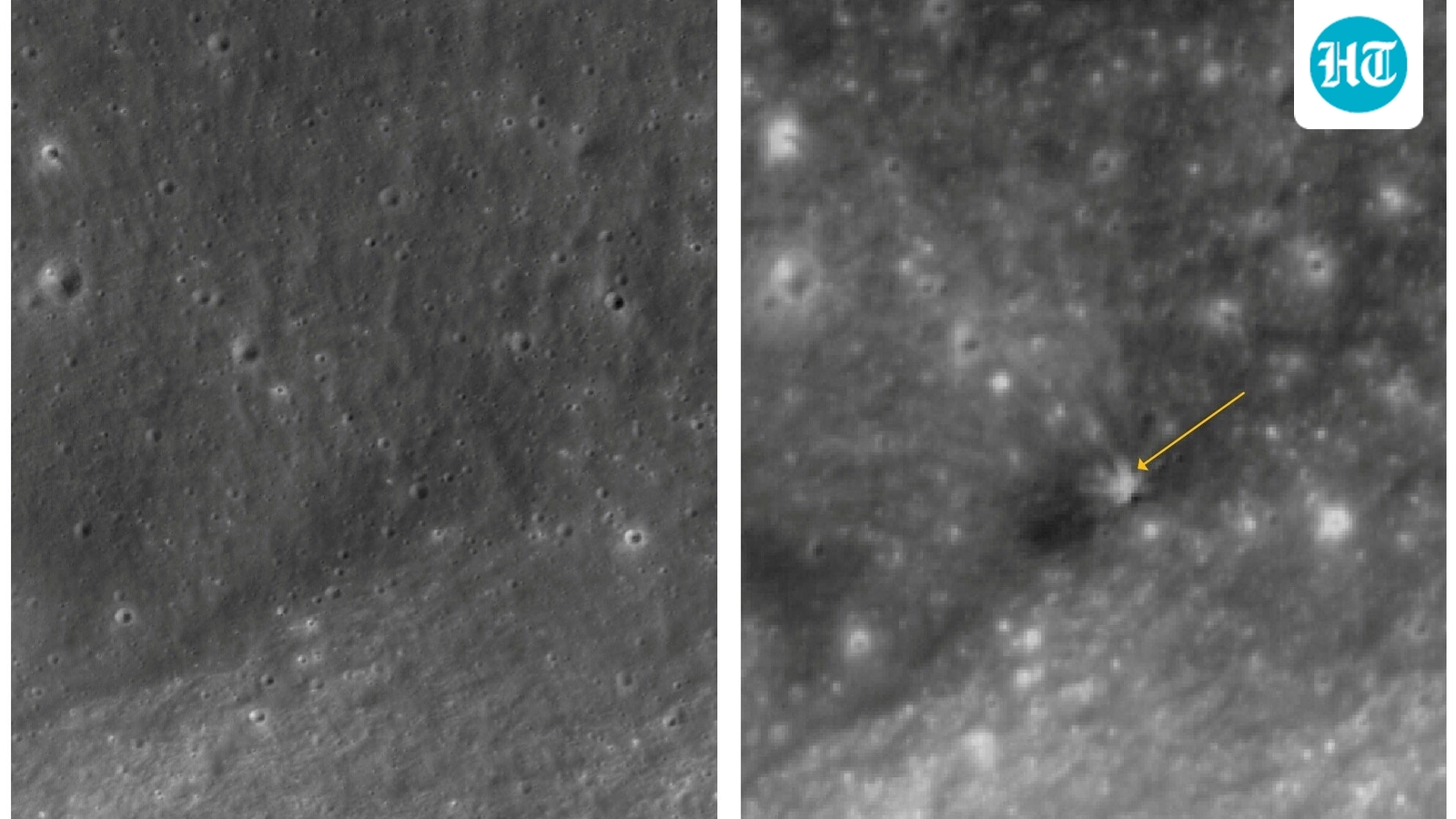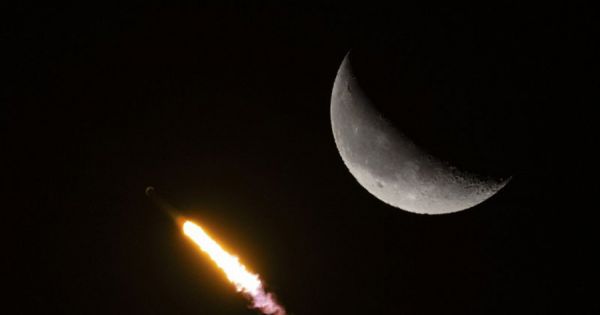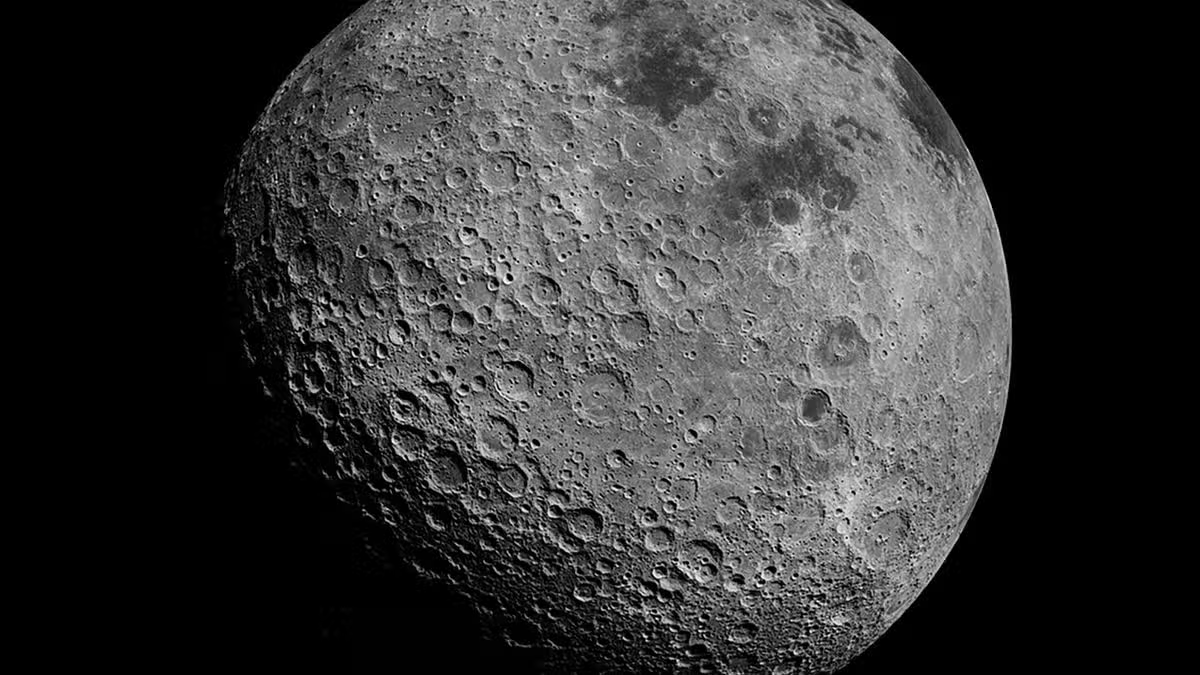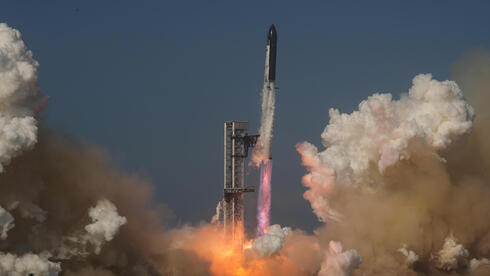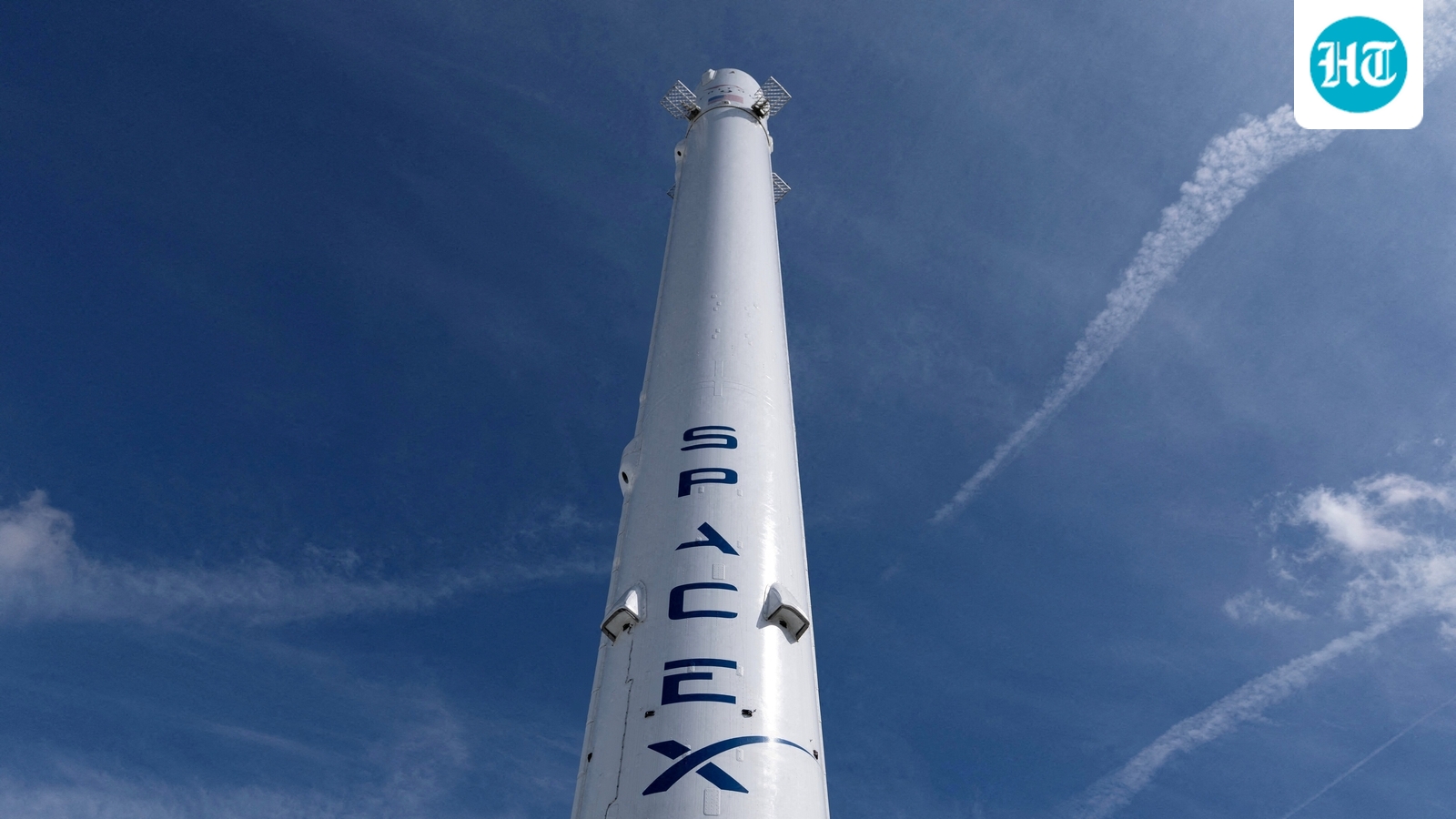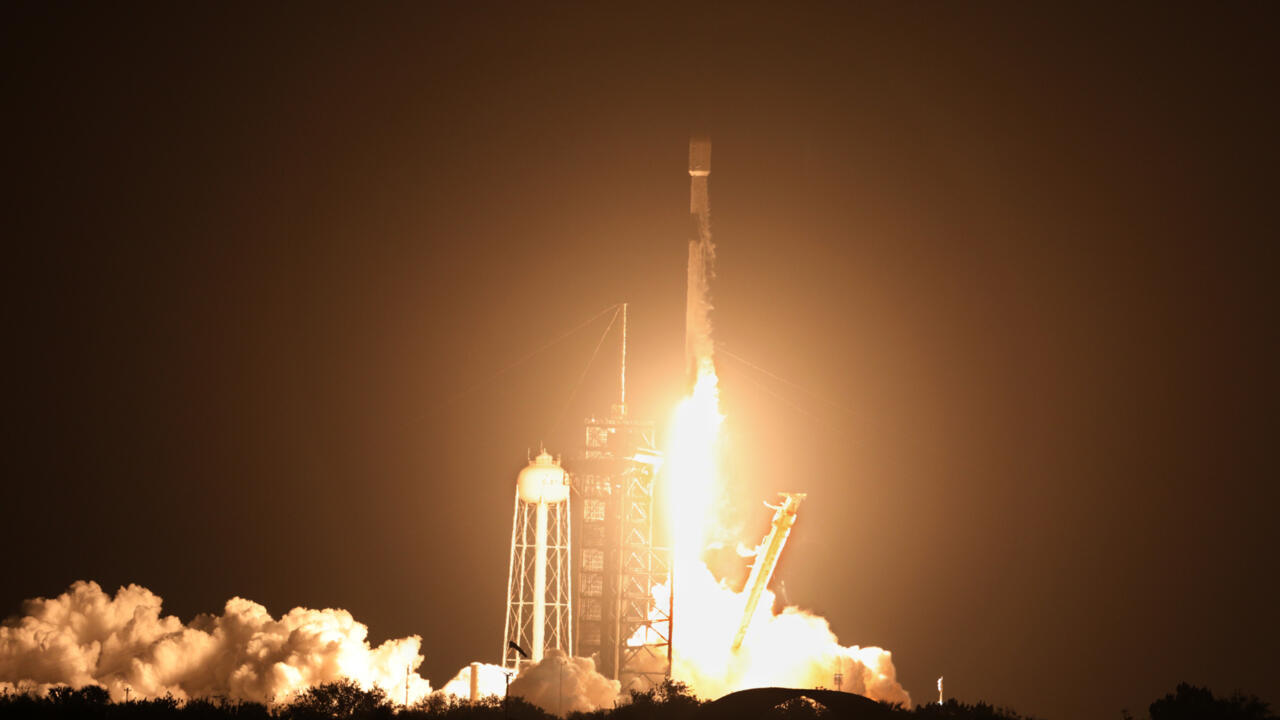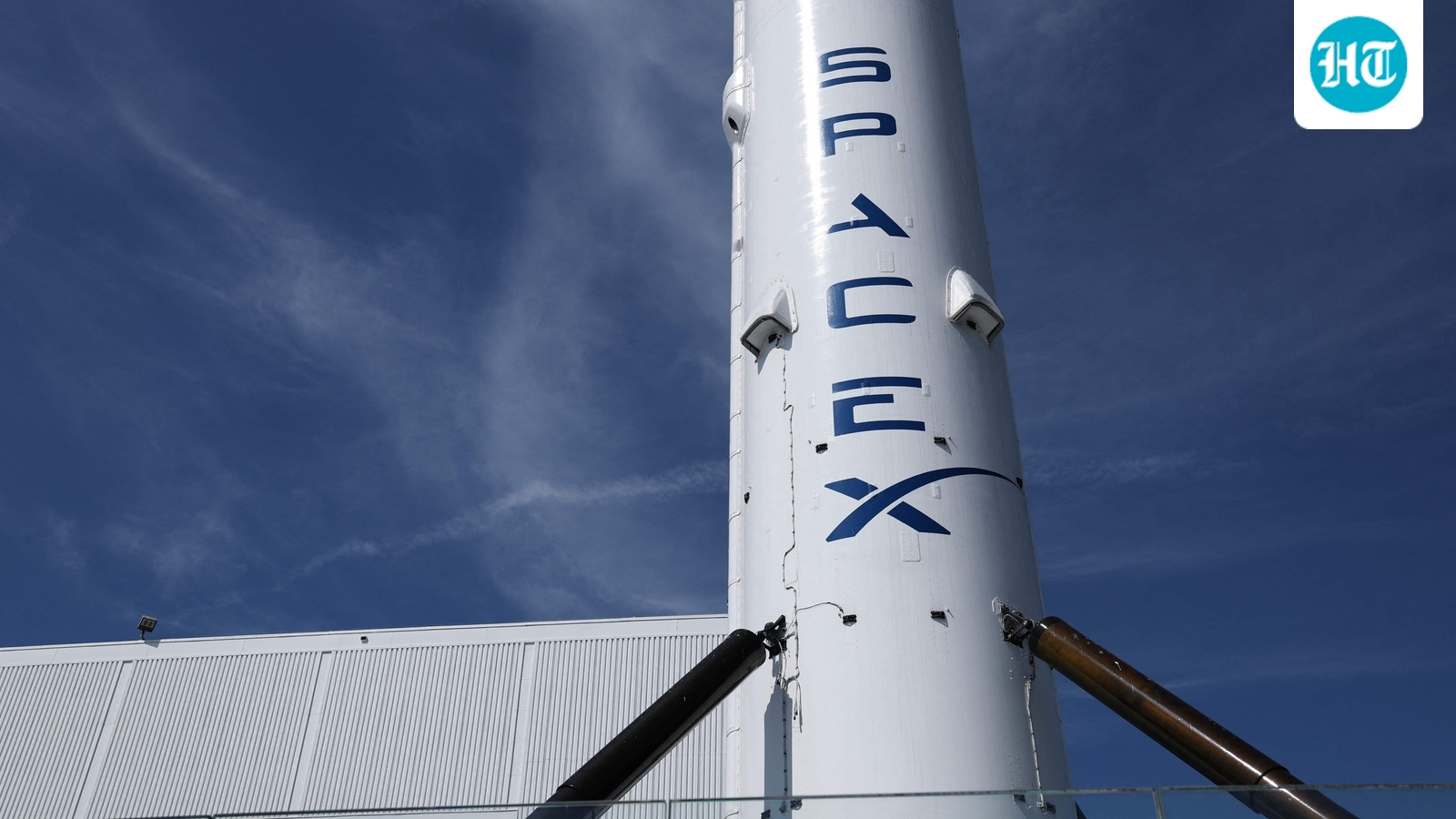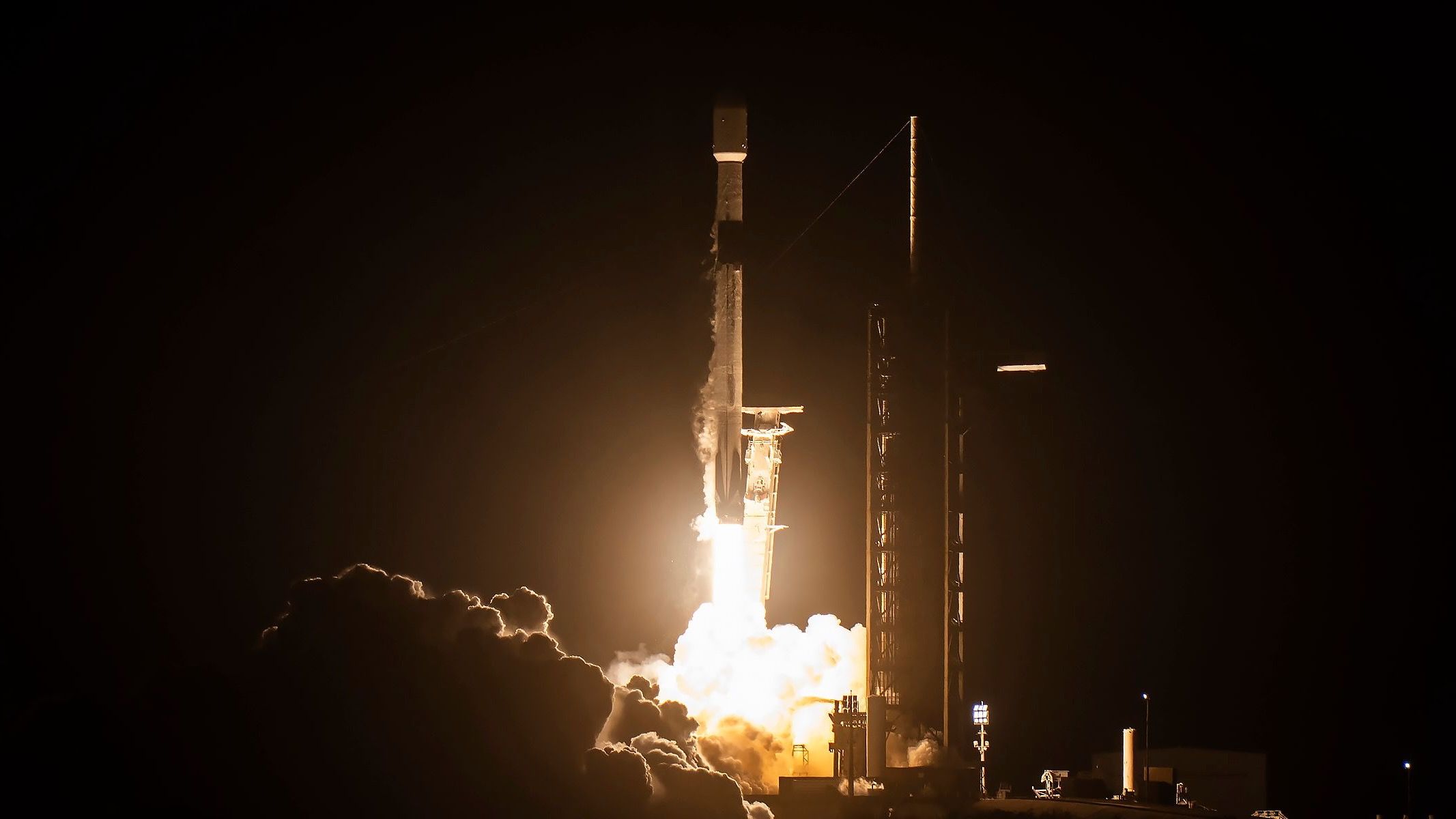
A four-ton rocket stage left over from a SpaceX launch slammed into the moon before dawn on Wednesday, hitting at roughly 5,400 miles per hour near the crater Einstein on the moon's far western edge. The object was the second stage of a Falcon 9 rocket that had helped send a Firefly Aerospace lunar lander on its way in January 2025. SpaceX says the crash was never planned. Telescopes on Earth still managed to catch it happening.Nobody was hoping for this collision, but astronomers weren't exactly disappointed either. Space debris smacks into the moon every so often, yet it's rare for anyone to get a clean read on the flash. This time, a telescope in Chile picked up a faint chemical signature rising off the surface, giving scientists an unusual, almost live, snapshot of what happens when a chunk of Earth-made metal meets lunar soil at highway-plus-a-zero speeds.The Size of a School Bus, Moving Like a BulletThe rocket stage was roughly the size of a school bus and weighed about 4,000 kilograms. It struck the moon around 2:35 a.m. ET, right along the terminator line, the fuzzy border where lunar day fades into lunar night. None of the handful of spacecraft currently orbiting the moon happened to be pointed the right way to snap a close-up. So the sharpest evidence came from roughly 240,000 miles away, at the European Southern Observatory's Very Large Telescope, perched on a mountaintop in Chile.— elonmusk (@elonmusk) A Faint Flash, Then Some ChemistryAn ESO spokesperson told Reuters, "We can confirm that the telescope detected spectral lines of sodium and lithium gas..." in the debris cloud thrown up by the impact, a glow that lingered for five to ten minutes before fading. That kind of light show is typical of lunar impacts: sunlight catches a puff of freshly kicked-up dust, and for a few minutes, instruments can read its chemical fingerprint.Carl Schmidt, the astronomer who led the observation, was quick to add a caveat by email. He told Reuters, "This observation did not go perfectly and this is a very crude analysis...", and said a fuller writeup would come later. Even so, his early read suggests the sodium likely came from the moon's own soil, while the lithium may have traveled all the way from Earth, riding along inside the rocket stage itself.Why a Rocket Part Was Still Floating AroundMost spent rocket stages never get anywhere near the moon. They usually fall back through Earth's atmosphere and burn up, or splash down somewhere in the ocean, shortly after doing their job. But this particular mission needed extra push to reach the moon, so the stage stayed in space long after its fuel ran dry, tumbling uncontrolled among the thousands of other bits of junk that satellites now have to dodge.It took astronomers until earlier this year to notice the drifting hardware was on a slow collision course with the moon. Julianna Scheiman, SpaceX's director of NASA science and Dragon programs, explained the physics behind it to reporters on Monday. She told Reuters, "What has happened is essentially a mixture of solar activity and gravity forces..." that nudged the stage onto its final path.One Astronomer Called the Crash Months AgoBill Gray had a hunch. Gray, who builds widely used astronomy software called Project Pluto, was the first person to calculate and publish a prediction of the impact, back in April. By January he suspected a hit was likely, though he couldn't yet say where; by April, he felt confident enough to go public with an announcement. Gray doesn't think the crash matters much scientifically, but he wasn't shy about the bigger picture. He told Reuters the incident presents no danger to anyone, adding "though it does highlight a certain carelessness about how leftover space hardware..." gets left to drift once its job is finished.The Moon Has Taken Hits BeforeThis isn't the moon's first unplanned visitor. A Chinese rocket stage crashed into it in March 2022 after finishing a lunar test flight. Russia's Luna-25 spacecraft spun out of control and crashed in 2023, likely leaving behind a small plutonium-238 power source that poses no real danger sitting on the surface. India's Chandrayaan-2 lander crashed in 2019, as did Israel's Beresheet lander that same year — Beresheet was carrying tiny, nearly indestructible creatures called tardigrades, which may still be sitting up there today.Not every impact has been an accident. NASA deliberately crashed a rocket stage into the moon in 2009 specifically to study the resulting plume, a mission that ended up revealing traces of water ice buried in lunar dirt. Decades earlier, in the 1970s, NASA also steered spent Saturn V rocket stages into the moon on purpose, just to measure the seismic shockwaves they produced.What Happens NextWith NASA planning to put a permanent base on the moon and send regular astronaut missions there later this decade under its Artemis program, stray space hardware raining down is starting to look like more than a curiosity. Scheiman said NASA and SpaceX are now in talks about how to keep future rocket stages from wandering off toward the moon at all. For now, the crater near Einstein has one more scar in it, and a handful of astronomers have a little more sodium-and-lithium data to sift through.(Inputs from Reuters)
SpaceX rocket crashes into Moon: Plume erupts, leaving a hole on lunar surface; Elon Musk shares impact video. Watch
A 4,000-kg SpaceX Falcon 9 rocket stage crashed into the moon near crater Einstein after drifting through space since a January 2025 lunar mission. The impact produced a brief flash and a cloud containing sodium and lithium signatures detected by the European Southern Observatory's Very Large Telescope in Chile.
878 words~4 min read