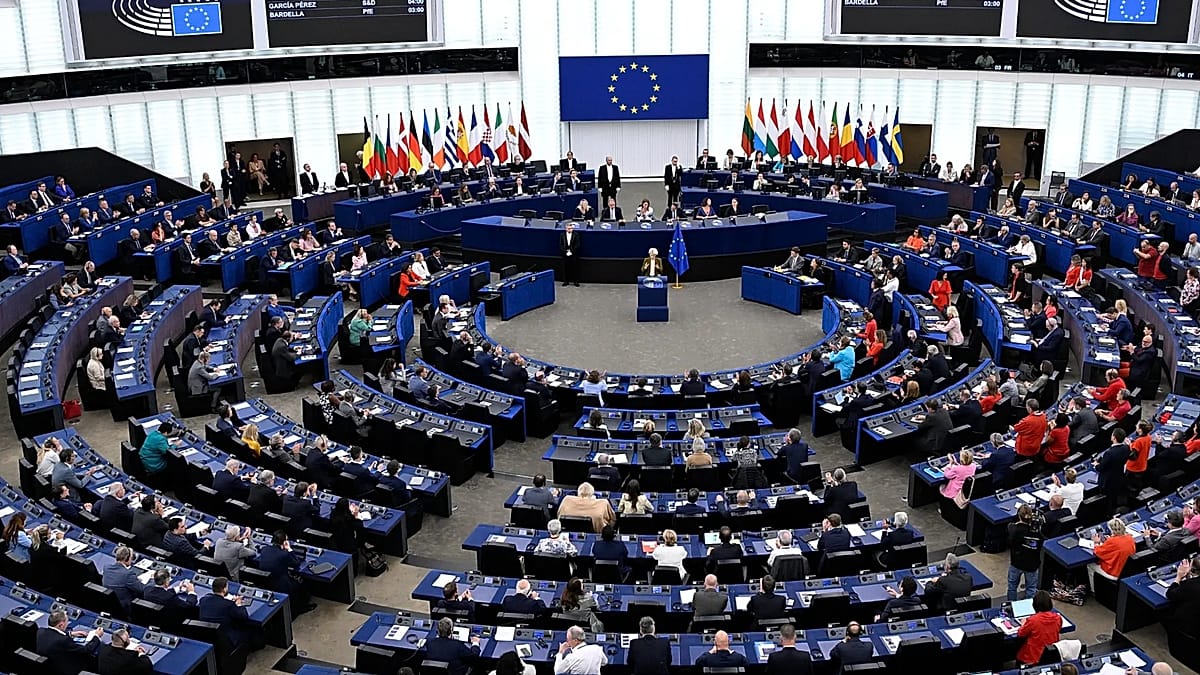
In the coming months, European governments will intensify their efforts to establish how the EU's long-term budget for the period 2028-2034 should be financed, with new revenues, called "own resources", at the centre of the debate.
The discussion on own resources is not new. During the last long-term budget negotiations, the 27 member states failed to agree on any resources at all, and the budget was eventually financed by a national contribution, each country contributing 1.13 percent of its gross national income.
But given the bloc has grand ambitions to make large new investments in strategic sectors such as AI and defence while maintaining investments for sectors such as agriculture and fisheries, it is clear that the EU needs its own money collected and spent in a coordinated manner, rather than fragmented across 27 different national budgets.
European governments are therefore trying to source fresh money – but finding an agreement on new taxes is not easy, and none of the proposals currently on the table are to everyone's advantage. Member states will have to find a compromise and make the right trade-offs to leave all 27 governments happy – or at least, equally unhappy.
The central problem is that no government welcomes the prospect of new taxes on citizens. This is the central concern EU diplomats expressed to Euronews, speaking on condition of anonymity: how can governments convince their publics to accept a new tax?