Academia
Indonesia will need to decide whether its digital data should be treated merely as an input for external technology companies or as a strategic national asset whose value should also contribute to domestic development.
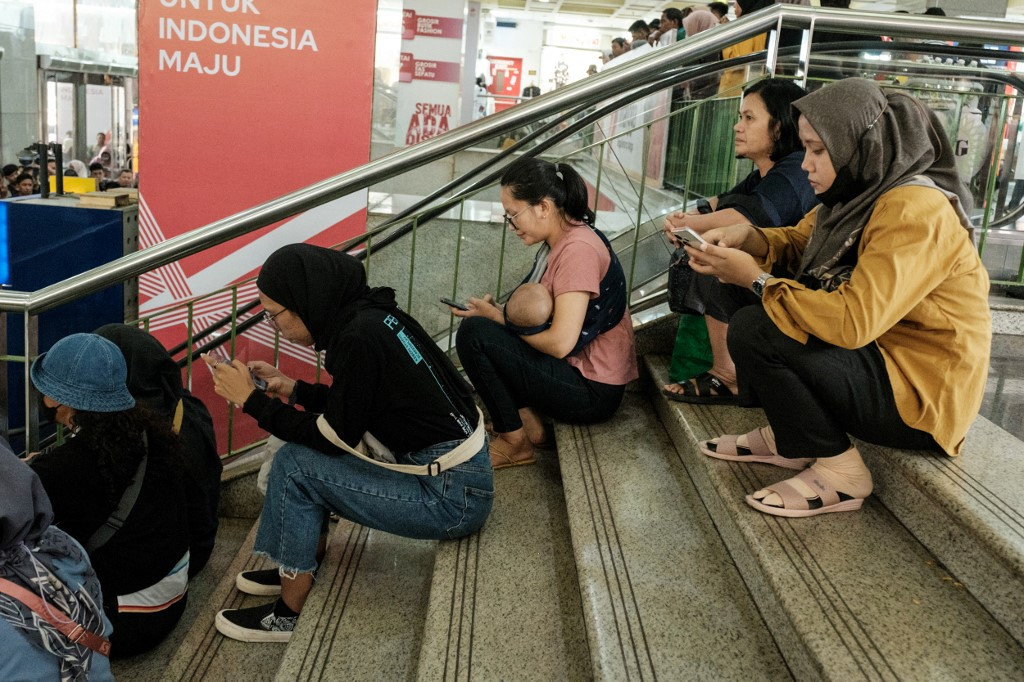
Women use smartphones on Sept. 28, 2023, at the entrance of Tanah Abang Market, Southeast Asia's largest wholesale shopping center for garments and textiles, in Jakarta. (AFP/Yasuyoshi Chiba)
As the saying goes, “The more things change, the more they stay the same.” Nearly two decades ago, there was an international debate about bird flu blood samples. Today, it’s about digital data samples. Yet the question of fairness for Indonesia is much the same. Was it fair then for Indonesia to donate blood samples for developing H5N1 avian influenza vaccines that could then be sold to us at unaffordable prices? Is it now fair that the United States is pressing Indonesia for a more relaxed attitude toward IT companies when our digital activity helps create products that generate billions of dollars in economic value through AI?
As when Indonesia was asked to freely supply H5N1 blood samples and research results in 2007, there is now legitimate interest in ensuring that we also benefit from the value of sharing the data in our collective digital footprint.