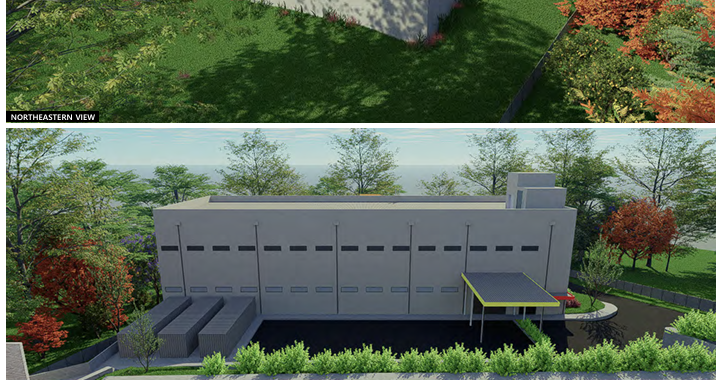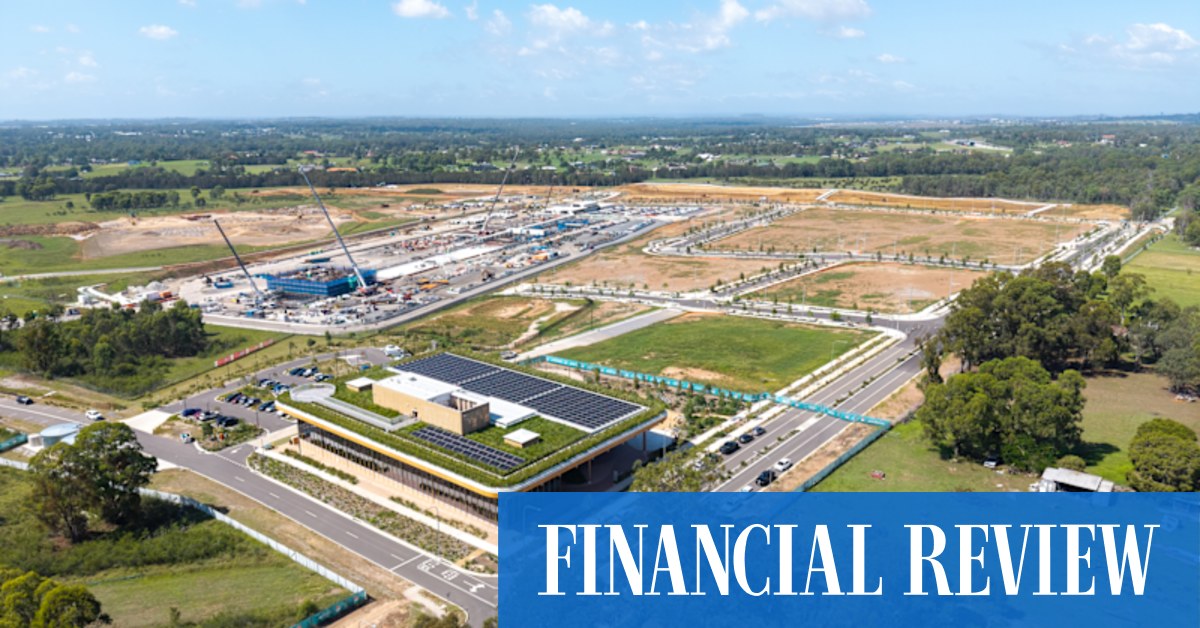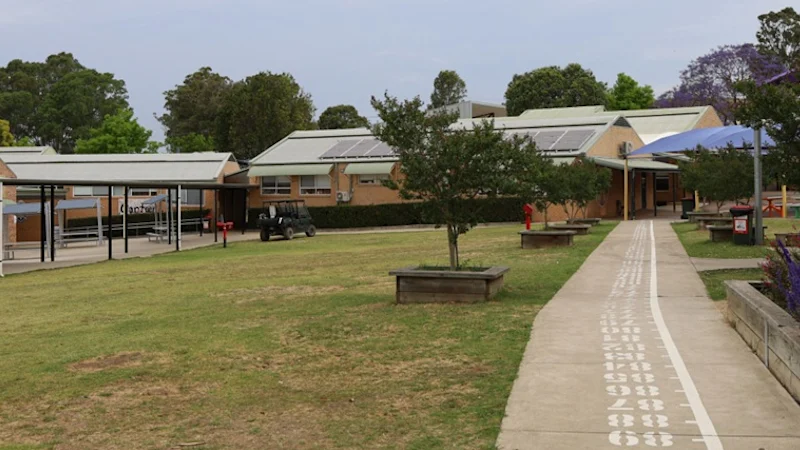
August 6, 2026 — 11:30amThe race to power Australia’s artificial intelligence boom has reached a vacant paddock in western Sydney, where plans for the nation’s largest data centre development have sparked a battle over potential impacts on nearby schools, homes and critical freight infrastructure.The NSW government is in the final stages of deciding whether to approve a $9 billion data centre campus that would see US technology company AirTrunk develop six four-storey data hall buildings across 52 hectares of vacant land at Kemps Creek.If approved, the project would be built over a decade and operate 24 hours a day, supported by 852 diesel backup generators, 936 cooling units, 14.4 million litres of diesel fuel storage, electrical substations and 2.65 million kilograms of lithium-ion battery storage.At completion, the facility would have a power capacity of 1.2 gigawatts – roughly equivalent to the annual electricity consumption of about one million Australian homes – making it the first Australian data centre to exceed the one-gigawatt threshold.Planning documents stated the development is vital for Australia’s digital sovereignty, ensuring the nation keeps pace with the rapid growth of artificial intelligence, cloud computing and data storage.But the scale of the proposal has intensified concerns among schools, residents, freight operators and government agencies about the cumulative impact of data centre developments across western Sydney, where a growing cluster of facilities has earned the region the nickname “data centre alley”.A concept image of the data centre campus at Kemps Creek.NSW Department of PlanningThe AirTrunk proposal would join a concentration of nearby facilities, including Stack Infrastructure’s planned 450-megawatt campus at Erskine Park, NEXTDC’s approved 250-megawatt facility at Horsley Park, Microsoft’s 190-megawatt development at Kemps Creek and the Echidna data centre at Eastern Creek.In a submission to the Department of Planning, Sydney Water warned existing wastewater networks were “not designed to handle the significant discharge anticipated from data centres”.In a statement to the Herald, project manager Plan PM said the proposal had been modified following weeks of consultation with Sydney Water, resulting in an agreement to incorporate dry-cooling technology at the site to eliminate the operational water use required for cooling systems.Planning documents show the precinct would draw power through underground transmission lines connected to Transgrid’s Sydney West substation and aims to achieve net zero operational emissions by 2030 using carbon offset mechanisms.The planned development joins a growing list of Western Sydney data centres, including this approved facility which will be operated by Microsoft at Kemps Creek.“We will continue to work constructively with stakeholders and community to assess long-term servicing options as the application progresses,” Plan PM said in statement.The impending decision comes as governments grapple with how to accommodate the rapidly increasing electricity and water demands of the AI boom. Last month, the federal government released a proposed national framework for data centres that would require facilities to fund additional renewable energy generation and electricity grid infrastructure.NSW already hosts almost 90 operational data centres, according to state government figures, with another 15 major projects worth a combined $52 billion progressing through the planning system.The AirTrunk proposal has also exposed tensions between industrial development and surrounding communities. The site sits near three schools educating more than 1500 students, including Mamre Anglican School, about 60 metres from the site, Emmaus Catholic College, about 170 metres away, and Trinity Catholic Primary School, approximately 320 metres away.In submissions to the Department of Planning, Catholic Schools Parramatta Diocese and The Anglican Schools Corporation warned that around-the-clock operations could expose students to continuous noise from industrial cooling units, diesel exhaust from routine generator testing and increased traffic during school pick-up and drop-off periods. Concerns were also raised about the visual impact of the 40-metre height of buildings.Mamre Anglican School principal Ross Whelan questioned whether a development of such industrial scale belonged next to a school.“Members of our school community ... will have concerns regarding the potential health impacts and risk from both the operation and site infrastructure requirements,” he wrote.The project faces further headwinds from the freight and logistics sectors. NSW Ports and the Australasian Railway Association have urged the government to reject the application, arguing the site is strategically important industrial land adjoining the planned Western Sydney Intermodal Terminal, Western Sydney Freight Line and near the new Western Sydney International Airport.NSW Ports warned that converting the land into a data centre would “permanently lock out” nationally significant freight land needed to move shipping containers efficiently between Port Botany and Western Sydney by rail.Planning documents estimate the development would generate $13.7 billion in economic output during construction, support 2775 operational jobs and include measures to mitigate noise and vibration impacts on nearby properties.For local residents like Ted Pochodyla, whose home is adjacent to the development site, the plans have prompted fears his home could be exposed to further noise, traffic and vibrations in the increasingly industrialised area.Ted Pochodyla, pictured at his home in Kemps Creek.Wolter Peeters“I am slowly being surrounded by industry on all sides, and it worries me greatly the negative impact this construction may have on my health and everyday life,” Pochodyla said.The NSW Department of Planning is expected to hand down its determination on the project in the coming weeks. AirTrunk was contacted for additional comment but did not respond to questions.The Morning Edition newsletter is our guide to the day’s most important and interesting stories, analysis and insights. Sign up here.From our partners
These Sydney schools teach 1500 students. A $9b data centre is moving next door
Plans to build Australia’s largest data centre on a block of Sydney land is triggering a battle over power, noise and impacts on three local schools.
892 words~4 min read